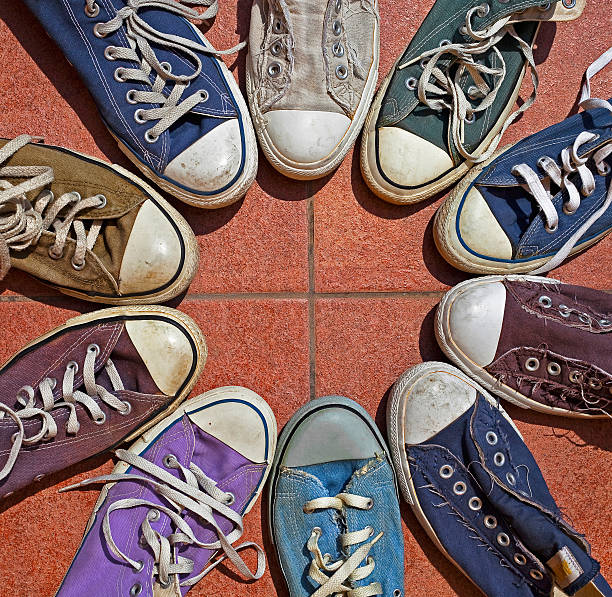
Breaking the Mold: Gender-Inclusive Sneaker Styling in Modern Streetwear
The sneaker has long been a unifying force in fashion, a rare item that transcends age, class, and geography. Yet for decades, the industry quietly reinforced a binary framework: sneakers were marketed either as “men’s” or “women’s,” with color palettes, silhouettes, and sizing drawn along strict gender lines. Today, that binary is crumbling. Gender-inclusive styling in sneaker fashion is not a fleeting trend but a fundamental shift in how we think about identity, expression, and the very purpose of footwear. By breaking traditional boundaries, sneaker enthusiasts are rewriting the rules of style, proving that a shoe is never inherently masculine or feminine—only the wearer’s intention gives it meaning.
The most visible expression of this movement lies in the rise of oversized, unisex silhouettes. For years, brands reserved chunky dad shoes, high-top basketball sneakers, and heavy-duty boots for men, while women were offered slim, pastel-toned trainers or heeled hybrids. Now, the landscape has inverted. Sneakers like the New Balance 990 series, Nike Air Force 1, and Adidas Samba have become beloved by all genders precisely because their design is devoid of gendered cues. These models do not taper for a narrow foot or employ floral embroidery; they are architectural, functional, and neutral. Stylists and influencers have embraced this neutrality as a canvas. A person wearing an oversized hoodie, wide-leg cargo pants, and a pair of chunky sneakers no longer signals a specific gender—it signals a mood: comfortable, confident, and unapologetically individual.
Color, traditionally one of the most rigidly assigned elements of fashion, has also undergone a radical transformation. Pink was once off-limits for men; blue was deemed too “serious” for women. Today, neon greens, sunset oranges, and lavender hues appear on every shelf regardless of the aisle label. The gender-inclusive stylist deliberately crosses these lines. Pairing a stark white sneaker with a full monochrome beige outfit works equally well for any wearer, as does a bright red Air Jordan worn with a flowing silk skirt or tailored trousers. The key is contrast and intention, not conformity to a prescribed palette. This freedom allows individuals to explore aspects of their identity previously stifled—a man can embrace softness through a pastel sneaker, a woman can channel power through a bulky black boot, and nonbinary individuals can move fluidly between both poles without explanation.
Sizing has historically been a barrier to true inclusion. Many sought-after sneakers were only produced up to a certain size or with different proportions for men and women. Brands like Converse, Vans, and more recently, Nike and Adidas have begun releasing unified size runs that span from child sizes to extended men’s sizes, removing the need to buy from a specific “gender” line. This shift is practical but also deeply symbolic. When a shoe is simply a shoe—available in the same dimensions for anyone—the act of choosing becomes purely aesthetic. The sneakerhead community has responded by celebrating “sisterhood” and “brotherhood” interchangeably, trading sizing tips and sharing lookbooks that feature identical models worn in starkly different ways. The conversation is no longer about what a man or woman should wear, but about how the shoe interacts with the body and the outfit.
Beyond the product itself, styling techniques have evolved to break norms. Tucking laces inward, swapping standard laces for satin ribbons or neon cords, and even wearing sneakers with traditionally feminine garments like slip dresses or lace skirts are moves that defy categorization. A Nike Dunks low-top worn with sheer tights and a blazer is a statement of gender fluidity that refuses to be boxed in. Similarly, pairing chunky platform sneakers with a cropped bomber jacket and chain necklace merges streetwear with ballroom culture, drawing from queer aesthetics that have long challenged mainstream fashion. These combinations are not about shock value; they are about showing that sneakers are a versatile tool for self-expression, capable of elevating any look regardless of the wearer’s gender identity.
The cultural forces driving this change are rooted in broader social movements. Younger generations increasingly reject the gender binary as an outdated construct, and brands are listening. Collaborations with queer artists, nonbinary designers, and influencers have introduced collections that explicitly celebrate ambiguity. For instance, the popularity of the “Woman” campaign by Puma or the genderless “Everyone” line from Veja signals a shift from tokenism to genuine representation. On the street, this translates into a new visual language: a person wearing Air Max 90s with a floor-length skirt and a baseball cap is no longer an anomaly but a reference point for how style can be both personal and inclusive.
Gender-inclusive sneaker styling also carries a deeper ethical dimension. By rejecting gendered labels, consumers push back against the idea that clothing must signal a fixed identity. Instead, sneakers become a common ground—a shared love for craftsmanship, history, and comfort that unites rather than divides. The Hall of Fame models like the Adidas Superstar, the Converse Chuck Taylor, and the Reebok Classic have always been worn by everyone, but now that inclusivity is named, celebrated, and expanded. A young boy can admire a pink-and-purple sneaker without shame; a woman can buy a size 12 in a men’s release without feeling she is trespassing; a nonbinary teen can find a shoe that fits both their foot and their spirit.
In breaking these boundaries, we are not discarding tradition—we are redefining it. The sneaker has always been a symbol of rebellion, from the basketball court to the skatepark to the runway. Today, that rebellion is personal. It says that style is not about fitting into a box but about building a world where every step is authentic. Gender-inclusive styling offers no final destination, only an open road where sneakers lead the way, one lace, one color, one silhouette at a time.
Articles