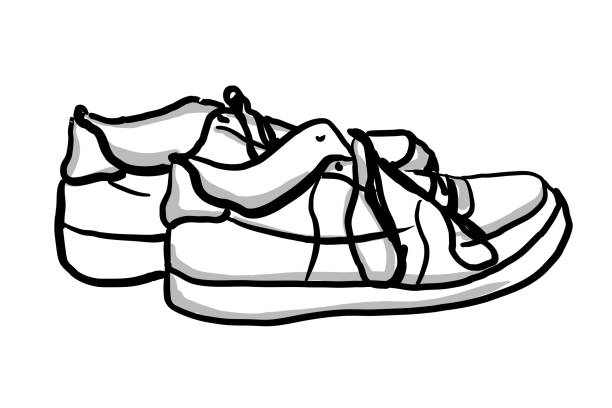
Chuck Taylor All Star: How a Basketball Shoe Became a Global Icon

The Converse Chuck Taylor All Star began with humble intentions, designed in 1917 as a high-top canvas basketball shoe for a sport still young, messy, and full of awkward experimentation. Its rubber sole offered traction on wooden courts, and its canvas upper was light enough to allow movement and sturdy enough to endure the scuffs of early hardwood competition. But the shoe’s true turning point arrived in 1921 when a basketball player from Akron, Ohio, named Charles “Chuck” Taylor walked into Converse’s sales office. He had a basketball background, a persuasive personality, and an immediate conviction that the All Star shoe could be improved. By 1923, he had not only convinced the company of his vision, he had lent his signature to the ankle patch, creating one of the first athlete-endorsed footwear deals in modern history. For decades afterward, the star on the side was far more than a logo. It was a stamp of authenticity worn by up-and-coming players and professional barnstormers alike, eventually becoming standard equipment for the early NBA.
As basketball grew from a niche activity to a national passion, the Chuck Taylor All Star rode along, appearing on feet in every YMCA gymnasium and dusty high school court across the country. Its design remained almost startlingly simple: a resilient canvas upper, a flat vulcanized rubber outsole, a toe cap that protected against dragging, and a now-famous circular ankle patch. This simplicity allowed the shoe to perform in ways that were accessible, inexpensive, and easy to reproduce. It also made the shoe a blank canvas for creative expression long before sneaker culture viewed footwear as fashion. By the 1940s and 1950s, Chuck Taylors had become so tied to basketball that they were considered standard-issue sporting goods, even as other competitors emerged with new materials and new technology.
Perhaps the most unlikely chapter in the All Star’s story arrived during World War II, when Converse was commissioned to manufacture rubber footwear and protective gear for the military. Soldiers returning from overseas brought their Chucks back into civilian life, and many of them wore the sneakers casually rather than on the court. This subtle shift transformed the shoe from an athletic exclusive to a daily wardrobe staple, planting the seeds for its future as a fashion icon. When the counterculture movement exploded in the 1960s and 1970s, youngsters gravitated toward the Chuck Taylor precisely because it stood in opposition to polished leather dress shoes and corporate uniformity. Artists, musicians, skaters, and free spirits adopted the sneaker as a uniform of nonconformity, proving that a basketball shoe could communicate attitude, ideology, and belonging without saying a word.
The rock and punk scenes accelerated this cultural takeover. Icons like Kurt Cobain, Sid Vicious, and countless garage bands wore Chucks with torn jeans, band t-shirts, and everything else that defied sleek glamour. In time, the All Star became a fixture in movies, from Rebel Without a Cause to Pulp Fiction, and its presence cemented a mythology built on rebellion, youthful independence, and raw authenticity. The shoe never boasted complicated cushioning or advanced athletic engineering, and that was precisely its point. It represented honesty, durability, and unfiltered personal style, qualities that no high-priced gadget could replicate. When the brand eventually sold, ownership changes and fashion cycles never killed the shoe’s appeal. Instead, each generation rediscovered the Chuck Taylor in its own context, reinventing its meaning while keeping its iconic silhouette unchanged.
Today the Chuck Taylor All Star holds a unique place in sneaker history. It has appeared on runways, collaborated with high fashion houses, and inspired countless variations in color, material, and pattern, yet the original remains beloved by everyone from grandparents to schoolchildren. There are canvas Chucks, leather Chucks, winter Chucks, waterproof Chucks, and platform Chucks, but none of these variations diminish the power of the original design. Across a full century of sneaker innovation, rubber formulas have evolved, cushioning systems have been invented, and performance models have fragmented into dozens of specialty categories, yet no shoe has matched the All Star’s comprehensive cultural weight. It is at once a basketball relic, a militaristic artifact, a counterculture badge, a fashion chameleon, and a nostalgic portal to simpler times.
The true genius of the Chuck Taylor All Star is its refusal to be pinned down. It remembers the game because it helped build basketball’s foundation, yet it has spent far longer as a canvas for self-expression beyond the court. It is both a vintage item and a contemporary sneaker, simultaneously timeless and ever-changing. When someone laces up a pair of Chuck Taylors, they are not simply putting on a shoe. They are participating in a visual language that spans generations, connecting the athlete, the rebel, the dreamer, and the everyday walker under one clean, circular silhouette. That, more than any single design innovation, is why the Chuck Taylor All Star remains an unmatched icon of footwear. Its form has stayed faithful to its roots, but its story keeps evolving, ensuring that another century will likely pass far before this humble canvas sneaker ever fades from collective memory.
Articles