Lateral Support in Tennis Shoes: The Engineering Behind Every Pivot
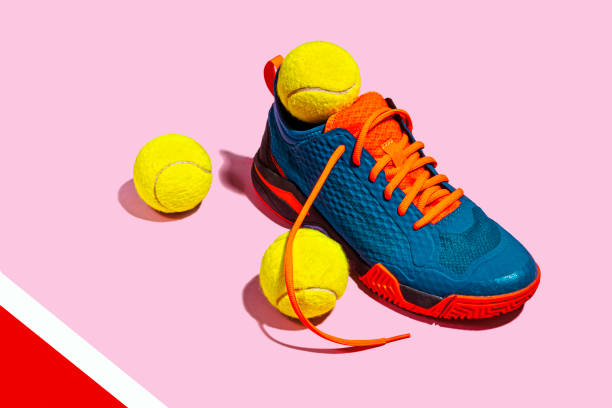
The essence of tennis reveals itself in a single explosive step. A player launches into a wide forehand, plants the outside foot, and then reverses direction in a blur of acceleration. This sequence, repeated hundreds of times in a single match, demands far more from footwear than simple cushioning or comfort. The defining characteristic of a true tennis shoe is lateral support, the subtle yet complex architecture that prevents the foot from rolling over its outer edge during rapid side-to-side movements. Without this engineered stability, the ankle, knee, and entire kinetic chain would absorb forces they were never designed to handle, turning every aggressive angle into a potential injury.
Lateral support begins with the outsole, where the tread pattern and width determine how securely the shoe grips the court during a land-and-cut maneuver. Unlike the uniform traction of running shoes, tennis outsoles typically feature a herringbone pattern that bites into hard courts from multiple directions. Yet grip alone does not guarantee stability. The outsole’s flare is equally critical. A wide, flared outer heel and midfoot create a broader platform, effectively lowering the foot’s center of gravity relative to the ground. This geometric expansion acts as a brake against inversion, the inward rolling motion that leads to the most common ankle sprains in the sport. High-performance models often add a visible plastic or rubber wing extending from the sole, giving the shoe a stubborn footprint that refuses to tip over when the player leans hard into a backhand.
The midsole composite is the silent partner in this support system. While foam compounds serve primarily for shock absorption during landing, their density and stiffness must be carefully balanced. A midsole that is too plush will collapse under lateral loading, allowing the foot to shift unpredictably inside the shoe. Manufacturers therefore reinforce the lateral edge of the midsole with firmer materials, often a denser polyurethane or a thermoplastic shank embedded beneath the arch. This creates a wedge effect that resists compression on the outer side, redirecting force upward through the skeleton rather than letting the shoe distort. Some designs even integrate a rigid cradle that wraps from the heel through the midfoot on the lateral side, acting like a supportive hand cupping the outer foot. The result is a shoe that feels stable during sudden stops, yet remains flexible enough to allow natural toe-off during forward runs.
Inside the shoe, the upper and lacing system contribute equally to lateral security. A traditional tongue-and-lace closure, when properly engineered, can lock the midfoot so that the foot moves as one unit with the shoe. Modern tennis uppers often use a combination of synthetic leather overlays and engineered mesh, with strategic reinforcement along the eyestay and the outside of the toe box. These overlays do not merely look aggressive; they function as tension straps that prevent the foot from sliding outward over the sole during sharp cuts. Similarly, a padded internal heel counter helps anchor the rearfoot, while higher-collar designs—popular in recent clay-court models—offer additional ankle buttressing for players who favor extreme sliding movements. For players with weak ankles or a history of sprains, the connection between the midfoot and heel becomes the difference between confident play and chronic hesitation.
What truly sets a tennis shoe apart, however, is how all these elements interact under dynamic strain. A static fit test in a store cannot replicate the force of a 180-degree pivot on a sweaty hard court. The shoe’s lateral support must therefore work in concert with the player’s proprioception, the internal sense of joint positioning. When a shoe provides adequate resistance against inversion, the brain trusts the foot to push harder into the desired direction. This psychological safety margin often explains why a player will perform brilliantly in one shoe model and poorly in another of seemingly identical dimensions. Every flex groove, every injected stabilizer, every slight curve in the heel-to-toe transition contributes to a sense of planted confidence. For the modern game, where aggressive angles and open-stance groundstrokes dominate, lateral support is not a luxury—it is the foundational requirement that separates a court shoe from a mere sneaker.
Articles