The Air Jordan 1 and the Birth of Sneaker Culture
Every sneaker collector remembers a first pair. For an entire generation born after 1985, that first pair often carries a wings logo and a colorway that defies convention. The Air Jordan 1 did more than launch a basketball shoe line; it fundamentally rewired how people think about footwear. Before its arrival, athletic shoes were practical equipment, worn for games and then discarded. The Air Jordan 1 transformed a sneaker into a statement, a symbol, and a commodity worth fighting over. Its story is not simply about Michael Jordan’s rookie season, but about a perfect collision of design, rebellion, and marketing genius that created the template for every hype drop that followed.
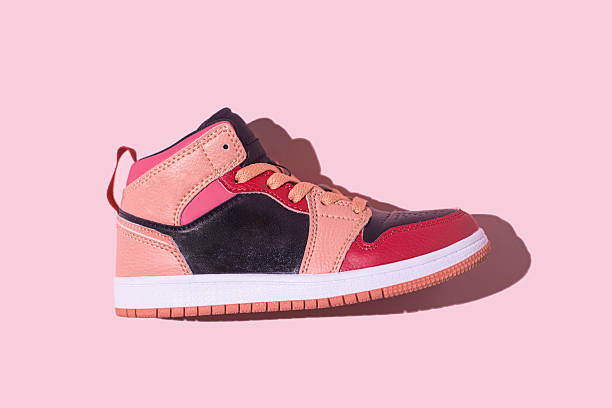
The shoe’s origin itself was an act of defiance. Nike designed the Air Jordan 1 in bold red and black, colors that broke every unwritten rule of NBA footwear. When the league banned the shoe for lacking sufficient white, Nike turned that ban into the most effective advertising campaign in sports history. The famous “Banned” commercial framed the shoe as dangerous, rebellious, and forbidden. Jordan wore the shoe anyway, paying fines of five thousand dollars per game, which Nike happily covered. That manufactured controversy gave the Air Jordan 1 an outlaw mystique. For young fans, wearing the shoe meant sharing in Jordan’s refusal to conform. No prior sneaker had ever carried such narrative weight. The black and red colorway, later known as “Bred,” became the most recognizable silhouette in basketball, not because of its technical superiority, but because of the story stitched into its leather.
Yet the Air Jordan 1 was not merely a marketing accident. Its design, credited to Peter Moore, featured a high-top silhouette that hugged the ankle while offering a sleek, almost dress-shoe profile. The swoosh was stretched thin and the famous Wings badge adorned the collar. The shoe was built from premium leather at a time when most competitors used canvas or synthetic materials. The price tag of sixty-five dollars was shockingly high, nearly double the cost of standard basketball sneakers. But that price point was deliberate. The Air Jordan 1 was positioned as a luxury item, not just athletic gear. It appealed to consumers who wanted to wear a piece of Jordan’s greatness, even if they would never step on a court. This shift from performance to aspiration opened a new economic lane. Sneakers became collectible art objects, and the Air Jordan 1 was the first masterpiece.
The cultural resonance of the Air Jordan 1 extended far beyond the hardwood. In the late eighties and nineties, hip-hop artists, graffiti writers, and streetwear pioneers adopted the shoe as a badge of authenticity. The colorful releases, including the “Chicago” red, white, and black, and the metallic series, allowed wearers to express personality in a way that plain white gym shoes could not. Michael Jordan’s airborne style, captured in the famous “Jumpman” logo, synced perfectly with the confident swagger of early rap. When Spike Lee featured the shoe in his film Do the Right Thing, Radio Raheem’s white and red pair became a character in the story. Suddenly, the Air Jordan 1 was not just a basketball shoe; it was a visual shorthand for urban resilience, creativity, and pride. This cultural embedding ensured that the shoe’s legacy would outlast Jordan’s playing career.
Perhaps most importantly, the Air Jordan 1 established the resale market that now dominates sneaker culture. Early collectors realized that limited colorways would disappear from shelves rapidly. The scarcity bred desire, and desire bred a secondary economy. People lined up overnight, traded pairs, and paid premiums. This behavior was unheard of in the mid-eighties. Today, platforms for reselling sneakers are a billion-dollar industry, and the Air Jordan 1 remains a cornerstone of that economy. Every retro release causes pandemonium, because collectors understand that owning an original or early edition is akin to owning a piece of history. The shoe’s constant reinvention through limited drops, collaborations with brands like Off-White and Travis Scott, and colorway experiments keeps it perpetually relevant. Yet beneath every new iteration lies the same foundational DNA that changed everything in 1985.
The Air Jordan 1 proved that a sneaker could be a canvas for identity, a symbol of social status, and a financial asset. It blurred the line between sport and fashion, between utility and art. Without the Air Jordan 1, there would be no sneaker conventions, no SNKRS app, no months-long anticipation for a numbered drop. There would still be athletic shoes, but there would not be a culture built around them. The shoe’s true innovation was not its cushioning or its traction, but its ability to make every wearer feel like they were defying a ban, pushing boundaries, and flying above the ordinary. That feeling, stitched into every pair, remains the most enduring legacy of the Air Jordan 1. It is not just an iconic model; it is the archetype that birthed an entire universe of passion and obsession.
Sneaker Legacy
Articles