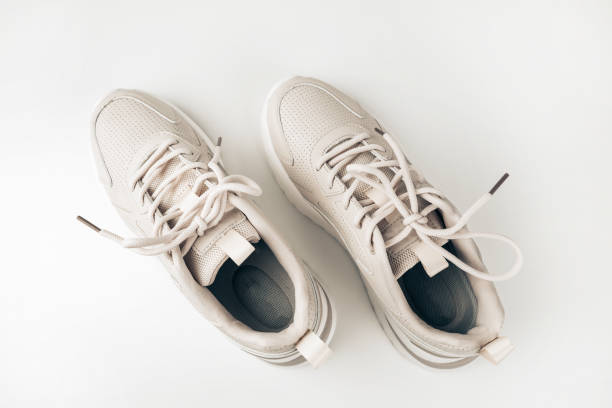
The Anatomy of a High-Top Basketball Sneaker: Balancing Ankle Support with On-Court Agility

The high-top basketball sneaker stands as one of the most iconic and functionally complex footwear designs ever created. Born from the raw athletic demands of a game built on explosive jumps, lateral cuts, and sudden stops, the high-top silhouette has evolved far beyond a simple leather shell. Its true genius lies in the delicate equilibrium between two seemingly opposing forces: the need for rigid ankle support to prevent injury and the requirement for unimpeded freedom of movement to execute split-second maneuvers. Understanding this balance reveals why the high-top remains a cornerstone not only of basketball performance but also of sneaker culture itself.
At its core, the high-top’s defining feature is the extended collar that wraps around the ankle. This design was not an aesthetic choice but a direct response to the high incidence of ankle sprains in early basketball. When a player lands awkwardly after a rebound or changes direction sharply, the ankle joint can roll inward or outward beyond its natural range. The high-top collar acts as a mechanical brace, using stiff materials like padded leather, synthetic overlays, or integrated thermoplastic reinforcements to limit excessive inversion and eversion. Yet early models proved too restrictive. Players found that a rigid, immobile cuff reduced their ability to plantarflex and dorsiflex the foot, essential for pushing off the floor or bending low on defense. Modern high-tops solve this by incorporating articulated ankle pads, flexible mesh panels, and strategic notching. The collar is often cut lower at the Achilles tendon while remaining high around the malleoli, allowing the calf to move naturally while the ankle bones themselves remain cradled in place. This anatomical sculpting represents a triumph of biomechanical engineering over simple bulk.
Equally critical to the high-top’s performance is the outsole grip, a topic that receives far less attention than cushioning or upper materials. The grip of a basketball sneaker dictates how decisively a player can stop, start, and pivot. Hardwood courts are polished and often dust-laden, creating a low-friction surface. High-top basketball sneakers tackled this challenge early with the herringbone tread pattern, first popularized by the Converse All Star in the 1910s and perfected by Nike and adidas in subsequent decades. The herringbone’s zigzag lines provide multidirectional traction, biting into the court whether the player is moving forward, backward, or sideways. But traction cannot be considered in isolation from flexibility. A high-top with a rigid, unyielding outsole would transfer all forces to the upper ankle brace, potentially causing stress fractures or knee strain. So modern outsoles are designed with flex grooves that mirror the foot’s natural bending points. These grooves allow the forefoot to roll smoothly while the heel remains stable, ensuring that the grip works in harmony with the player’s stride rather than fighting it.
The materials used in high-top construction further modulate the support-versus-mobility equation. Traditional leather high-tops offered excellent durability and lateral containment but were heavy and breathless, causing fatigue and overheating. The shift to synthetic leathers, knit textiles, and woven composites has dramatically reduced weight while preserving structural integrity. Flyknit and Primeknit uppers, for example, provide a sock-like fit that moves with the foot, but they require additional support layers—often in the form of fused overlays, internal straps, or external lacing cages—to maintain ankle security. The lacing system itself is a sophisticated mechanism. High-tops typically extend the eyelets higher up the collar, allowing the player to tighten the fit around the ankle. Some models use asymmetrical lacing that pulls the foot toward the lateral side, counteracting the common tendency to roll outward. Others incorporate strap systems that cross over the midfoot and heel, locking the foot in place without constricting the Achilles.
Perhaps the most instructive example of this balancing act is the lineage of signature high-tops worn by legendary players. Michael Jordan’s early Air Jordans featured a high-cut collar reinforced with a polyurethane strap in the Air Jordan III, which gave stability without sacrificing the ability to perform his signature fadeaway jump shot. Decades later, LeBron James’s signature line pushed the high-top to new extremes, using full-length carbon fiber plates and cushioning units that sat above the footbed to lower the center of gravity while still offering extreme ankle lockdown. Conversely, players like Kyrie Irving demanded lower profiles even in high-top silhouettes, insisting on a collar that hugged the ankle without limiting the sharp, unpredictable changes of direction that defined his game. These preferences underscore that there is no universal high-top design; the ideal balance is personal, shaped by body mechanics, playing style, and position.
The high-top’s influence extends well beyond the hardwood. Its silhouette has become a cultural signifier, appropriated by hip-hop, skateboarding, and street fashion. Yet the functional origins remain embedded in every pair. When a sneaker enthusiast laces up a high-top for casual wear, they are benefiting from decades of refinement in ankle support and traction design, even if they never step on a court. The padded collar that once prevented a sprained ankle now provides a comfortable hug around the calf. The herringbone outsole that once gripped a slippery baseline now offers sure footing on city pavement. This dual life—as performance tool and lifestyle statement—is what elevates the high-top to its enduring status.
In the final analysis, the high-top basketball sneaker is a masterpiece of compromise. It does not offer perfect ankle protection, because no shoe can replace strengthening and conditioning. It does not grant unlimited agility, because the body has its own anatomical limits. What it does is extend the athlete’s capability by a few critical degrees, shaving milliseconds off a cut, absorbing a fraction of an impact, and reducing the risk of a season-ending twist. That incremental gain, refined through trial, innovation, and the unrelenting demands of the game, is the true legacy of the high-top. Whether on a championship court or a city sidewalk, it remains a testament to how thoughtful design can bridge the gap between protection and performance.
Articles