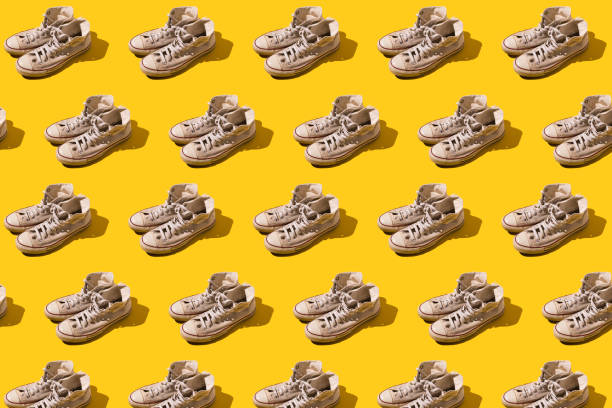
The Converse Chuck Taylor All Star: A Canvas of Rebellion and Timeless Style

When the sneaker world speaks of icons, few silhouettes carry the weight of history quite like the Converse Chuck Taylor All Star. Born on the basketball court in 1917 as the Converse All Star, its journey from athletic necessity to global symbol of counterculture is a testament to the power of simplicity and authenticity. The Chuck Taylor, with its trademark star patch and white rubber toe cap, has transcended generations, subcultures, and continents, earning its rightful place alongside the Puma Suede and Adidas Superstar in the pantheon of street credibility.
The story begins in the early twentieth century when Converse Rubber Shoe Company introduced a high-top canvas sneaker designed for basketball players. In 1921, a basketball player named Charles “Chuck” Taylor walked into Converse looking for work and ended up becoming a salesman and brand ambassador. His name was added to the ankle patch in 1932, and the shoe officially became the Chuck Taylor All Star. For decades, it dominated professional basketball, worn by legends like Julius Erving and Larry Bird before the rise of modern performance sneakers. But it was off the court that the Chuck Taylor would forge its most enduring identity.
The 1950s saw the sneaker adopted by American youth culture, particularly rebellious teenagers influenced by James Dean and Marlon Brando. The canvas construction and simple design made it affordable and accessible, appealing to those who rejected the polished conformity of adult society. By the 1960s, the Chuck Taylor had become the unofficial footwear of rock and roll. The Ramones, a band that defined punk rock, famously wore them on every album cover, cementing the shoe’s association with raw, anti-establishment energy. Meanwhile, the rise of skateboarding culture in the 1970s embraced the Chuck Taylor for its board feel and durability, even though the thin sole offered little protection. Skaters like Jay Adams and later the Bones Brigade made the low-top version a skatepark staple.
Perhaps the most profound cultural connection occurred in the 1980s and 1990s, when hip-hop and B-boy culture adopted the Chuck Taylor. While the Puma Suede and Adidas Superstar had their own deep roots in breakdancing and street dance, the Chuck Taylor offered a lightweight, flexible option for popping, locking, and footwork. B-boys and b-girls valued its grip on cardboard and linoleum, and the shoe’s minimalist look allowed dancers to express their own style rather than the shoe’s logo. The Chuck Taylor became a canvas for personal expression—literally, as dancers often customized them with paint, patches, or worn-out soles that told stories of countless battles.
The street credibility of the Chuck Taylor lies in its refusal to evolve for fashion’s sake. While other sneakers chased technology and performance updates, Converse kept the design essentially unchanged for over a century. This stubborn consistency allowed the shoe to be reinterpreted by every new generation. In the 1990s, grunge and alternative rock fans wore them as a badge of authenticity, torn and dirty, against the glossy trend of designer sneakers. In the 2000s, the high-top became a staple of indie fashion and even high fashion collaborations with designers like Rei Kawakubo and Virgil Abloh, who recognized that the Chuck Taylor’s emptiness was its greatest luxury.
The Chuck Taylor All Star has never been about innovation in cushioning or traction. Its appeal is emotional and cultural. It belongs to no single tribe but has been claimed by many: punks, skaters, hip-hop dancers, artists, activists, and everyday rebels. The shoe’s ability to absorb meaning without losing its shape is why it remains relevant in the Sneaker Hall of Fame. Alongside the Puma Suede’s b-boy legacy, the Chuck Taylor represents a different kind of street credibility—one rooted in democratization and subcultural ownership. You do not wear Chuck Taylors to be noticed; you wear them to belong to a lineage that values substance over hype.
In an era of limited releases and hyper-branded collaborations, the Chuck Taylor remains a quiet giant. Its rubber toe cap has been scuffed on subways, pruned through mosh pits, and glided across dance floors. It is the sneaker that asks nothing of you except that you live in it. For the sneaker enthusiast, owning a pair is not about rarity or resale value; it is about honoring a history that is still being written. The Chuck Taylor All Star proves that the most iconic model is often the one that lets the person wearing it become the icon.
Articles