The Critical Decision: Sole Separation Repairs and Professional Restoration
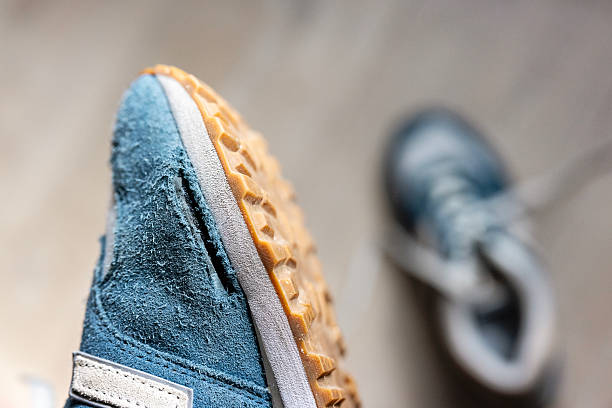
A sneaker collector’s worst nightmare often begins with a subtle sound—a faint peeling, a soft creak, or the quiet pop of glue giving way. Sole separation, the gradual or sudden detachment of the outsole from the midsole or upper, is one of the most common yet distressing afflictions in the world of footwear. When a beloved pair begins to yawn open at the toe or heel, the knee-jerk reaction is often to grab a tube of superglue and press the pieces back together. That impulse, however understandable, frequently leads to irreversible damage. Understanding exactly when to set aside the DIY mindset and ship the sneaker to a professional restoration specialist is the difference between a second life and a tragic burial.
Sole separation occurs for many reasons. Age is the primary culprit, as the polyurethane and rubber compounds that form modern outsoles and midsoles degrade over time, losing their elasticity and adhesive properties. Humidity, heat, and improper storage accelerate this hydrolysis process, turning once resilient sneakers into brittle artifacts. The iconic Air Jordan 3, the Nike Air Max 1, and even the latest Yeezy 350 V2 are all susceptible to this decay, regardless of their price point or cultural status. The moment you notice the sole lifting—even by a millimeter—the clock starts ticking. The longer you delay a professional restoration, the greater the risk of dirt, debris, and moisture infiltrating the gap, compromising the midsole foam and the structural integrity of the upper.
Many owners attempt to fix sole separation at home using household adhesives. The problem is that common glues like cyanoacrylate (superglue) or even standard contact cement are not formulated for the specific materials and stresses involved in sneaker construction. Superglue bonds instantly but becomes brittle, creating a rigid joint that cannot flex with the natural movement of the foot. This rigidity often leads to further cracking of the midsole or a clean break along a new fracture line. Worse, these adhesives seep into the foam and fabric layers, staining and hardening the materials beyond recognition. A professional restorer uses industrial-grade polyurethane or neoprene-based adhesives that remain flexible, resist moisture, and bond chemically with both rubber and EVA foam. They also employ techniques like surface sanding, solvent cleaning, and precise clamping under controlled pressure and temperature—steps that no home workshop can replicate.
The decision to send out for repairs should be made as soon as the separation exceeds a quarter-inch in length or depth, or if the sneaker shows signs of crumbling midsole foam, commonly known as “crumbling soles.” This condition is especially prevalent in older Air Jordan models and certain Nike Dunks from the late 1990s and early 2000s. When the foam turns into a grainy powder, no amount of glue can hold it together. A professional can perform a full sole swap, removing the degraded midsoles and replacing them with donor units from deadstock pairs or newly manufactured replicas that match the original shape and density. These sole swaps require surgical precision, including heat-separating the original outsole, cleaning the upper, applying fresh adhesive, and aligning the sole perfectly under a press. Attempting this at home usually results in misalignment, air bubbles, or permanent damage to the upper.
Another critical scenario is partial separation accompanied by warping. When only one side of the sole lifts, the upper may twist out of shape, causing the heel counter to sit askew or the toe box to bulge. A professional restorer can often correct this warping by carefully reapplying the sole while the upper is held in a last (a foot-shaped form) to restore its original silhouette. This is particularly important for high-value sneakers like the Off-White Air Jordan 1 or the Nike Air Yeezy 2, where even a slight asymmetry can reduce the resale value by hundreds of dollars. The restorer also inspects the interior for torn strobel boards, degraded sock liners, or damaged heel clips—issues that an untrained eye would miss until the entire shoe collapses months later.
Cost is often the deciding factor. A professional sole reglue can range from fifty to a hundred and fifty dollars, depending on the complexity and the sneaker’s rarity. A full sole swap climbs higher, sometimes exceeding two hundred dollars. For a pair of sneakers worth five hundred dollars or more, this investment makes clear sense. But even for shoes with sentimental value—a first pair of Air Force 1s, a vintage pair of Asics Gel-Lyte IIIs—the restoration cost is a fraction of the emotional loss. Rushing a DIY repair that fails not only wastes the shoe but also makes future restoration far more difficult, as the residual superglue must be mechanically removed, often scarring the surrounding materials.
The final consideration is the type of sneaker. Boots, skate shoes, and heavy-duty trainers with stitched soles sometimes tolerate amateur repairs better. But athletic sneakers, especially those with encapsulated air units, carbon fiber plates, or translucent outsoles, demand professional handling. The internal air bubbles in a Nike Air Max can be punctured by aggressive clamping. The carbon fiber shank in a Jordan 11 can snap if the sole is twisted during a botched glue job. The translucent rubber on a Yeezy 350 can yellow unevenly if exposed to the wrong solvent. These are not hypothethical risks—they are documented disasters in restoration forums.
Ultimately, the moment you spot that first hairline gap between rubber and foam, pause before reaching for the glue. Assess the age of the shoe, the extent of the damage, and the value—both monetary and sentimental. If the separation is fresh, smaller than a thumbnail, and the surrounding foam feels firm, a careful application of a flexible sneaker-specific adhesive might buy you time. But if the foam is crumbling, the separation is spreading, or the upper shows signs of distortion, professional restoration is not an option—it is a necessity. The trained hands of a restoration specialist preserve not just the structure of the sneaker but the story it carries, allowing you to lace up a piece of history rather than burying it in a landfill.
Articles