
The Economics of Regional Exclusivity: How Geographic Scarcity Fuels Sneaker Obsession
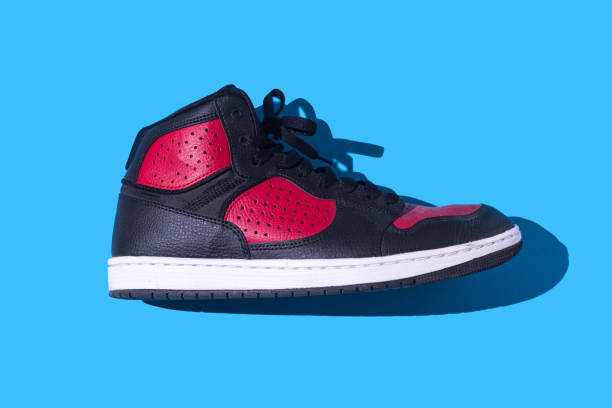
The modern sneaker landscape is no longer a level playing field. While global brands release marquee silhouettes to a worldwide audience through massive online drops, a parallel, more elusive economy thrives on the principle of geographic restriction. Regional exclusives, those sneakers deliberately confined to a single country, continent, or even a specific city, represent the purest form of artificial scarcity in the drop culture ecosystem. Understanding the mechanics of these releases requires navigating not just a calendar but a complex map of availability that dictates value, desire, and the very rhythm of the collector community.
At its core, the regional exclusive strategy is a masterclass in controlled distribution. A brand like Nike or Adidas might reserve a limited colorway of an Air Jordan or a Yeezy 500 solely for the Chinese market, while another variation stays locked within the borders of Europe. This is not accidental logistics; it is a calculated move to create micro-ecosystems of hype. When a shoe is only available in Tokyo or London, it becomes a trophy for local enthusiasts and a grail for international collectors who must now rely on proxies, travel, or the secondary market to obtain it. This geographic scarcity amplifies the perceived value far beyond the retail price, often tripling or quadrupling it within hours of the regional drop.
The implications for the release calendar are profound. A global release timeline is relatively predictable; brands announce a date, and a worldwide audience queues digitally. But regional exclusives operate on a fragmented schedule that demands constant vigilance. A colorway that drops in Paris in June might never appear in North America, only to resurface in a different configuration in Australia months later. For the dedicated enthusiast, this creates a continuous scavenger hunt. Instead of a single launch date, the calendar becomes a patchwork of time zones and geographic coordinates. Tools like global availability maps, often crowd-sourced within forums and social media groups, become essential survival gear. These maps track not only where a shoe is releasing but also which retail doors have received shipments, which countries have unique lottery systems, and where resale markets are most active.
The secondary market, however, is where the true impact of regional exclusives is felt. A sneaker that retailed for two hundred dollars in a specific Southeast Asian market can command a premium of five hundred to a thousand dollars on a global resale platform like StockX or GOAT, simply because it cannot be obtained anywhere else. This price disparity creates an arbitrage opportunity for savvy travelers and local residents, who can purchase at retail and ship internationally for a profit. Yet it also introduces a corrosive element of exclusivity based on birthplace rather than demand. A collector in Nebraska may desire the same shoe as someone in Seoul, but the former will pay a steep tax simply because of postal codes. This fuels a gray market of middlemen, known as “pluggers” or “proxy runners,” who specialize in navigating regional release processes. These individuals build networks of local raffle entries, in-store connections, and bot-assisted checkout systems tailored to specific country restrictions.
Regional exclusives also deepen the connection between sneaker culture and local identity. A shoe designed for the Japanese market often incorporates cultural motifs, premium materials, or historical references that resonate with that audience. When such a shoe becomes a global commodity through resale, it loses some of its cultural specificity, but it gains a new layer of story. The collector who owns a regional exclusive is not just showing off a rarity; they are displaying a piece of geography, a narrative of travel or connection. This transforms the sneaker from a consumer product into a souvenir of globalized fandom.
Nevertheless, navigating this map of availability is fraught with frustration. Brands rarely announce regional exclusives with transparency, often fueling accidental hype rather than genuine appreciation. A release that is only available in one country can feel like a slap to enthusiasts elsewhere, especially when the same silhouette was broadly available in a different colorway. This creates a two-tiered system of haves and have-nots that mirrors broader economic disparities. The collector who can afford to pay resale or travel to a release has a distinct advantage over someone who can only access local raffles. The drop culture that prides itself on community and passion is thus undercut by a geography of privilege.
In summary, regional exclusives are the hidden engine of the sneaker economy. They fragment the release calendar into a global puzzle, force collectors to become cartographers of scarcity, and enrich the secondary market with a premium on place. Understanding this dynamic is essential for anyone who wants to move beyond casual fandom into the deeper currents of drop culture.
Articles