The Enduring Case for High-Top Basketball Sneakers: Ankle Support, Grip, and Court Control
High-top basketball sneakers occupy a special place in performance footwear because they solve a very specific problem: the body must move explosively in multiple directions while the foot and ankle absorb landing forces, pivot, stop, and push off. A high-top silhouette extends above the ankle collar, but its real value is not simply extra material. It is the way that collar, lacing system, midsole, outsole, and upper work together to create a secure connection between player and court. For guards who cut sharply, forwards who post up, and centers who battle for rebounds, that connection can mean the difference between a confident drive and a hesitant step.
Ankle support begins with fit. A high-top shoe can only protect if it locks the heel into the heel counter and wraps the midfoot without pinching. Modern designs use padded collars, internal straps, and lacing that extends higher up the instep to distribute pressure. Some models incorporate TPU shanks or molded heel clips that resist rolling, while others rely on softer textiles that allow natural flexion. The best high-tops do not feel like casts. They feel like an extension of the leg, offering lateral stability when the foot lands awkwardly and proprioceptive feedback that helps the wearer sense the court. That feedback matters because ankles rarely fail in isolation; they fail when the body is off balance, the foot is misaligned, and the shoe cannot help the player recover.
Grip is the other half of the equation. A basketball shoe’s outsole must handle hardwood, dusty gym floors, and occasional outdoor surfaces. Herringbone patterns remain a classic because they channel dust and provide multidirectional traction, but many brands now combine herringbone with radial or zigzag zones for specific movements. Rubber compounds are tuned for softness and durability: too hard and the shoe slips; too soft and it wears down quickly. The best high-top basketball sneakers balance these traits, giving players the confidence to stop on a dime, explode toward the rim, and slide laterally on defense without losing footing. Grip is not just about speed. It is about safety. A shoe that holds the floor allows the ankle to trust the planted foot, reducing the awkward roll that leads to sprains.
The relationship between ankle support and grip becomes clear during deceleration. When a player sprints downcourt and plants to change direction, the outsole grips the floor while the upper and collar resist the ankle’s urge to continue outward. If either element fails, the other is compromised. A sticky sole with a loose collar can trap the foot while the ankle rolls over it. A supportive collar with a slick sole can cause the whole body to slide, placing torque on the knee and ankle. High-top basketball sneakers are therefore systems, not isolated features. Their height is a visible promise of support, but their performance depends on engineering that players may never see: cushioning foams that absorb impact, torsion plates that stabilize the midfoot, and heel counters that keep the rearfoot centered.
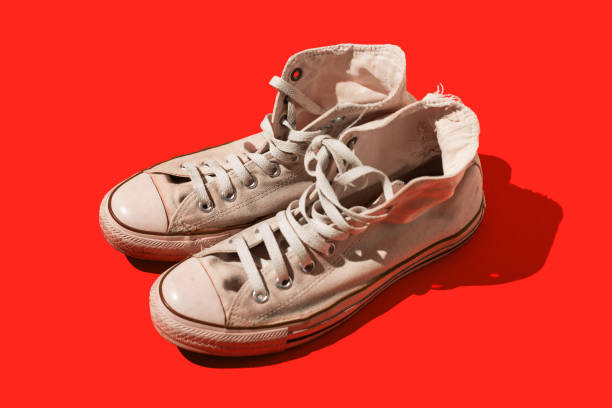
Style has always played a role in high-top basketball sneakers, from leather classics to knit uppers and bold colorways. Yet the cultural appeal grows from function. A high-top looks ready for competition because it is built for competition. Collectors prize certain models for their silhouettes, but players return to them for the way they feel after repeated stops, jumps, and pivots. The shoe becomes a record of movement: creases at the toe, scuffs on the outsole, and a collar that has molded to the ankle. That personal break-in process is part of the bond between player and sneaker.
Choosing a high-top basketball sneaker is ultimately about matching design to playing style. A lighter, lower-profile high-top may suit a quick guard who values court feel. A bulkier model with maximum cushioning and a rigid heel may serve a larger player who needs impact protection. The common thread is a secure fit, reliable traction, and a collar that supports without restricting. When those elements align, the shoe disappears from thought. The player simply moves, cuts, lands, and responds. That is the quiet excellence of high-top basketball sneakers: they do not make the play, but they make the play possible. For anyone who has rolled an ankle or slipped on a dusty baseline, that distinction is everything.
Articles