The Enduring Legacy of High-Top Basketball Sneakers in Ankle Protection
Few pieces of athletic footwear carry the symbolic weight of the high-top basketball sneaker. From its earliest canvas iterations to the modern marvels of engineered knit and responsive cushioning, the high-top has remained a cornerstone of basketball footwear design. Its primary mission has always been rooted in two fundamental needs: safeguarding the ankle against the sudden twists and landings inherent to the game, and providing the grip necessary to cut, pivot, and explode toward the basket. Yet the high-top’s story is not one of static purpose; it is a narrative of continuous adaptation, balancing protection with agility, and tradition with biomechanical innovation.
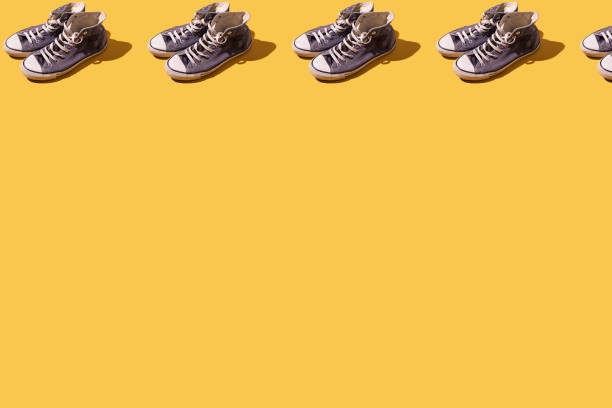
The connection between high-top sneakers and ankle support began in the early twentieth century, when basketball was still played in canvas shoes that offered little more than a thin rubber sole. The Converse All Star, introduced in 1917, set the template with its canvas upper that rose above the ankle. For decades, players relied on the simple act of lacing tightly to create a compressive sleeve around the joint. This rudimentary approach reduced lateral ankle sprains by limiting excessive inversion and eversion, though it came at the cost of some mobility. Coaches and trainers quickly recognized that the stiff canvas construction could also provide a psychological buffer—players felt more secure, which allowed them to compete with greater intensity.
As the game evolved in the 1970s and 1980s, so did the high-top. The introduction of leather uppers added durability and a more customizable fit, but the real breakthrough came from external support structures. The Nike Air Force 1, launched in 1982, featured a thick ankle strap that could be fastened for additional lockdown. The concept behind such straps was simple: they worked in tandem with the lacing system to pull the heel deep into the shoe and cinch the collar around the ankle mortise. This snug fit acted as a prophylactic against the most common mechanism of ankle injury—the rapid, uncontrolled roll to the outside.
The 1990s witnessed an explosion of support technologies. Brands began embedding rigid plastic heel counters, TPU clips, and even inflatable air bladders within the collar. The Reebok Pump, with its manual inflation system, allowed players to customize the pressure around their ankles, creating a fit that mimicked a taped joint. Meanwhile, the Nike Air Jordan series pioneered the use of foam ankle collars that were both thick and sculpted, hugging the Achilles and medial malleolus. These designs acknowledged that the ankle needed not only restraint but also proprioceptive feedback—the subtle sensation of the shoe’s presence that reminds the brain where the foot is in space.
In the 2000s, the rise of lightweight synthetic materials and mesh challenged the high-top’s dominance. Some players and designers argued that modern athleticism demanded lower-cut shoes that freed the ankle for greater range of motion. Yet the high-top persevered, morphing into something smarter. Instead of massive foam towers, manufacturers began using dynamic lacing systems and internal heel counters that provided support without adding bulk. The Nike Hyperdunk series exemplified this shift, weaving Flywire cables into the upper to create a tensioned web that locked down the foot while allowing the collar to remain flexible.
Today, high-top basketball sneakers are more sophisticated than ever. They often incorporate carbon fiber plates in the midsole to reduce torsional flex, coupled with multidirectional herringbone tread patterns that maintain grip on both clean and dusty courts. Ankle support is no longer just about the height of the collar; it is a holistic system involving the midsole shape, the outsole traction, and the lacing geometry. A proper high-top now guides the foot into a neutral position during jumps and landings, distributing impact forces across the lower leg rather than concentrating them at the ankle.
Despite advances in sports medicine and strength training, ankle sprains remain the most common injury in basketball. The high-top, therefore, continues to serve a vital role. Research suggests that while a high-top cannot prevent all injuries, it can reduce the severity of sprains by limiting the range of dangerous motion. For players with a history of ankle instability, the high-top is often a non-negotiable component of their gear. Moreover, the cultural weight of these sneakers cannot be ignored. The silhouette of a high-top basketball shoe—clean lines reaching above the ankle—has become synonymous with the sport itself, an icon worn by legends and rookies alike.
From the dusty courts of the YMCA to the polished hardwood of professional arenas, the high-top basketball sneaker has adapted without losing its soul. It remains a testament to the idea that good design listens to the body’s needs: protection, traction, and the confidence to move without hesitation. As materials continue to advance and data from motion-capture labs refines every millimeter of the shoe, the high-top will undoubtedly continue to evolve. Yet its core promise will likely stay unchanged—to anchor the player’s first step, shield the landing, and keep the game moving forward.
Articles