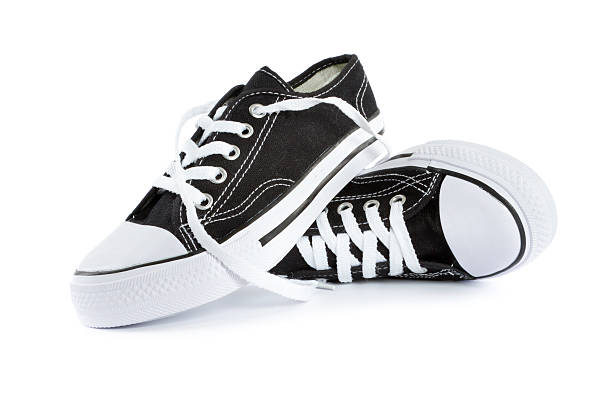
The Forgotten Innovator: How Chuck Taylor Transformed a Rubber Shoe into a Basketball Icon

In the early decades of the twentieth century, basketball was a sport still finding its identity. Invented in 1891 by Dr. James Naismith, the game was initially played in gymnasiums with a soccer ball and peach baskets. Footwear was an afterthought—players wore whatever leather or canvas shoes they owned, often with little traction or ankle support. Into this formative landscape stepped a man who would not only change the way athletes played but also create an enduring cultural symbol. Chuck Taylor, a former professional basketball player and salesman, understood that the shoe on a player’s foot could be as important as the ball in their hands. His collaboration with the Converse Rubber Shoe Company resulted in the Chuck Taylor All Star, a model that revolutionized athletic footwear and remains an enduring icon decades after its debut.
The story begins in 1917, when Converse introduced its first canvas basketball shoe, the All Star. It was a modest design: a high-top canvas upper, a rubber sole, and minimal cushioning. The shoe was functional but not revolutionary. At the time, basketball shoes were little more than indoor sneakers, offering grip on wooden floors but little else. Then came Charles H. “Chuck” Taylor, an Indiana native who had played semi-professional basketball and barnstormed with teams across the Midwest. Taylor saw potential in the All Star. He approached Converse in 1921, not as a designer but as a salesman and ambassador. He proposed that the shoe could be improved by adding better ankle support and a more durable toe cap, and he offered to promote it directly to players and coaches. Converse agreed, and Taylor became a traveling evangelist for the brand, visiting hundreds of high schools, colleges, and YMCAs to demonstrate the shoe’s benefits.
Taylor’s impact was twofold. First, he influenced the shoe’s design. The classic Chuck Taylor features that became standard—the star patch on the ankle, the reinforced toe, the distinctive diamond pattern on the sole—were largely his contributions. He insisted on a non-slip tread that could handle the quick pivots and stops of basketball, and he championed a high-top silhouette to protect ankles from sprains. Second, Taylor’s relentless marketing created a grassroots movement. He convinced entire teams to adopt the All Star, and by the 1930s, the shoe was the dominant basketball footwear in the United States. In 1932, Converse officially added Taylor’s name to the shoe, creating the “Chuck Taylor All Star” that would become a household name.
The significance of this partnership extends beyond mere commercial success. Taylor’s work helped professionalize basketball footwear at a time when the sport was evolving from a recreational pastime into a competitive, organized endeavor. The Chuck Taylor All Star provided the first generation of basketball players with a consistent, reliable tool. It offered ankle stability, durable grip, and a lightweight feel that allowed for faster movement. Players like George Mikan, the first dominant big man in the NBA, wore Chuck Taylors. The shoe was also adopted by the U.S. military during World War II as a training shoe, further embedding it in American culture.
Yet the Chuck Taylor’s role in basketball history is often romanticized or reduced to nostalgia. What is less frequently discussed is how Taylor himself, despite his outsized contributions, remained a relatively unsung figure. He was not a corporate executive or a famous athlete. He was a hustler, a road warrior who drove thousands of miles each year in a station wagon filled with sample shoes, often sleeping in the car to save money. He signed autographs, conducted clinics, and listened to coaches’ complaints. His intimate understanding of the game allowed him to refine the shoe in ways that factory engineers could not anticipate.
By the 1960s, however, the basketball world began to change. Converse faced competition from newer brands like Adidas and Nike, which introduced lighter, more ergonomic designs with advanced cushioning. The Chuck Taylor, with its flat rubber sole and minimal padding, became outdated for elite performance. Yet the shoe did not die. Instead, it was reborn as a casual footwear icon, embraced by countercultures, musicians, and artists. From punk rockers in the 1970s to skateboarders in the 1990s, the Chuck Taylor transcended its athletic origins.
Today, the legacy of Chuck Taylor and his eponymous shoe is a lesson in how innovation often comes from the margins. Taylor was not a scientist or a designer in the modern sense. He was a player who understood friction, weight distribution, and the psychological comfort of a familiar shoe. His insistence on listening to athletes rather than profit margins created a product that outlasted its original purpose. The Chuck Taylor All Star remains the best-selling basketball shoe of all time, with over a billion pairs sold—a testament to a man who believed that a simple canvas sneaker could carry the weight of a sport’s history. In the end, the story of the Chuck Taylor is not just about a shoe but about a symbiotic relationship between an athlete and a company, a partnership that defined an era and left an imprint on global culture that still resonates.
Articles