The Hidden Art of Authenticating Vintage Sneakers: Why Age Alone Isn’t Proof
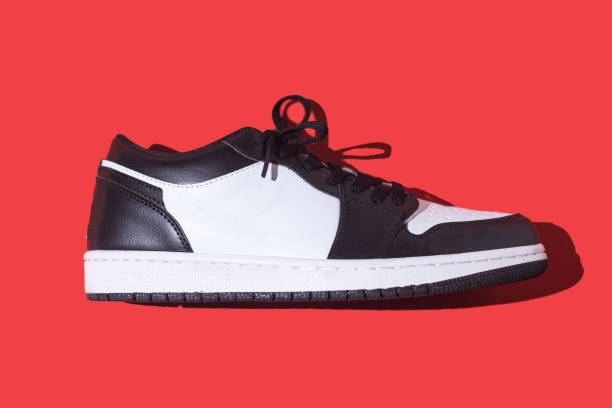
The sneaker resale market has exploded into a multi-billion-dollar ecosystem where a single pair of deadstock Air Jordan 1s can trade for the price of a used car. This gold rush, however, has attracted counterfeiters who have grown increasingly sophisticated. While most authentication guides focus on modern releases—comparing box labels, checking QR codes, and examining the stiffness of new soles—the vintage segment presents a far more treacherous terrain. A pair of sneakers from the 1980s or 1990s carries age-related wear, yellowing, and material degradation that can easily be mistaken for authenticity. The truth is that age alone is never proof of legitimacy. In fact, many experienced replicators now artificially distress their fakes to mimic vintage patina, exploiting the very assumption that old equals real. To navigate this minefield, collectors must learn to read the subtle physical language of decades-old manufacturing, understand the limits of oxidation, and recognize when a story—the provenance—matters more than the shoe itself.
The first trap lies in the materials. Vintage sneakers, especially those from Nike, Adidas, and Converse before the late 1990s, used specific leathers, rubbers, and glues that are nearly impossible to replicate today. For instance, the polyurethane foam used in midsoles of early Air Jordans was formulated differently; it typically crumbles or becomes brittle after twenty-five years, a process called hydrolysis. A pair of 1985 Air Jordan 1s that still has flexible, bouncy foam is either a well-preserved anomaly or, more likely, a modern reproduction. Similarly, the rubber outsoles of vintage Converse Chuck Taylors were made with a higher natural rubber content, giving them a distinctive chalky feel and a tendency to crack rather than peel. Counterfeiters often use modern synthetic blends that remain pliable and shiny. The tell is not just the presence of age but the type of degradation. Genuine vintage leather develops a fine, tight crackle pattern called crazing, while fake “distressed” leather shows larger, irregular fissures that look deliberate. A magnifying loupe and a trained eye are indispensable here, but so is a working knowledge of the chemistry behind sneaker materials.
Stitching is another critical frontier. Factory stitching from the 1980s was done on industrial machines with specific thread tensions and needle gauges. The stitch count per inch on an original pair of Nike Air Force 1s from 1982 is significantly lower and more uniform than on modern reproductions. More importantly, the thread itself was often cotton or a cotton-poly blend that has a matte finish and will fray slightly at the edges after decades. Counterfeit vintage sneakers commonly use bright, synthetic polyester thread that resists fraying, a dead giveaway if you know where to look—especially around the heel counter and swoosh. Also consider the way the shoe was assembled. Vintage shoes used cement that was applied in a molten, thick layer, creating a distinctive “glue line” that sometimes seeps out slightly and yellows with age. Modern fakes use precise, thin industrial adhesives that leave almost no residue or, conversely, an overly thick and glossy glue line that looks nothing like the dried, brittle lumps of five-dollar glue from 1990.
Beyond the physical shoe, the packaging and documentation of vintage sneakers offer clues that are often overlooked. Boxes from the 1980s were printed with a different paper stock—softer, less rigid, and with a faint grayish undertone. The ink on the size label often smudges when rubbed because it was a low-temperature curing process. Reproduction boxes, by contrast, are printed on high-quality cardstock with sharp, flawless lettering. Even the smell is a factor. Real vintage cardboard develops a musty, slightly sweet odor from decades of slow decomposition. Fakers spray their boxes with artificial “old book” perfume that fades quickly or smells chemically. Never underestimate the power of your nose. Similarly, the original paper stuffing inside the shoe—often newspaper or simple tissue—can reveal the date and region of manufacture. A pair claiming to be from 1989 that has glossy, modern packing paper is suspect.
Provenance has become the most powerful tool in the vintage collector’s arsenal, yet it is also the easiest to fabricate. A story of a pair bought at a garage sale in Ohio in 1995 is worthless without corroborating evidence. Authenticators now look for original receipts, store tags with period-specific barcode formats, and even photographs of the original owner wearing the shoes. The rise of digital forensics means that a simple screenshot of a eBay listing or a pixelated photo is not enough. The best way to protect yourself is to demand high-resolution photos of the insole stamp, the size tag inside the shoe (which often has unique font characteristics per factory), and the shape of the heel stitching. Compare these with authenticated examples from well-known collections or databases like the Sneaker Hall of Fame. If a seller balks at providing detailed images, walk away.
The community aspect of sneaker collecting has always been about shared knowledge, and that is never more vital than when dealing with vintage pieces. Forums, local meetups, and dedicated authentication groups on social media allow collectors to crowd-source opinions. A single confused detail—a midsole that looks twenty years old but has no cracking, or a box that smells “too new”—can be flagged by a dozen eyes. The best defense is humility: assume every vintage pair is a fake until proven otherwise. This mindset, combined with a deep understanding of the materials, manufacturing processes, and historical context of each model, separates the casual reseller from the serious collector. In the end, authenticity in vintage sneakers is not about a single data point like age or price. It is a tapestry woven from thread, leather, glue, paper, and memory. Learning to read that tapestry is the difference between owning a piece of history and owning an expensive costume.
Articles