
The Outrigger Flange: Engineering Lateral Confidence in Court Footwear
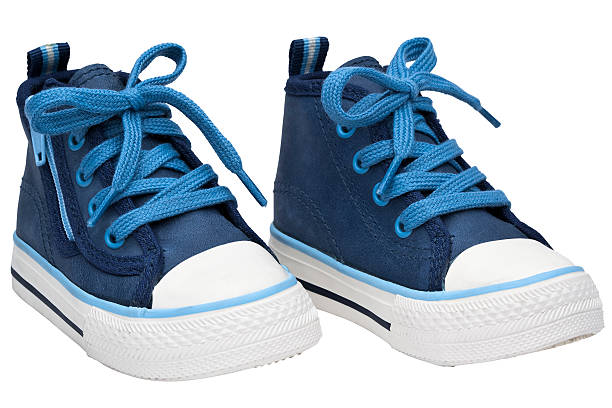
Lateral support often defines the difference between a confident pivot and a rolled ankle in court and training sports. As athletes plant, cut, and shift weight sideways, the shoe must act as an extension of the foot, resisting inversion and eversion forces that can exceed three times body weight. While many focus on ankle collars or lacing systems, the most critical component sits hidden at the sole level: the outrigger flange. This small, widened protrusion on the lateral edge of the outsole works on a simple mechanical principle. By increasing the effective contact width, it moves the tipping point further from the foot’s centre of rotation, creating a larger lever arm that resists rollover. Without an outrigger, a shoe allows the foot to rock precariously over its own edge during sudden lateral motions, making ankle sprains almost inevitable.
Performance testers place great emphasis on how the outrigger is shaped, positioned, and composed. In laboratory settings, they apply controlled inversion forces to a shoe mounted on a last, measuring the exact angle at which the outsole begins to lift. Shoes with well-designed outriggers demonstrate a delayed onset of that lift, meaning the athlete can hold a lateral plant for a fraction of a second longer. Pressure plate data from simulated cutting drills confirms this. A shoe with a proper outrigger shows a smooth lateral transition of the centre of pressure, while a shoe lacking one produces a sharp spike, signalling an unstable edge. Rubber hardness also matters. A durometer that is too soft compresses and deforms under load, neutralising the outrigger’s benefit. A very hard compound offers a crisp, grounded feel but can be jarring during landings. Therefore, many premium court shoes blend a moderately firm outrigger with softer adjacent foam to achieve both stability and impact absorption.
The outrigger does not act alone. It works with the midfoot shank, a rigid insert spanning the arch. Lateral stability requires resistance to torsional twisting, where the forefoot rotates relative to the heel. A flexible shoe that twists easily places enormous strain on the knee and hip, even if the ankle is stable. The shank and outrigger together create what testers call a locked-in lateral feel. In training shoes designed for multidirectional workouts, the shank might be slightly more flexible to allow natural foot mechanics, but the outrigger remains the primary guard against rollover. This coordination is why a simple visual inspection of a shoe’s outsole reveals its intended purpose: volleyball shoes feature a wide, low outrigger to manage deep impact angles, tennis shoes integrate the outrigger with drag pads for sliding on hard courts, and basketball models angle it upward for smooth defensive slides. Every sport places distinct demands on this single structural element.
In-depth performance reviews should always describe the outrigger’s dimensions and placement, yet this detail is frequently buried in marketing language. A forefoot width measurement taken at the lateral edge, along with the height of the outrigger from the ground, provides more meaningful data than vague claims of support. For example, a shoe with a 90 millimetre forefoot width and a 5 millimetre vertical flare offers inherently greater lateral stability than a narrow model with a rounded profile, regardless of how good the upper feels. Consumers can perform a quick ’’thumb roll test’’ at home by placing the shoe on a flat surface and pushing against the lateral edge. A stable shoe should resist tipping even under firm pressure. This practical method mirrors the lab equipment but does not require force sensors. It is a testament to the outrigger’s fundamental nature: the geometry itself is the technology.
Ultimately, the outrigger represents a quiet but deliberate act of engineering. It ensures that when an athlete pushes off in an unexpected direction, the ground remains firmly beneath the foot. As testing technologies evolve, the outrigger continues to be validated as a non-negotiable component for court and training sports. The next time you examine a performance shoe, look past the upper and focus on the lateral edge of the outsole. That small flange carries an outsized responsibility, balancing every cut, stop, and change of direction with silent precision. For anyone seeking true lateral stability, the outrigger is not a detail; it is the entire foundation.
Articles