The Unseen Influence of Film on Sneaker Resale Prices
The sneaker resale market has evolved into a multi-billion-dollar ecosystem driven by scarcity, nostalgia, and hype. Yet one of the most powerful, and often overlooked, catalysts for price surges is the documentary film. While release calendars and celebrity endorsements grab headlines, a well-crafted documentary can quietly transform a once-ignored silhouette into a grail worth thousands. These films do not merely chronicle history; they manufacture desire by embedding sneakers within narratives of struggle, innovation, and cultural rebellion. Understanding how documentaries shape valuation offers a deeper insight into the psychology of the collector and the mechanics of the secondary market.
Take, for example, the 2005 classic Just for Kicks. This documentary dissected the birth of sneaker culture from the playgrounds of New York to the global luxury stage. Before this film reached audiences, many casual wearers viewed sneakers as mere athletic equipment. But through interviews with designers, collectors, and hip-hop icons, Just for Kicks repositioned sneakers as artifacts of identity. The immediate aftermath saw a noticeable uptick in demand for models featured in the film, particularly early Air Jordans and Adidas Superstars. Resale prices on platforms like eBay and StockX climbed not just because the film reminded people of the shoes, but because it created a shared mythology. A sneaker that appeared in a documentary became a piece of a larger story, and collectors pay a premium for stories.
The documentary Sneakerheadz (2015) took this phenomenon a step further by focusing specifically on the resale frenzy itself. By capturing the adrenaline of auction battles, the obsessive storage methods, and the emotional highs and lows of flipping sneakers, the film validated the secondary market as a legitimate subculture rather than a frivolous hobby. This legitimacy attracted new investors who had previously viewed sneaker resale as a niche of teenage boys. When a documentary frames a pair of Yeezys as a financial asset comparable to blue-chip stocks, it effectively creates a new audience of speculators. The result is a price floor that artificially raises the value of any sneaker that appears in the film, even models that were previously considered undesirable.
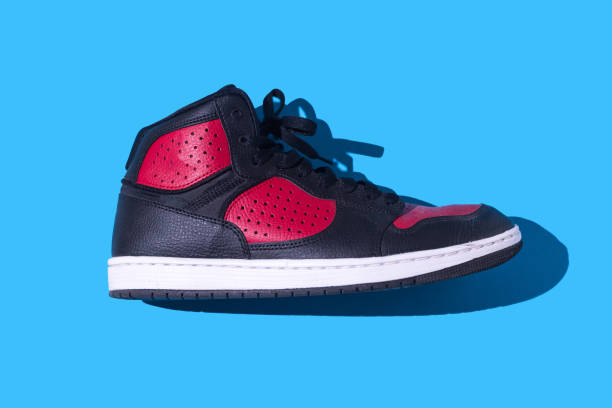
Perhaps the most dramatic example of documentary influence is The Last Dance (2020), the ESPN series about Michael Jordan and the Chicago Bulls. While not a sneaker-dedicated film, its deep dives into Jordan’s relationship with Nike and the creation of the Air Jordan line reignited a global obsession. Used pairs of the Air Jordan 1 “Bred” and “Chicago” colorways saw price increases of over three hundred percent during and immediately after the series aired. The documentary did not just remind people of a shoe; it recontextualized the sneaker as a symbol of defiance, excellence, and tragedy. Every detail onscreen—the squeak of leather, the close-up of the Jumpman logo—became a trigger for nostalgia that translated directly into higher bids. In this sense, documentaries function as a sort of emotional inflation mechanism.
Beyond price manipulation, documentaries also shape the taxonomy of what is considered “collectible.” Before Unbanned: The Legend of AJ1 (2018), few outside hardcore circles appreciated the regulatory history behind the Air Jordan 1. The film’s exploration of the NBA’s ban on black and red sneakers turned a simple color combination into a historical artifact. Suddenly, any Jordan 1 that could be traced to the banned era commanded a premium, while newer colorways without that narrative failed to gain similar traction. This demonstrates that documentary storytelling does not just boost existing grails; it creates new categories of rarity based on backstory rather than production numbers.
The most intriguing aspect is the feedback loop between film and resale. As resale prices climb, documentary filmmakers are more likely to feature those sneakers, which in turn drives prices higher. A pair of Nike Air Mags, already astronomically priced, became even more legendary after appearances in Back to the Future documentaries and retrospective films about Marty McFly’s shoes. The cycle is self-perpetuating: a documentary justifies the high price, and the high price convinces viewers that the sneaker must be historically significant. This cognitive bias fuels a market where narrative often outweighs material quality.
For collectors, understanding this dynamic is essential. A documentary can turn a common sneaker into a rare one simply by framing it correctly. The 2019 film Sneaker Stories explored the lives of low-profile collectors in Japan and Europe, and within months, pairs of New Balance 990s featured in those segments doubled in value despite no change in supply. The documentary acted as a filter, focusing the attention of thousands of viewers onto a specific model. Those viewers then competed for the same limited number of deadstock pairs, driving up prices through pure demand concentration.
In the end, sneaker documentaries are not passive reflections of culture but active participants in it. They create meaning where none existed, assign value to overlooked designs, and generate the very hype that the resale market feeds on. For the sneaker enthusiast who wants to understand why a particular shoe costs what it does, the answer often lies not in leather quality or production numbers, but in the emotional power of a well-told story captured on film. The next time a grail listing appears with a price tag that seems absurd, check whether a documentary has recently aired. Chances are, the story is more valuable than the shoe itself.
Articles