

The Untold Story of How the Converse Chuck Taylor All Star Revolutionized Basketball Footwear
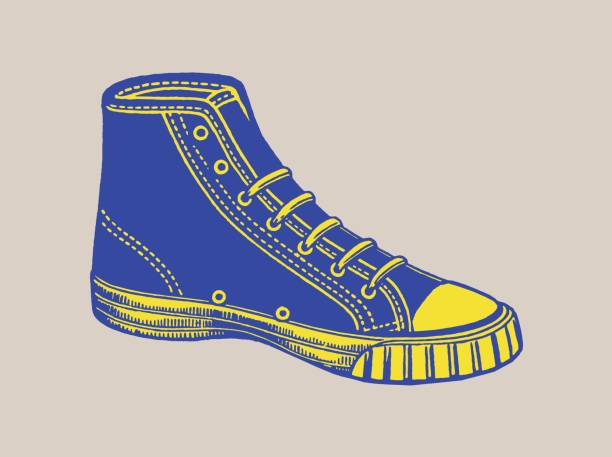
In the early twentieth century, basketball was a sport in its infancy, played with peach baskets and a soccer ball on makeshift courts in gymnasiums and YMCAs. Players wore whatever shoes they owned, typically canvas high-top sneakers from the 1917 Converse All Star Basketball Shoe that lacked ankle support and grip. That changed dramatically when a young salesman named Chuck Taylor entered the picture, transforming a simple sneaker into an enduring icon and effectively birthing modern basketball footwear. The story of the Converse Chuck Taylor All Star is not merely a tale of a shoe but a chronicle of how a single athlete and marketer shaped the game, the industry, and eventually global culture.
The original Converse All Star debuted in 1917, designed by the Converse Rubber Shoe Company as a practical basketball shoe. It featured a canvas upper and a rubber sole with a herringbone pattern for traction, a revolutionary concept at a time when most athletic shoes were flat and slippery. The company targeted the shoe at basketball players, but sales were modest. Then in 1921, Chuck Taylor, a semi-professional basketball player who had played for the Akron Goodyear Wingfoots and various barnstorming teams, walked into Converse headquarters. Taylor was not only a talented player but a natural promoter who understood the game’s needs intimately. He offered his services as a salesman and consultant, and Converse hired him.
Taylor’s impact was immediate. He traveled across the country, conducting basketball clinics, demonstrating the shoe’s benefits, and signing endorsement deals with high school and college teams. He listened to players’ complaints and suggested improvements to the Converse design. In 1922, he recommended adding a padded ankle collar for extra support, a reinforced toe cap to prevent blowouts, and a more flexible sole. Converse incorporated these changes, and the shoe was renamed the Chuck Taylor All Star in his honor in 1932, when his signature patch was added to the ankle collar. That patch, featuring a blue star and his name, became one of the most recognizable logos in footwear history.
The Chuck Taylor All Star quickly became the standard issue for professional basketball players. Throughout the 1930s and 1940s, every major basketball league, including the early NBA, wore Converse Chucks. The shoe’s high-top design provided stability for the lateral movements required in basketball, while the vulcanized rubber sole gripped wooden floors better than any competitor. Even as basketball evolved into a more athletic, high-flying sport with the introduction of the slam dunk and faster pace, the Chuck Taylor remained dominant. By the 1950s, Converse controlled roughly 80 percent of the basketball shoe market, and the Chuck Taylor All Star was synonymous with the game itself.
However, the very innovation that made the Chuck Taylor a legend also set the stage for its eventual decline in basketball. By the 1970s, advances in athletic shoe technology began to surpass the simple canvas and rubber construction. New materials like leather provided better durability and cushioning, while innovations like the Nike Air sole offered superior impact protection. Players started demanding more specialized footwear, and competitors like Adidas, Puma, and later Nike introduced shoes with better arch support and shock absorption. The Chuck Taylor, which had remained largely unchanged for decades, could not match these new features. The NBA officially stopped using the Chuck Taylor as standard issue in the late 1970s, and by the 1980s the shoe had largely disappeared from professional basketball courts.
But the story of the Chuck Taylor All Star did not end with its departure from basketball. Instead, the shoe found a second life as a cultural icon. In the 1970s, musicians, artists, and counterculture figures adopted the Chuck Taylor as a symbol of rebellion and authenticity. Punk rock bands wore them because they were cheap, durable, and nonconformist. By the 1980s, the shoe had become a staple of skateboarding culture, street fashion, and even high fashion. Today, the Chuck Taylor All Star remains one of the best-selling sneakers of all time, worn by people of all ages around the world. Its legacy as the shoe that helped modernize basketball is etched into the very fabric of sneaker history.
Reflecting on this evolution, it becomes clear that the Chuck Taylor All Star was far more than just a piece of athletic equipment. It was a catalyst that propelled basketball from a recreational pastime into a professional sport with its own dedicated footwear. Chuck Taylor himself, through his relentless promotion and feedback, demonstrated the value of athlete involvement in product design, a principle that still drives the sneaker industry. The shoe’s journey from the hardwood to the sidewalk represents a unique intersection of sports, commerce, and culture. Even as new technologies render it obsolete for actual play, the Chuck Taylor All Star endures as a testament to the birth of basketball footwear and the power of a simple canvas sneaker to change the world.
Articles