Why Sneaker Rotation Is the Most Underrated Crease Prevention Technique
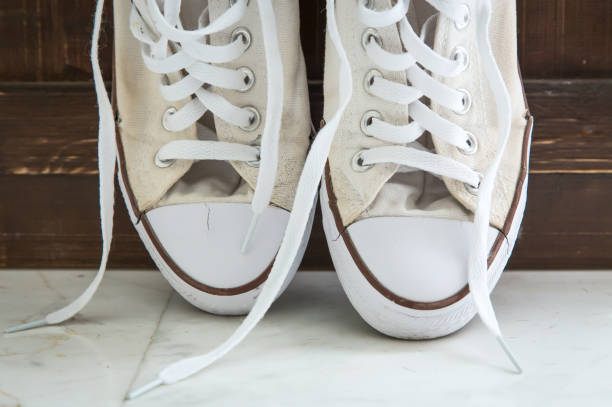
For the devoted sneaker enthusiast, few sights are as disheartening as the first deep crease forming across the toe box of a fresh pair of kicks. The collective obsession with keeping sneakers pristine has spawned an entire industry of force fields, crease protectors, plastic toe inserts, and elaborate wearing rituals. Yet one of the most effective and entirely natural methods of crease prevention remains consistently overlooked: the simple practice of rotating your sneakers. While the sneaker community often focuses on external interventions, the fundamental physics of leather, fabric, and foam demand that we reconsider how we distribute wear across our collections. Proper rotation does not just extend the life of a single pair; it fundamentally alters the rate at which creases form by allowing materials time to recover, reducing cumulative stress, and preventing the micro‑damage that accumulates into permanent lines.
Every time you walk, your sneaker’s toe box bends at the flex point where your foot naturally hinges. This repeated bending compresses the upper material, forcing the fibers or leather grains to buckle. In synthetic or leather sneakers, these buckles initially appear as temporary wrinkles. If the shoe is worn again before the material fully relaxes, those wrinkles deepen, the fibers begin to fatigue, and the crease becomes set. This is where rotation offers its most critical benefit: recovery time. Leather and many synthetic uppers possess a degree of elasticity and shape memory. When a sneaker sits unworn for a day or two, the compressed areas slowly rebound as moisture and heat dissipate. A sneaker worn two days in a row never gets that chance. The material is bent again while still in a partially deformed state, accelerating the transition from temporary crease to permanent damage. A study of leather fatigue in footwear suggests that allowing at least forty‑eight hours between wears can reduce the depth of flex‑induced creases by more than thirty percent compared with consecutive wear.
Beyond material recovery, rotation distributes the cumulative bending cycles across multiple pairs. Think of a sneaker’s lifespan as a fixed number of bends before failure. A single pair worn every day might reach that threshold in six months, developing deep, ugly creases along the way. Three pairs rotated evenly will each experience only one‑third of the total bends over the same period, meaning each pair’s creases will remain shallow and far less pronounced for much longer. This mathematical reality is so straightforward that it borders on obvious, yet many collectors hoard dozens of pairs only to wear the same two or three favorites into early retirement. The most effective crease prevention strategy is not a plastic insert or a specialized spray; it is simply having enough sneakers in active rotation to ensure no single pair bears the brunt of daily wear.
Rotation also influences crease formation indirectly through moisture management. Feet sweat even in the driest climates, and that moisture gets absorbed into the lining and upper during wear. Damp materials are more pliable and less resilient. When a sneaker is worn again before fully drying, the fibers are softer and more prone to permanent deformation. A proper rotation of at least three pairs allows each shoe a full drying cycle, which not only reduces creasing but also prevents odor, bacteria growth, and material degradation. Using cedar shoe trees between wears further enhances recovery by wicking moisture and maintaining shape, but the foundational step is simply not wearing the same pair two days in a row.
For the purist who views creases as inevitable battle scars, rotation still offers a practical advantage: it allows you to control where and when those scars appear. By rotating a new pair with older, already‑creased pairs, the new pair’s initial wear is less intense. You can gradually break in the toe box over several weeks rather than during the first weekend of heavy use. This slow break‑in period is precisely how many vintage collectors keep decade‑old sneakers looking nearly unworn. They may wear a pair only once every week or two, allowing the material to adapt without ever being overwhelmed by repeated stress.
Critics might argue that rotation requires a larger collection, but the principle scales. Even a rotation of two pairs dramatically reduces crease depth compared with wearing one pair exclusively. The key is consistency and patience. Many sneaker enthusiasts fall into the trap of wearing a new pair obsessively for the first week, then wondering why creases appear so quickly. The solution is not a more expensive crease protector; it is a more disciplined wearing schedule. Crease protectors themselves can introduce new problems, such as discomfort, reduced flexibility, and even stress fractures in the midsole from altered foot mechanics. Rotation imposes no such trade‑offs.
In the broader context of sneaker care, rotation is the silent partner to every other maintenance practice. It makes cleaning easier because dirt and oils have less time to set. It keeps the midsole foam from packing out prematurely. Most importantly, it allows the upper to age gracefully, developing a patina of character rather than a stark line of defeat. The next time you unbox a coveted pair, resist the urge to wear them tomorrow. Let them rest. Let your other pairs earn their keep. In the long run, rotation is not just a storage strategy; it is the most natural, effective, and underappreciated crease prevention method available to any sneaker lover.
Articles