How Canvas Sneakers Became a Staple of Casual Fashion

What began as a simple, utilitarian shoe has evolved into an enduring symbol of effortless style. Canvas sneakers, with their humble rubber soles and lightweight fabric uppers, have transcended their athletic origins to become a foundational piece in wardrobes around the world. Their journey from tennis courts to city streets reveals a fascinating interplay of function, culture, and fashion that continues to resonate decades after their debut.
The story of canvas sneakers starts in the late nineteenth century, when the Industrial Revolution made mass production of rubber footwear feasible. Early versions were marketed as “plimsolls” in England, named after the Plimsoll line on ships because the thin rubber sole seemed to mark the boundary between land and water. These shoes were primarily worn for seaside promenades and gym classes. But the real breakthrough came in 1917, when the Converse Rubber Shoe Company introduced the All Star. Originally a basketball shoe, its canvas body and vulcanized rubber sole provided the grip and flexibility players needed. A young player named Chuck Taylor became its most vocal advocate, and by the 1930s his name was stitched onto the ankle patch, cementing the Chuck Taylor All Star as America’s first iconic sneaker.
Canvas sneakers quickly spread beyond the court. During World War II, they were issued as training shoes for soldiers thanks to their low cost and ease of production. After the war, returning GIs kept wearing them casually, and teenagers adopted them as a badge of youthful rebellion. In the 1950s, James Dean was photographed in blue jeans and canvas sneakers, and that look became the uniform of a generation pushing back against buttoned-up conformity. The sneaker was no longer just a sports shoe; it was a symbol of authenticity and nonchalance.
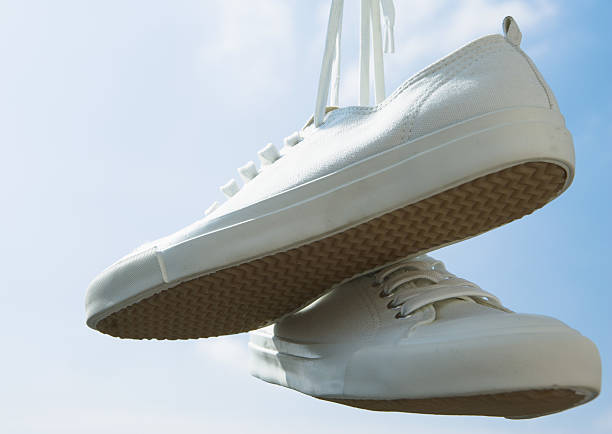
The 1970s and 1980s saw canvas sneakers become a blank canvas for self-expression. Brands like Vans, with their debut of the Authentic in 1966, captured the skateboarding subculture. The waffle-patterned sole and durable canvas upper gave skaters the board feel and grip they needed, while the low price point made them disposable enough to wear through. Suddenly canvas sneakers were linked to surf, skate, and punk scenes—each group customizing them with paint, patches, or simply letting them get scuffed and worn. This beat-up aesthetic became desirable in its own right, a visual diary of adventures and late nights.
Fashion’s embrace of canvas sneakers in the 1990s and 2000s completed their transformation. Designers began reimagining classic silhouettes with premium materials and collaborations. The simple canvas shoe became a vehicle for haute couture expression, appearing on runways in limited-edition colorways and artist collaborations. Yet even in their most elevated forms, canvas sneakers retained their democratic spirit. They were affordable enough for a student to buy, yet coveted enough for a collector to chase. This paradox is central to their appeal: they offer accessibility without sacrificing style.
In warm weather, canvas sneakers shine as the breathable, lightweight alternative to leather or synthetic shoes. The woven cotton fabric allows air to circulate, keeping feet cooler on sweltering days. They pair effortlessly with shorts, chinos, or rolled-up jeans, and their simple lines complement almost any casual outfit. But they are not without drawbacks. Canvas is easily stained, and the thin sole provides less cushioning and support than modern athletic shoes. These limitations have inspired a thriving aftermarket of care products and insoles, as well as a culture of embrace—the dirtier and more faded the canvas, the more character the shoe carries.
Environmental considerations have also pushed canvas sneakers back into the spotlight. Many brands now produce versions made from organic cotton, recycled rubber, and water-based adhesives, appealing to consumers who want to reduce their footprint. The classic canvas sneaker requires fewer resources to manufacture than its leather counterparts, and its simple construction makes it easier to repair or recycle. This aligns with a growing movement toward slow fashion, where quality and longevity are prized over fast turnover.
Canvas sneakers have also become a canvas for storytelling. Brands release collections that celebrate historical moments, artistic movements, or social causes. Limited drops generate excitement, while timeless white or black pairs remain wardrobe staples year after year. The sneakerhead community, often associated with rare leather Jordan retros, has also embraced canvas models—especially collaborative releases that reinterpret classic shapes with modern flair.
Looking ahead, the canvas sneaker seems assured of its place in fashion’s pantheon. It has survived every trend, from neon aerobics to chunky dad shoes, by staying true to its essential nature: simple, honest, and adaptable. Whether laced up for a morning walk, a concert, or an afternoon coffee, canvas sneakers connect us to a past that values substance over spectacle. They are proof that the most enduring designs are often the most unassuming, and that a shoe built for movement can carry the weight of culture on its shoulders.
Articles