New Balance 990: The Blueprint for the Dad Shoe Renaissance
Few sneakers have redefined a category quite like the New Balance 990. When it debuted in 1982, it was pitched as the most advanced running shoe money could buy, a technical marvel built with a price tag that shocked the industry. Forty years later, that same silhouette has become the unlikely face of the dad shoe movement, a cultural phenomenon that transformed the bulky, beige-and-grey sneaker from suburban uniform into high-fashion essential. Understanding the 990’s journey reveals not only how New Balance’s heritage craftsmanship anchors its identity but also how the dad shoe revival rewrote the rules of sneaker desirability.
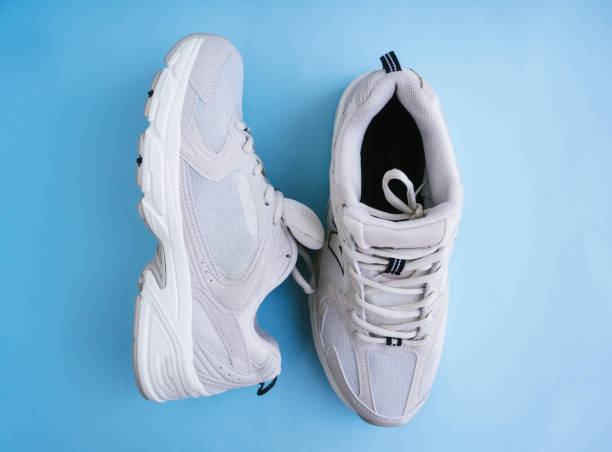
The original 990 was a statement of intent. New Balance poured years of research into a shoe that combined three key innovations: a Vibram outsole for traction, a lightweight polyurethane midsole for cushioning, and a supple pigskin suede upper reinforced with mesh. At one hundred dollars, it was the most expensive sneaker ever released, a gamble that relied on the brand’s reputation for precision engineering. The shoe was assembled in the United States, a point of pride that New Balance has never abandoned. Every stitch, every cut of suede, every alignment of the iconic N logo was subject to quality checks that rivaled aerospace standards. This commitment to domestic manufacturing and meticulous construction became the bedrock of the brand’s ethos, a promise that a pair of 990s would outlast three pairs of anything else on the market.
Yet the 990 spent its first three decades as a niche favourite. It was the shoe basketball dads wore to the grocery store, the go-to for retirees who valued arch support, the quiet companion of college professors who cared more about comfort than trends. Sneakerheads largely ignored it. The 1990s and 2000s were defined by flashy Nike Air Max bubbles, Adidas Boost technology, and low-profile basketball silhouettes. The 990’s chunky shape and utilitarian grey palettes seemed hopelessly outdated. But that perceived obsolescence was precisely what the dad shoe revival needed.
The revival began subtly in the early 2010s, when fashion insiders started romanticizing the mundane. Designers like Raf Simons and brands like Balenciaga began plundering the archives of suburban mall sneakers, and the 990 was a prime target. Its clunky aesthetic, once a liability, became a symbol of anti-fashion authenticity. Suddenly, the same beige-and-grey colourway that had been laughed at was walking runways and appearing in street style blogs. The dad shoe label was reclaimed as a badge of honour. For young consumers weaned on minimalist sneakers, the 990 offered something radical: a shape that refused to disappear, a silhouette that demanded attention not through logos but through sheer presence.
Crucially, this revival did not force New Balance to compromise its values. While other brands rushed to pump out exaggerated versions of the dad shoe, New Balance leaned into the 990v4, v5, and eventually the v6, each iteration refining the original formula without abandoning its core. The midsole remained chunky but was updated with modern foam compounds. The suede continued to come from premium leather tanneries. The stitching stayed as reliable as ever. The result was a sneaker that felt both nostalgic and contemporary, a bridge between the brand’s New England heritage and the global appetite for chunky footwear.
What made the 990 particularly influential in the dad shoe revival was its refusal to chase hype. It never relied on limited drops or celebrity collaborations to sell out, at least not at first. Instead, it attracted a diverse audience: older wearers who had bought the 990 in the eighties and now saw their children coveting the same shoe, fashion editors who prized its understated versatility, and collectors who appreciated the continuity of design language. This cross-generational appeal became the defining characteristic of the dad shoe movement. It was no longer about creating something new; it was about rediscovering something that had always been good.
The cultural impact of the 990 extends beyond sneaker circles. It reshaped how the industry talks about craftsmanship. In an era of disposable fast fashion, the 990’s longevity became a talking point. Resale platforms noted that pristine pairs from the 1990s still commanded high prices, not because they were rare but because they were made to last. This durability ethos resonated with a generation tired of shoes that disintegrated after six months. New Balance’s heritage craftsmanship, once a quiet selling point, became a loud argument for sustainability.
Ultimately, the 990’s role in the dad shoe revival is a story of rediscovered value. It reminds us that trends are cyclical, but quality is permanent. The bulky silhouette that once seemed destined for retirement now sits in the Hall of Fame of sneaker design, proof that a shoe built with integrity will always find its moment. For New Balance, the 990 is not just a product; it is a philosophy. And for the sneaker world, it remains the gold standard of the dad shoe renaissance.
Articles