Six-Month Wear Test: How the Adidas Ultraboost 22 Endures Daily Grind
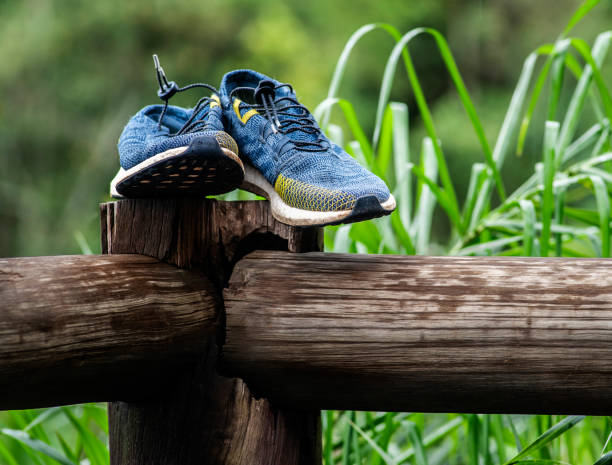
After six months of near-daily wear across pavement, treadmill, and occasional trail, the Adidas Ultraboost 22 presents a compelling case study in modern sneaker durability. This test focused on a single pair worn for commuting, casual errands, and three to four weekly runs of five to eight kilometers. The goal was not merely to see if the shoe survives, but to understand how its signature technologies—the Primeknit upper, the Boost midsole, and the Continental rubber outsole—hold up under real-world stress.
The upper of the Ultraboost 22 is a prime candidate for long-term scrutiny. Primeknit is engineered for stretch and breathability, but skeptics often question its resilience. After six months, the knit structure remains intact without any tearing or loose threads around the toe box or the heel collar. The TPU heel clip, a frequent stress point in earlier Ultraboost iterations, shows no signs of cracking or detachment. However, there is noticeable bagginess in the forefoot area where the knit has gradually relaxed. This does not compromise lockdown for running, but the initial sock-like fit has become slightly less precise. The lacing system, integrated with a plastic cage, still holds tension firmly; the eyelets show no fraying. The internal heel counter has not collapsed, maintaining its shape even after hundreds of flexion cycles. Minor pilling appears along the inner lining near the Achilles, but this is superficial and does not affect comfort.
The midsole is where the Ultraboost 22 makes its name, and six months provides a robust test of Boost foam’s compression set. Boost pellets are known for retaining elasticity longer than standard EVA, but they are not immortal. After half a year, the midsole shows moderate compression under the heel strike area, roughly a two-millimeter reduction in thickness measured with calipers. The energy return remains impressive—still bouncy compared to most conventional running shoes—but the initial plushness has softened by about fifteen to twenty percent. For a casual wearer, the difference is barely perceptible. For a runner, the shoe still feels responsive, though the springy rebound of new Boost is notably muted. The medial side, where overpronators might apply extra force, shows no unusual disharmony; the foam has compressed evenly. The outsole integration with the midsole—no separation or bubbling—indicates solid manufacturing.
The Continental rubber outsole, a staple of Adidas performance footwear, earns high marks. After six months of mostly asphalt and concrete, the tread pattern is still discernible. The deepest grooves measure about eighty percent of original depth, with the most wear concentrated on the lateral heel and the central forefoot. This is typical for a neutral shoe. There is no exposure of the underlying foam, no chunks missing, and no delamination from the midsole. The rubber compound seems to resist abrasion effectively, though glossy patches on the heel indicate smoothness from repetitive striking. Wet traction remains adequate—not as grippy as brand new, but still reliable on slick pavement. One minor issue: small stones occasionally get lodged in the tread channels, but they are easy to flick out.
Structurally, the shoe has held together admirably. The stitching along the quarter panel is intact. The tongue, often a weak point in knit sneakers, has not shifted or ripped. The insole has compressed significantly—the original ortholite layer is nearly flat—though the user can replace insoles cheaply. The laces have frayed at the tips but still function. The overall weight has not increased due to water absorption or dirt buildup, a testament to the closed-cell foam and hydrophobic upper treatment.
What does this mean for the enthusiast considering a long-term investment? The Ultraboost 22 is not indestructible, but it outlasts many lifestyle-running hybrids. The upper relaxation and moderate midsole compression are predictable trade-offs for a shoe that prioritizes initial comfort and style. After six months, the shoe is still perfectly wearable for daily errands and short runs, though serious runners might retire it beyond eight hundred kilometers. The outsole longevity is especially commendable, suggesting the shoe can survive a second six months for casual use. For collectors and reviewers, this durability report confirms that the Ultraboost 22 delivers on its promise of a premium, long-lasting ride—provided the user accepts that no foam defies physics forever. The six-month mark is not the end of life; it is the beginning of a comfortable, character-filled middle age.
Articles