The Role of Mycelium in Next-Generation Eco-Friendly Sneakers
The sneaker industry has long grappled with a fundamental contradiction. Consumers demand both high-performance footwear and environmental responsibility, yet traditional manufacturing relies heavily on petroleum-based synthetics and resource-intensive animal leather. Enter mycelium, the root-like structure of fungi, which is rapidly emerging as one of the most promising sustainable materials for footwear. Unlike plant-based leathers derived from pineapple leaves or cactus, mycelium can be grown in a matter of days under controlled laboratory conditions, requiring minimal water and land while producing zero waste. This biological innovation is not merely a novelty; it represents a paradigm shift in how sneakers can be designed, manufactured, and eventually returned to the earth.
Mycelium leather is produced by feeding fungi a substrate of agricultural byproducts such as sawdust or corn husks. The mycelium then forms a dense, interwoven network that can be harvested, compressed, and tanned using non-toxic processes. The resulting material mimics the texture, durability, and even the grain of animal leather but with a fraction of the environmental footprint. Unlike synthetic leathers derived from polyurethane or polyvinyl chloride, mycelium is fully biodegradable under the right conditions, meaning a sneaker made from it will not persist in a landfill for centuries. Companies like MycoWorks and Bolt Threads have already scaled this technology, partnering with major footwear brands to produce commercial prototypes.
For sneaker enthusiasts, the introduction of mycelium leather raises legitimate questions about performance. Can a fungus-derived material withstand the repetitive stress of running, jumping, and daily wear? Early testing suggests it can. Mycelium-based materials exhibit tensile strength comparable to traditional leather while offering superior breathability and moisture management. Because the material is grown rather than assembled, its density and flexibility can be engineered at the microscopic level, allowing for targeted reinforcement in high-wear areas like the toe cap and heel counter. Some manufacturers have even developed mycelium foams for midsoles, creating fully fungal sneakers that are both lightweight and shock-absorbent.
The aesthetic appeal of mycelium leather should not be underestimated. Designers appreciate its ability to accept natural dyes and finishes without the heavy chemical load required for synthetics. The material can be embossed, perforated, or left with a subtle organic texture that distinguishes it from mass-produced alternatives. For collectors who value rarity and story, a mycelium sneaker offers something genuinely novel: a shoe that was grown, not fabricated. This aligns with a broader cultural shift toward transparency in supply chains and a rejection of opaque manufacturing processes.
Manufacturing mycelium sneakers also reduces energy consumption. Traditional leather tanning is notoriously water-intensive and relies on chromium, a heavy metal that poses serious environmental and health risks. Synthetic leather production, meanwhile, depends on fossil fuels and releases volatile organic compounds. Mycelium cultivation can be carried out in vertical farms using LED lighting and controlled humidity, with water recycling systems that cut usage by over ninety percent compared to cattle farming. The substrate itself can be sourced from local agricultural waste, transforming a disposal problem into a valuable resource.
Of course, no material is without challenges. Mycelium leather currently carries a higher price point due to limited production scale, though costs are expected to drop as fermentation technology improves and demand increases. There is also the issue of consumer perception. Some buyers remain skeptical of any alternative leather, associating it with inferior quality or a plasticky feel. Education is essential here. When a sneaker enthusiast learns that mycelium can be grown to match the exact thickness and flexibility of a classic leather upper, and that it will biodegrade at the end of its life, the value proposition becomes clear.
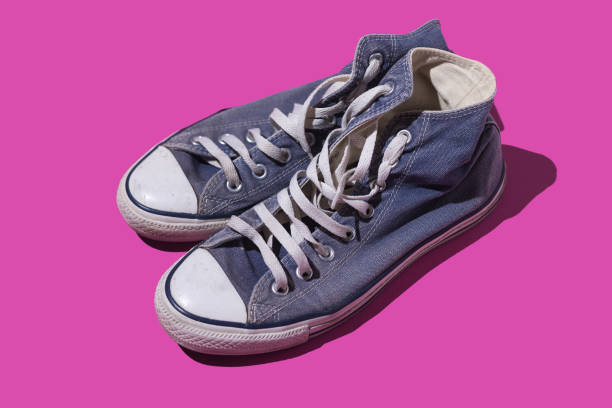
Brands are already testing the waters. Adidas has released limited runs of its Stan Smith silhouette with a mycelium upper developed in partnership with Bolt Threads under the Mylo brand. Stella McCartney has incorporated mycelium into luxury footwear. Even heritage sneaker labels are exploring mycelium as a way to modernize their classics without abandoning craftsmanship. The trend signals a departure from the disposable mindset that has long plagued the industry. A mycelium sneaker is not something to be worn twice and discarded; it is an object of durability and intention.
Looking ahead, mycelium may represent only the beginning of a broader biofabrication revolution in footwear. Researchers are experimenting with living mycelium that can self-heal minor scuffs and scratches, potentially extending a sneaker’s lifespan indefinitely. Others are engineering mycelium blends that incorporate recycled fibers or natural rubber, creating composites that are stronger than any single material alone. The sneaker world, long dominated by leather and synthetic foams, is entering an era where the most advanced materials are not invented in a chemistry lab but grown in a petri dish.
For the environmentally conscious collector or everyday wearer, mycelium sneakers offer a rare convergence of ethics, aesthetics, and engineering. They respect the planet without compromising the passion that drives sneaker culture. As production scales and prices normalize, these fungal-derived designs will likely become as common as canvas or mesh. The future of sustainable footwear is not made of plastic or hide. It is woven from the quiet, industrious network of fungi underground.
Articles