The Adidas Superstar: How the Shell-Toe Became a Hip-Hop Legend
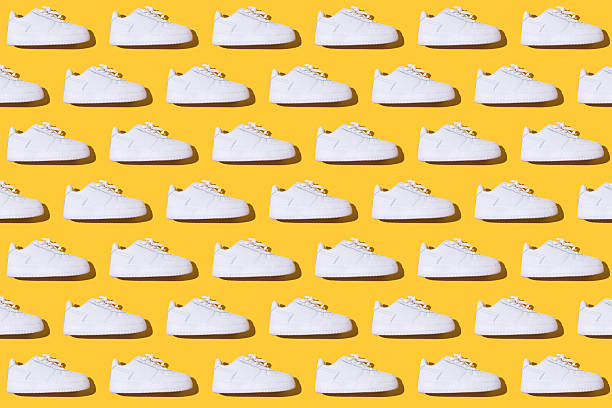
In the pantheon of sneaker history, few silhouettes have achieved the cultural transcendence of the Adidas Superstar. Born on basketball courts in 1969, this low-top leather shoe with its distinctive rubber shell toe might have remained a sports footnote if not for the seismic shift it caused when it crossed into the world of hip-hop. The Superstar’s journey from functional athletic gear to an enduring symbol of street credibility, rebellion, and artistic identity tells a larger story about how sneakers became the uniform of a generation. Its shell toe, once designed solely to protect players’ feet, became a visual shorthand for authenticity, toughness, and the raw energy of the Bronx streets that birthed a global movement.
The shoe’s original design was undeniably practical. Adidas developed the Superstar as a basketball shoe built for the hardwood, with a full-grain leather upper for durability and the famous rubber toe cap to shield players from stomped toes and scuffs. It was the first low-cut basketball sneaker widely adopted by professional players, and by the mid-1970s, it had become a staple in arenas. But as the sport evolved toward high-top models offering more ankle support, the Superstar faded from athletic prominence. That quiet retirement set the stage for its second, far more influential life. In the late 1970s and early 1980s, as hip-hop began coalescing in New York City’s boroughs, young people gravitated toward the Superstar for reasons that had nothing to do with jump shots. The shoe was affordable, durable, and its clean, unmistakable silhouette looked sharp with the emerging streetwear aesthetic of tracksuits, gold chains, and bucket hats. The shell toe in particular became a badge of belonging, a detail that signaled you were part of a culture that valued authenticity over flashy logos.
No single moment cemented the Superstar’s legend more than its embrace by Run-DMC. The pioneering hip-hop group from Queens made the sneaker central to their visual identity, wearing them without laces, often with the tongue hanging out, and referencing them explicitly in their 1986 hit “My Adidas.” That song was not just a shout-out; it was a declaration of cultural ownership. When Run-DMC performed at Madison Square Garden and asked the crowd to hold up their Adidas sneakers, thousands of shoes rose in unison, creating an unforgettable tableau that proved the group’s influence extended far beyond music. This symbiotic relationship between artist and brand culminated in a groundbreaking endorsement deal—the first of its kind between a hip-hop act and a major sportswear company. Crucially, Adidas did not ask Run-DMC to change their style or clean up their image. Instead, the company recognized that the group’s raw, unfiltered representation of street culture was precisely what made the Superstar iconic. The partnership reshaped how brands approached hip-hop, moving from wary distance to active collaboration, and it legitimized the sneaker as a canvas for cultural expression.
The ripple effects of that moment are still felt today. The Superstar became a staple in breakdancing, graffiti artist circles, and the burgeoning fashion scenes of London, Tokyo, and Berlin. Its shell toe was reinterpreted in countless colorways and collaborations, yet the core design remained untouched—proof that true icons do not need reinvention, only reverence. In the decades since, the shoe has been worn by everyone from punk rockers to high-fashion models, but its soul remains rooted in the hip-hop ethos of making something out of nothing and turning the everyday into the extraordinary. The Superstar taught the sneaker world that a shoe does not need to be the newest or the most technologically advanced to matter; it only needs to mean something to the people who wear it. That lesson echoes through every limited-edition drop and every collector’s shrine to this day.
The legacy of the Adidas Superstar is ultimately a testament to the power of subculture to redefine mainstream taste. What began as a practical basketball shoe became a uniform for a generation of artists, dancers, and dreamers who saw in its simple lines a reflection of their own resilience. The shell toe, that unmistakable curved rubber cap, no longer guards against accidental stomps; it guards the history of a movement that refused to be ignored. To lace up a pair of Superstars today is to connect with a lineage that stretches from the cracked asphalt of Hollis, Queens, to the runway shows of Paris, and to remember that culture is not manufactured in corporate boardrooms but born on the streets where people live, dance, and create.
Articles