The Air Max 1: How Tinker Hatfield’s Transparent Sole Changed Sneaker History
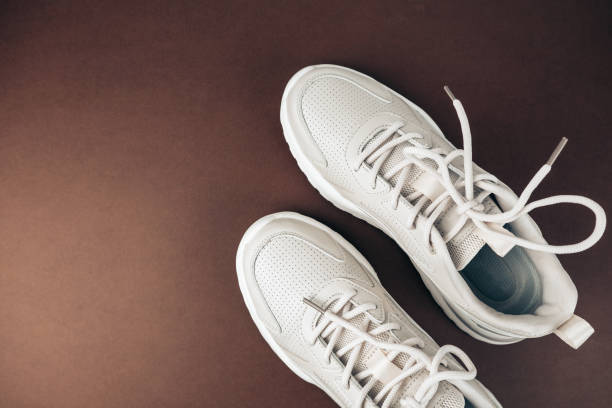
In the mid-1980s, Nike was a running company struggling to maintain its edge. The Air-Sole cushioning technology, developed by aerospace engineer Frank Rudy in 1977, had been successfully embedded in the Tailwind and later in the Air Force 1, but it remained hidden inside the midsole – a secret pocket of pressurized gas that athletes could feel but never see. That all changed in 1987 when a young architect turned sneaker designer named Tinker Hatfield dared to ask a simple question: what if everyone could see the air? The answer was the Nike Air Max 1, a shoe that did not merely perform better but fundamentally reimagined what a sneaker could look like, introducing visible air technology and initiating a design language that would define the company for decades.
Hatfield’s inspiration came not from the track but from the Centre Pompidou in Paris, a building designed by Renzo Piano and Richard Rogers that famously turned its structural systems – pipes, escalators, ducts – inside out, making them the focal point of the architecture. Hatfield saw a parallel: why hide the Air-Sole unit when it could become a dramatic visual signature? The challenge was technical. Early Air-Sole bags were prone to bursting when exposed to environmental stress, and die-hard runners were skeptical of any modification that might compromise durability. Hatfield and his engineering team spent months developing a polyurethane window that could withstand impact while remaining clear enough to showcase the air chambers. The result was a small, elliptical window in the heel – just large enough to reveal the pressurized gas but robust enough to survive pavement, rain, and repeated heel strikes.
The Air Max 1’s debut in March 1987 in its original “University Red” and “White/Red” colorways stunned the industry. Runners initially questioned whether the visibility of the Air unit was a gimmick, but the shoe’s ride quality silenced most critics. The full-length Air-Sole, combined with a soft EVA midsole and a flexible outsole, delivered plush cushioning that was noticeably superior to its competitors. More importantly, the visual breakthrough transformed the sneaker from a utilitarian tool into a piece of wearable art. The transparent window became a conversation starter, a proof point of technology you could trust because you could see it working. The shoe quickly transcended its running origins, finding fans among hip-hop artists, skaters, and fashion-forward youth in New York, London, and Tokyo.
Culturally, the Air Max 1 arrived at the perfect moment. Sneaker collecting was just beginning to emerge as a serious hobby, and the explosion of colorways and limited editions in the 1990s can be traced directly back to this single model. The first Air Max 1 was followed by “Sport Red,” “Infrared,” and eventually collaborations with underground boutiques like Stüssy and Atmos, each release building a mythology around the shoe’s iconic silhouette. The visible Air unit also spawned an entire lineage of successors – the Air Max 90, Air Max 95, Air Max 97, and the bulbous Air Max 360 – all of which expanded the window into a full-length bag, then a clamshell, then a 360-degree bubble. But the original Air Max 1 remains the purest expression of Hatfield’s architectural vision: a clean, low-profile runner that lets the technology speak for itself without unnecessary ornamentation.
The design’s influence extends far beyond Nike’s own catalog. The visible Air concept forced the entire footwear industry to reconsider how sneakers could communicate their technical features. Adidas responded with visible Boost and 4D-printed midsoles, New Balance experimented with visible ENCAP, and even fashion houses like Balenciaga and Gucci began incorporating transparent elements into their luxury sneakers. The Air Max 1’s legacy is not just a single shoe but a paradigm shift: it proved that performance features could be marketing assets, that transparency – literally – builds consumer trust, and that a sneaker can function as both a precision tool and a cultural statement.
Today, nearly four decades after its initial release, the Air Max 1 continues to be reissued, restyled, and revered. It remains a staple of sneaker rotations, from vintage collectors hunting for original 1987 pairs in deadstock condition to younger fans discovering the model through retro drops and collaborations. The shoe’s enduring popularity is a testament to the power of an idea that was initially considered risky: that hiding the air was a mistake, and that showing it could change everything. The Air Max 1 did not just revolutionize design; it revolutionized how we think about the relationship between what a sneaker does and what it shows us. In doing so, it earned its place not only in the Sneaker Hall of Fame but in the broader history of modern design.
Articles