The Alchemy of Dry Feet: Understanding Waterproofing Sprays and Their Interaction with Sneaker Materials
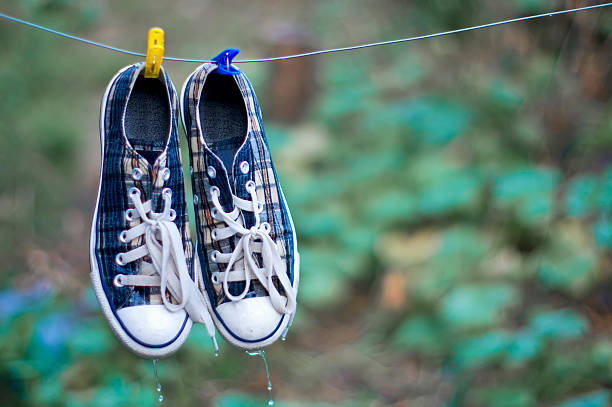
Rain and puddles are the natural enemies of sneaker enthusiasts, yet most waterproofing sprays are applied with a cavalier attitude that can lead to cracked coatings, stained uppers, and diminished breathability. The science of protecting sneakers from moisture goes far beyond a simple aerosol blast. Every spray contains a cocktail of fluoropolymers, silicone resins, or natural waxes that must chemically bond with specific materials to create an invisible shield without compromising the shoe’s original texture or flexibility. Understanding this interaction is the difference between a pair that repels water like a lotus leaf and one that develops unsightly watermarks after the first drizzle.
The most common active ingredient in modern waterproofing sprays is a fluorocarbon compound similar to those used in outdoor apparel. These molecules have a unique dual nature: one end attaches to the fibers of the sneaker while the other end creates a low-energy surface that forces water droplets to bead up and roll off. When applied correctly, this treatment does not clog the microscopic pores of mesh or knit uppers, allowing moisture vapor from perspiration to escape while liquid water is blocked. The challenge arises when users oversaturate the material, causing the fluoropolymer to form a thick film that traps heat and humidity inside the shoe. Foam midsoles, in particular, can become rigid and lose their cushioning properties if the spray penetrates too deeply. Leather sneakers, on the other hand, require a different balance. Full-grain leather naturally resists water to some degree, but a spray with too much silicone can prevent the leather from breathing and lead to cracking over time. Suede and nubuck are the most demanding substrates. Their raised nap acts like a sponge, and standard waterproofing sprays often mat down the fibers, ruining the velvety texture. Specialized suede sprays use a micro-wax emulsion that coats each individual fiber rather than bridging them, preserving the nap while still offering protection.
Temperature and humidity during application are critical variables that many sneakerheads overlook. Fluoropolymer sprays perform best when the sneaker is warm, around twenty-five degrees Celsius, because the molecules have enough energy to spread evenly across the surface. Cold shoes cause the spray to pool in droplets rather than forming a uniform layer, leaving patches where water will instantly soak through. Humidity above sixty percent can also interfere with the bonding process. Water molecules in the air compete with the spray’s active ingredients for attachment sites on the sneaker material, resulting in a weak coating that washes off after just a few wears. A simple test after application—sprinkling a few drops of water on the toe cap—will reveal whether the treatment is effective. If the drops flatten out and spread, the coating is inadequate. If they remain spherical and roll away with a gentle tilt, the chemical bond has been successful.
The longevity of a waterproofing treatment depends largely on the mechanical stress the sneakers endure. Walking through gravel, repeated flexing at the toe, and contact with road salt all abrade the molecular layer. Most sprays advertise protection for four to six weeks, but in urban environments with frequent puddle hopping, reapplication may be necessary after two weeks. A common mistake is applying a fresh coat on top of a partially worn layer. The old, broken-down molecules create a barrier that prevents the new spray from reaching the material, resulting in peeling like sunburnt skin. The correct protocol is to clean the sneaker thoroughly with a gentle detergent to remove dirt and old residues, allow it to dry completely, and then apply the spray in two thin coats with a ten-minute interval. This ensures that the new molecules bond directly to the fabric rather than to the degraded remnants of the previous treatment.
Environmental considerations have also reshaped the waterproofing market in recent years. Traditional sprays relied on perfluorinated chemicals that persist in ecosystems and have been linked to health concerns. Newer formulations use hydrocarbon-based repellents or biodegradable waxes that offer similar performance without the long-term ecological footprint. While these eco-friendly sprays may require more frequent reapplication, they are less likely to cause discoloration on light-colored materials and produce fewer volatile organic compounds during application. For collectors who rotate dozens of pairs, a dedicated spray for each material type—suede, leather, canvas, and knit—is far more effective than a one-size-fits-all solution. The time invested in matching the spray to the sneaker is repaid many times over when a sudden downpour leaves every other pair soaked while the protected ones stay perfectly dry.
Ultimately, waterproofing is not a set-it-and-forget-it ritual but an ongoing dialogue between the shoe, the weather, and the chemistry of protection. A sneaker that has been properly treated feels no different on the foot, yet it repels water with the same indifference as a duck’s back. The magic lies in the invisible work of molecules that cling to fibers and defy gravity, allowing enthusiasts to step through puddles without a second thought. When the spray can runs empty, the real test begins—not of the product, but of the care taken in its application.
Articles