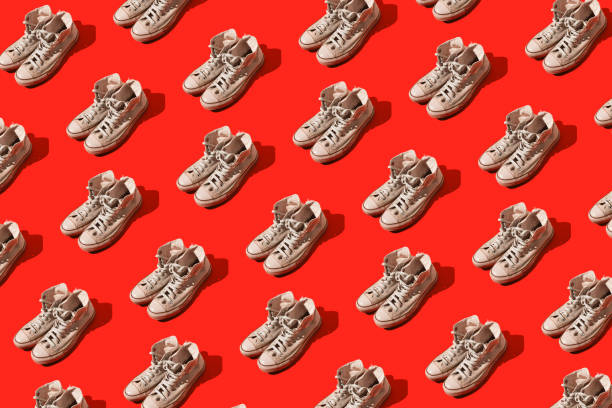
The Allure of the All-White Sneaker: Minimalism’s Quiet Domination

The sneaker world is rarely quiet. From neon-accented basketball silhouettes to chunky, layered “dad shoes” that seem to defy gravity through sheer material volume, the loudest voices in footwear fashion often belong to maximalism. Yet paradoxically, the most enduring and culturally dominant sneaker of the past decade is perhaps the quietest of them all: the all-white leather sneaker. At first glance, it represents everything minimalism stands for—clean lines, absence of embellishment, a restrained palette—but its power lies in how it functions within a maximalist fashion landscape. The all-white sneaker is not merely a shoe; it is a philosophy, a canvas, and a silent rebellion against the tyranny of constant visual stimulation.
To understand why the all-white sneaker has become the minimalist’s ultimate weapon, one must appreciate the aesthetic tension it creates. Maximalist style revels in excess: bold color blocking, oversized logos, multi-textured uppers, and experimental silhouettes that shout for attention. This approach has dominated streetwear and sneaker culture for years, fueled by collaborations that push boundaries and collector hype cycles that reward the rarest, most visually distinct models. In this environment, the all-white sneaker does something subversive: it refuses to compete. It does not scream; it simply exists. And in doing so, it becomes the ultimate foil—the blank space that makes every other element of an outfit visible.
The minimalist philosophy embodied by the all-white sneaker is not about deprivation but about intentionality. Every stitch, every panel, every curve of the sole is visible precisely because there is nothing to hide behind. Brands like Common Projects, Axel Arigato, and Veja have built entire identities around this principle, offering variations of the same essential idea—a premium leather upper, a clean rubber sole, no logos or minimal branding. The wearer’s choice is not about which sneaker to buy but about which version of purity to endorse. This is a radical departure from the maximalist approach, where a sneaker’s value is often measured by its visual complexity or heritage storytelling.
Yet the all-white sneaker’s quiet dominance also highlights a deeper cultural shift. In an age of information overload and endless choices, minimalism offers a form of mental relief. The white sneaker becomes a neutral anchor, a ground from which personal style can emerge without distraction. It works equally well with tailored trousers and distressed denim, with summer shorts and winter overcoats. This versatility is its own kind of maximalism—not of quantity, but of possibility. A single pair of all-white sneakers can accommodate a wardrobe of infinitely varied combinations, making it arguably more practical than a closet full of statement pieces.
But the true magic lies in how minimalism within sneaker fashion actually intensifies the maximalist potential of the wearer’s overall look. Pair an all-white sneaker with a Japanese selvedge denim jacket, a cashmere sweater, and a vintage watch, and the shoe’s simplicity allows each of these rich details to breathe. The same sneaker with a graphic-heavy streetwear ensemble prevents the outfit from becoming visually chaotic. In this sense, the all-white sneaker is not rejecting maximalism; it is mastering it. It provides the negative space that makes positive statements legible.
The collector culture that fuels sneaker passion often overlooks this quiet model in favor of limited-edition drops and loud collaborations. Yet the hall of fame of sneaker history includes icons that embody minimalist principles: the Adidas Stan Smith, the Nike Air Force 1 in pure white, the Converse Chuck Taylor All Star in canvas white. These are not just shoes; they are cultural artifacts that have transcended trends precisely because they refused to become trends. Their minimalist design allowed them to be filled with meaning by each generation of wearers.
Furthermore, the all-white sneaker challenges the notion that maximalism is inherently more creative or expressive. True creativity often emerges from constraint. Designing a white-on-white sneaker that feels fresh, premium, and desirable requires meticulous attention to material, silhouette, and proportion. A maximalist sneaker can hide imperfections behind layers of flashy details; a minimalist sneaker has nowhere to hide. This discipline resonates with a certain kind of sneaker enthusiast who values craftsmanship over hype.
In the end, the debate between minimalist and maximalist style philosophies is not a binary. The all-white sneaker proves that minimalism can be the most powerful form of maximalism when executed with intention. It allows the wearer to make a statement without shouting, to stand out by blending in, to be seen without being scrutinized. As sneaker culture continues to evolve, with maximalist trends cycling through chunky, techwear, and retro futuristic phases, the all-white sneaker remains the constant—the quiet anchor that every fashion philosophy must eventually reckon with. It is not a compromise; it is a foundation. And that is its ultimate statement.
Articles