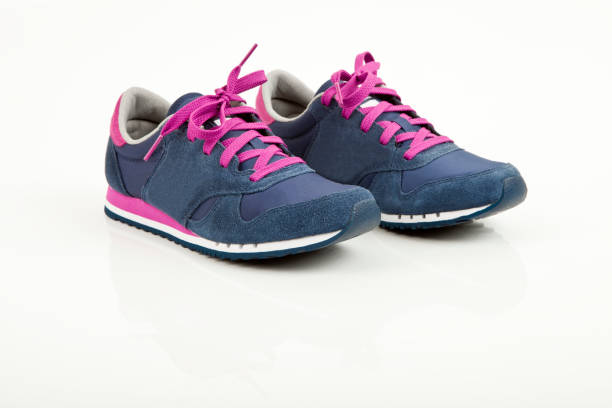
The Anatomy of a Grail: Why Certain Sneakers Become Legendary

The sneaker world is built on desire, but at its apex sits a singular concept that drives collectors, fuels entire market segments, and defines status within the community: the grail. For those deep in collector culture, the term “grail” is not thrown around lightly. It refers to a pair of sneakers so rare, so historically significant, or so emotionally charged that acquiring them feels less like a purchase and more like a conquest. But what exactly transforms a sneaker from a coveted release into a legendary grail? The answer lies in a complex interplay of scarcity, storytelling, cultural inflection, and personal nostalgia that elevates a shoe beyond its material components.
Scarcity is the most obvious, and often the most misunderstood, ingredient. It is not merely a matter of limited production numbers, though that is critical. A true grail exists when scarcity meets insurmountable demand, creating a perfect storm of unobtainability. Consider the Nike Air Yeezy 2 “Red October.” Released in 2014 in quantities so small that the public drop felt like a whisper, the shoe disappeared within seconds. Yet thousands of people had spent months obsessing over Kanye West’s design. The scarcity was not accidental; it was engineered. But scarcity alone does not sustain a grail. Many limited sneakers become footnotes because they lack the other essential components. A grail maintains its scarcity over time because the original supply is never replenished, and the shoe’s story prevents factory-floor-level rereleases from ever being acceptable to the purist collector. The fear of counterfeits and the slow erosion of wearable examples only deepen the scarcity, turning each surviving pair into an artifact.
Storytelling transforms a limited shoe into a legend. Every grail has a narrative that exceeds the product. The Nike Air Mag, inspired by Back to the Future Part II, is not just a self-lacing sneaker; it is a piece of science fiction made real, a symbol of what the future was supposed to feel like. The story of the 2011 auction pairs raising millions for the Michael J. Fox Foundation, combined with the 2016 limited public release of 89 pairs via lottery, created a mythos that no other sneaker has matched. Similarly, the Air Jordan 1 “Chicago” is not simply a red, white, and black shoe. It is the shoe Michael Jordan wore when he shattered the NBA’s dress code, the shoe that sparked a cultural war between the league and a rebellious icon, and the shoe that launched the billion-dollar Jordan brand. That story has been retold through documentaries, books, and oral tradition within sneaker communities. A grail’s narrative must be repeatable, shareable, and emotionally resonant. It gives the sneaker a soul beyond the leather and rubber.
Cultural inflection is the third pillar. A grail often captures a specific moment in music, art, or sports that defines an era. The Nike Dunk Low “Wu-Tang Clan” did not achieve its legendary status merely because it was limited to 36 pairs for friends and family of the group. It achieved it because the Wu-Tang Clan represented a seismic shift in hip-hop, and the sneaker became a physical token of that golden-age moment. The adidas Yeezy Boost 350 “Turtle Dove” marked the transition from retro-heavy sneaker culture into the modern age of knitted uppers and celebrity-driven hype. These shoes are time capsules. Owning a grail means owning a piece of a specific cultural moment that cannot be replicated. The sneaker becomes a talisman of authenticity for collectors who want to prove they understand not just the product, but the context in which it existed. In this sense, grail hunting is a form of cultural archiving.
Personal nostalgia cannot be underestimated, even as it complicates the wider definition. For many collectors, a grail is a deeply individual thing: the shoe they saw in a magazine as a teenager but could never afford, the pair their older sibling wore, or the shoe that reminds them of a first job or a lost friendship. This emotional resonance lives outside the established market hierarchy. A collector might consider a slightly worn pair of Air Force 1 Low “Year of the Dog” to be their personal grail because that shoe was released during the Lunar New Year of their birth year, even if the market price is modest compared to a Yeezy. This personal dimension is what keeps grail hunting alive. The resale market relies on monetary value, but the community thrives on shared stories. When a collector finally lands their personal grail, the act is celebrated not for the dollar amount but for the closure of a long search. The hunt itself becomes a rite of passage, with stories of camping outside stores, refreshing stock monitors for months, or trading shoe after shoe to climb the ladder to that one elusive pair.
Grail hunting also exists within a larger social ecosystem. Social media platforms like Instagram and dedicated forums such as Reddit’s r/sneakers have democratized the chase while also intensifying it. A grail sighting in a “Sneaker of the Day” post generates dozens of comments asking for the story behind the shoe. The community validates the grail status collectively; no single collector can declare a grail without the tribe agreeing. This dynamic creates a living hierarchy where older, rarer models—like the Nike Air Jordan 4 “Eminem” or the Converse Weapons “Magic Johnson”—sit at the top, while newer grails like the Travis Scott Air Jordan 1 “Reverse Mocha” fight for inclusion. The constant tension between established history and contemporary hype ensures that grail hunting never feels static.
Ultimately, the grail is more than a shoe. It is a mirror reflecting the collector’s dedication, the community’s values, and the cultural currents of the moment. It demands sacrifice, patience, and knowledge. It rewards those who understand that the true value of a sneaker is never in the box alone, but in the story it carries and the hunt it required. For every sneakerhead, there is a grail out there—waiting, elusive, and unforgettable. And when it is finally found, it changes the collector forever.
Articles