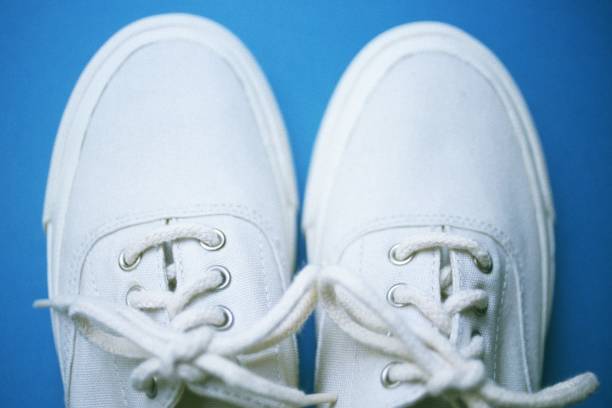
The Ankle Support Debate: Are High-Top Sneakers Truly Superior for Lateral Stability?
The quest for optimal performance and injury prevention in athletics often centers on footwear, with a long-held belief positioning high-top sneakers as the undisputed champions of lateral support. The visual logic is compelling: a higher collar must provide greater stability, restricting unwanted ankle motion, especially during sharp cuts and pivots common in basketball or tennis. However, modern sports science and footwear engineering reveal a more nuanced reality. While high-tops can offer advantages in specific contexts, they are not universally or inherently better for lateral support than well-designed low-tops, with the ultimate determinant being a complex interplay of biomechanics, individual anatomy, and shoe construction.
The traditional case for high-tops rests on mechanical reinforcement. The extended collar is designed to act as a physical barrier against extreme ankle inversion—the rolling motion that leads to sprains. By providing a rigid structure around the malleoli (ankle bones), high-tops aim to limit the range of motion, effectively bracing the joint. This can be psychologically reassuring for athletes with a history of ankle injuries or those engaged in sports with frequent lateral jumps and landings. Furthermore, the secure fit of a laced high-top can enhance proprioception, the body’s sense of its position in space, which is crucial for reactive stability. For some athletes, this combination of physical constraint and heightened awareness translates to a tangible feeling of confidence and support during aggressive lateral movements.
However, the assumption that height equates to support overlooks critical factors. First, lateral stability is less about collar height and more about the shoe’s foundational design: its outrigger (the lateral outsole flare), torsional rigidity, heel counter stiffness, and midfoot shank. A low-top sneaker with a wide, stable base, a reinforced heel counter that cups the foot securely, and advanced cushioning systems can provide exceptional lateral containment without encroaching on the ankle. Many elite basketball players, including the majority in the NBA, now prefer low-tops, citing greater freedom of movement and agility without a perceived increase in injury risk. This shift underscores that superior engineering at the footbed and midsole level is often more impactful for stability than the height of the material above the ankle.
Crucially, the human body’s own musculoskeletal system plays the most significant role. The ankle’s stability is primarily governed by ligaments, tendons, and muscular strength, particularly the peroneals which act to evert the foot and counteract inversion. A high-top cannot compensate for weak stabilizing muscles; it may even create a dependency, potentially leading to muscular atrophy over time. Conversely, a low-top forces these muscles to engage more actively, potentially strengthening them and promoting natural, dynamic stability. This principle is why rehabilitation from ankle injuries often progresses from rigid braces to minimal support, aiming to rebuild intrinsic strength. Therefore, for an athlete with robust ankles and strong proprioception, a high-top may offer redundant support while unnecessarily restricting the natural motion and muscular recruitment that contributes to agility and performance.
In conclusion, the blanket statement that high-top sneakers are always better for lateral support is a misconception. They serve as a valuable tool for individuals seeking additional external reinforcement, whether due to past injury, specific sport demands, or personal preference. However, they are not a panacea. Modern low-top designs can deliver equivalent, if not superior, lateral support through advanced engineering focused on the shoe’s base and fit, often while granting superior mobility. The “better” choice is intensely personal, dictated not by shoe height alone, but by an individual’s biomechanics, strength, sport-specific needs, and comfort. Ultimately, the best lateral support arises from a synergy between a well-engineered shoe—be it high or low—and a well-conditioned, resilient athlete.
Articles