

The Cartography of Hype: Mapping Sneaker Exclusivity Across Borders
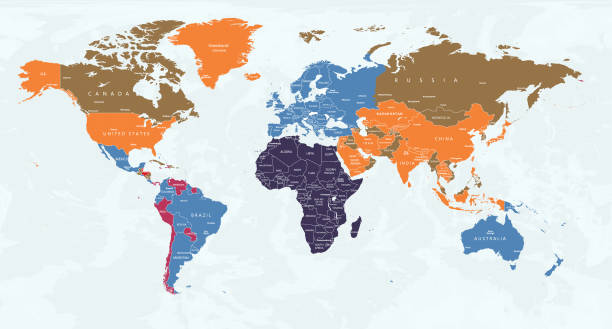
In the sprawling ecosystem of sneaker culture, geography is destiny. A pair of Nike Air Max 1s released exclusively in Tokyo’s atmospheric Daikanyama district carries a different weight than the same model launched simultaneously in New York, London, or Shanghai. This truth has become the beating heart of regional exclusives, a phenomenon that transforms simple footwear into artifacts of place, time, and access. For the dedicated collector, navigating this terrain requires more than a calendar; it demands a mental map of retail ecosystems, distribution networks, and the digital tools that collapse distance while preserving scarcity.
Regional exclusives are not new. In the early days of Nike’s Jordan Brand, certain colorways appeared only in specific cities as a test of local appetite. But the modern era, accelerated by social media and the globalization of desire, has turned these limited drops into a high-stakes game of digital cartography. Release calendars now include flags for regions, time zones, and store tiers, while enthusiasts pore over maps that visualize where a shoe might land and why. The geography of a release is often coded in its very name: the “Tokyo 23” or “Shanghai 91” special editions are explicit in their geographic anchoring. Yet the true map is invisible—a web of relationships between brands, retailers, and local regulating bodies that determine which pairs fly and which stay grounded.
One critical layer of this map is the legal and logistical framework. A shoe that drops in the United States might never see European shelves due to different intellectual property laws or import tariffs. Conversely, a collaboration with a Japanese boutique may remain confined to the archipelago because of exclusivity clauses in the licensing agreement. The savvy collector learns to read these signals: a brand’s decision to release a model only in its own flagship stores on a specific continent often hints at a broader strategy to cultivate regional loyalty or test market saturation. The rise of “global availability maps” on enthusiast sites has democratized this intelligence, allowing anyone with an internet connection to understand why a pair of New Balance 990s might be easier to find in Boston than in Berlin.
Digital tools have reshaped how enthusiasts navigate this labyrinth. Apps that aggregate raffle entries, release times converted to local clocks, and live updates from store queues have become essential. But the most powerful innovation is the virtual private network or proxy service, which allows a buyer in São Paulo to appear as though they are shopping in Seoul. This practice, while not illegal, exists in a gray area that brands sometimes discourage and sometimes tacitly tolerate. The map, in this sense, becomes a contested space: brands attempt to gatekeep releases by IP address or credit card billing region, while consumers deploy geolocation spoofing to breach those walls. The result is a cat-and-mouse game where the availability map is not a static picture but a live feed of shifting boundaries.
Resale markets compound this complexity. A shoe that is a “regional exclusive” in one country can immediately become a global commodity on StockX, GOAT, or eBay as soon as a buyer with a local connection secures a pair and ships it abroad. This arbitrage creates micro-geographies of value: a NMD R1 released only in Singapore might trade for three times its retail price in the United States, while the same shoe in Tokyo might sell at only a modest markup. The collector’s map must therefore include not only release locations but also post-release flow patterns—the routes that pairs travel from doorsteps to distribution hubs to overseas buyers. Air freight routes, customs clearance times, and regional demand surges all become invisible contours on this map.
Yet the most profound layer is cultural. Regional exclusives often carry local stories that global consumers may never fully grasp. A Nike Dunk Low designed for the Chinese Year of the Tiger incorporates motifs and materials that resonate deeply in Beijing but might read as mere aesthetics in Paris. The collector who buys such a pair without understanding its cultural context is acquiring an object stripped of part of its meaning. Navigating the availability map responsibly means recognizing that these shoes are not trophies to be plundered but stories to be respected. Brands have begun to lean into this by creating educational content alongside drops, explaining the heritage behind a regional design and sometimes limiting sales to residents of that area to preserve authenticity.
The practical challenge for the enthusiast is building a personal map that balances ambition with ethics. Many collectors now rely on trusted contacts in key cities—a friend in London who can enter a raffle, a family member in Miami who can queue at a boutique. These human nodes are more reliable than any app, but they require reciprocity and patience. Others use region-specific social media groups to crowdsource availability updates, turning the map into a living document of shared intelligence. The best navigators do not simply track where a shoe will drop but understand why it drops there, forging a connection to the local sneaker community that digital tools alone cannot provide.
Ultimately, the cartography of regional exclusives is a mirror of globalization itself. It reveals how desire travels, how borders bend, and how scarcity is manufactured and challenged. For the sneaker enthusiast, mastering this map is not about acquiring every pair but about understanding the forces that shape availability. A release calendar is just a schedule; the global availability map is a story of culture, commerce, and connection. The most rewarding journey is not to the nearest store but to the deepest understanding of why a shoe belongs to one place and not another—and how, in the hands of a thoughtful collector, it can belong everywhere.
Articles