The Chuck Taylor All Star: How Canvas and Rubber Became a Century-Spanning Sneaker Icon

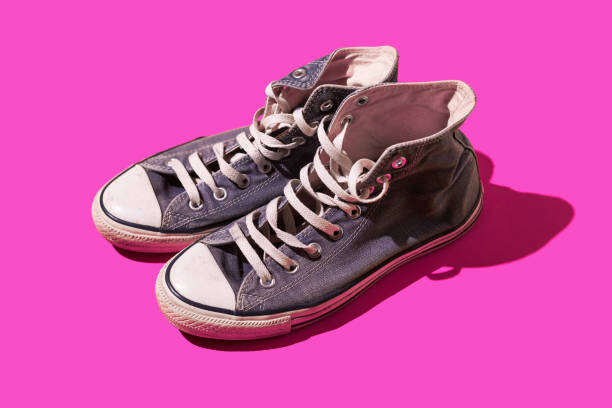
Few shoes have crossed as many boundaries as the Converse Chuck Taylor All Star. Born as a practical basketball sneaker, it has moved through gymnasiums, rock clubs, skate parks, college campuses, and fashion runways without losing its essential character. Its silhouette is instantly recognizable: a canvas upper, a rubber toe cap, a vulcanized sole, and the small ankle patch that carries the name of a man who helped turn a product into a piece of culture. The shoe’s longevity is not simply a matter of nostalgia. It comes from a design language so clear and flexible that each generation can assign new meaning to it while still recognizing exactly what it is.
The All Star arrived in 1917, when Converse introduced a canvas-and-rubber shoe intended for basketball. The early game was played on rough courts in heavy footwear, and the sneaker’s flexible construction offered a useful alternative. In 1921, basketball player and salesman Chuck Taylor joined Converse and became closely involved with the shoe. He traveled to schools and gyms, ran clinics, listened to players, and promoted the product with unusual energy. His name was added to the ankle patch in the early 1930s, and the shoe became known as the Chuck Taylor All Star. The partnership mattered because it joined performance credibility with everyday visibility. Taylor did not merely endorse a shoe; he helped shape the idea that a sneaker could be both functional equipment and personal identity.
On court, the Chuck Taylor became a standard for decades. Its high-top cut offered ankle coverage, while the rubber sole provided grip. The canvas upper was breathable and affordable. These were practical virtues, but the shoe’s greatest strength was its simplicity. Even after basketball technology advanced and rival sneakers introduced new cushioning systems and synthetic materials, the Chuck Taylor remained legible. It did not try to hide its construction. The stitching, toe bumper, metal eyelets, and license plate on the heel became visual signatures. That honesty made the shoe adaptable. It could be a team shoe, a school shoe, a weekend shoe, or a canvas for self-expression. The low-top version, introduced later, widened its use by making the shoe feel less specialized and more like everyday wear.
The All Star’s cultural life expanded far beyond sport. In the postwar decades, it became a casual staple and later a symbol within music subcultures. Punk, alternative rock, and grunge adopted the shoe because it was inexpensive, durable enough for messy venues, and free of corporate gloss. The Ramones wore them with jeans and leather jackets; later bands wore them with flannel and torn denim. Skaters valued the flat sole and grip, even as the canvas wore through. Artists, students, and activists customized their pairs with markers, paint, patches, and laces. The shoe became a democratic object: accessible enough to be universal, blank enough to feel personal. The visible wear became part of the story, turning a mass-produced shoe into an individual record of time, place, and routine.
Fashion eventually embraced the same qualities. Designers appreciated the Chuck Taylor’s proportions and its ability to move between high and low style. A clean pair could sharpen a tailored look; a battered pair could soften one. Collaborations brought new materials, colors, and references, but the core silhouette remained. The shoe’s age is part of its appeal. Faded canvas and scuffed rubber are not defects to hide but evidence of a life lived. In an era of rapid sneaker releases and engineered scarcity, the Chuck Taylor offers something quieter: continuity. Season after season, the same basic shape appears in editorial spreads and street corners alike, proving that recognizability can outlast novelty.
That continuity is the heart of its century of timeless style. The All Star has survived because it is not fixed to one moment. It has been a basketball shoe, a rebel’s uniform, a fashion staple, and a memory of youth. Its form is simple enough to endure, and its meaning is open enough to change. The sneaker Hall of Fame has many celebrated models, but few have done so much with so little. The Chuck Taylor All Star remains iconic because it never stopped being useful, wearable, and honest.