The Chuck Taylor All Star’s Century of Subcultural Rebellion
For over one hundred years, the Converse Chuck Taylor All Star has defied every expectation of a mass-produced sneaker. While most footwear trends fade within a season, this canvas-and-rubber icon has survived wars, economic depressions, and countless style revolutions. Its secret lies not in technological innovation or marketing genius, but in a paradoxical simplicity that invites endless reinterpretation. From the basketball courts of 1917 to the mosh pits of 1990s Seattle and the runways of Paris today, the Chuck Taylor has never been just a shoe. It is a blank canvas, a uniform for the nonconformist, and a living monument to the power of authentic self-expression.
The shoe’s original purpose was purely athletic. Converse introduced the All Star as a basketball sneaker, and Chuck Taylor himself, a salesman and player, joined the company in the 1920s to promote it. His signature on the ankle patch turned the shoe into a celebrity endorsement decades before that concept existed. For nearly half a century, it was the dominant basketball shoe in America, worn by professional players and schoolchildren alike. But as the sport evolved and new competitors arrived with more cushioned, high-tech designs, the Chuck Taylor was pushed out of the gym. That moment of obsolescence became its greatest opportunity. Freed from performance expectations, the sneaker found a new home among those who valued attitude over ankle support.
The 1950s marked the beginning of its cultural transformation. Rebel icons like James Dean wore battered Chuck Taylors as a mark of youthful alienation, while artists and beat poets adopted them for their proletarian honesty. By the 1970s, the shoe had become a staple of punk rock. The Ramones, the Sex Pistols, and countless garage bands wore Chucks on stage not despite their cheapness, but because of it. The canvas tore easily, the soles wore thin, and the whole shoe seemed to radiate an anti-establishment ethos. In a world of polished leather boots and flashy platforms, the Chuck Taylor was the footwear equivalent of a three-chord song: raw, direct, and full of heart. This association with underground music only deepened in the 1980s and 1990s. Hardcore bands, grunge groups, and hip-hop dancers all embraced the same silhouette, each community leaving its own scuff marks and safety pins on the canvas.
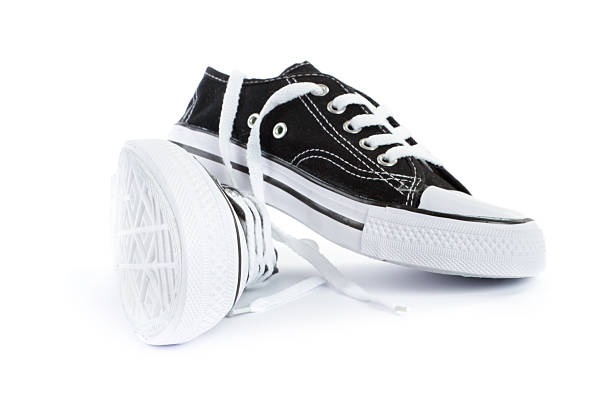
What makes the Chuck Taylor so universally appealing is its refusal to dictate a single identity. Unlike sneakers laden with logos and colorways that scream for attention, the All Star is almost humble. Its white rubber toe cap and simple star patch are quiet invitations to project meaning onto them. A pair covered in paint becomes an artist’s manifesto. A pair deliberately shredded becomes a punk’s badge of honor. A pair kept pristine becomes a nostalgic tribute to forgotten eras. This inherent mutability has allowed the shoe to cross boundaries of gender, class, and geography. From schoolyards in Tokyo to skate parks in Los Angeles, the same silhouette appears, yet it never looks the same on two people. In this way, the Chuck Taylor achieves a rare paradox: it is instantly recognizable yet deeply personal.
The sneaker’s endurance also stems from its refusal to change. While other brands chase new foams, knit uppers, and self-lacing gimmicks, Converse has largely preserved the original design. The slight updates to insole padding and materials do little to alter the soul of the shoe. That stubborn consistency has become its own form of rebellion in an industry obsessed with novelty. In a culture that constantly demands the next big thing, the Chuck Taylor stands as a quiet reminder that some things do not need improvement. Its imperfections are part of its character. The way the canvas wrinkles, the way the rubber yellows, the way the sole wears down unevenly—these are not flaws but records of a life lived. No other sneaker ages so gracefully, because no other sneaker invites such intimate wear.
Today, the Chuck Taylor All Star occupies a singular position in the sneaker pantheon. It appears in high-fashion collaborations with brands like Comme des Garçons and Off-White, yet it also remains a cheap, accessible shoe on the shelves of general stores. That dual existence is its superpower. It can be both a luxury statement and a utilitarian staple, both a collector’s item and a disposable everyday shoe. This flexibility ensures its relevance for the next century. As long as people crave authenticity, rebellion, and a means to project their inner selves onto the world, the Chuck Taylor will be there, waiting in the same silent canvas form it has always worn. It has outlived every trend that tried to replace it, not by following the future, but by staying stubbornly itself.
Articles