The Evolution and Cultural Impact of Chunky Sneakers in Modern Fashion
The chunky sneaker, once dismissed as a relic of nineties dad style, has undergone a remarkable transformation to become one of the most defiantly expressive pillars of contemporary footwear design. Its journey from utilitarian basketball gym floors to the polished runways of Paris and Milan is a story of rebellion, nostalgia, and the relentless human desire to make a statement through what we wear on our feet. The very qualities that made the clunky shoe an object of ridicule in the early 2000s—its exaggerated silhouette, its heavy sole, its unabashed bulk—have now become its greatest assets in an era that celebrates maximalism and self-expression over minimalist restraint.
The lineage of the chunky sneaker can be traced directly to the performance basketball shoes of the late eighties and early nineties. Brands like Reebok with the Pump, Nike with the Air Force 1 and the Air Max line, and later the Reebok Instapump Fury created silhouettes that prioritized cushioning and ankle support over sleekness. These shoes were built like small vehicles for the feet, with thick midsoles, visible air units, and aggressive geometry. When the streetwear culture of the early ninety began appropriating basketball shoes for everyday wear, these oversized forms became markers of authenticity and urban credibility. Yet by the turn of the millennium, sneaker design had pivoted toward lower profiles and sleeker lines, leaving chunky styles behind as fashion relics.
The revival began quietly in the mid 2010s through the influence of high fashion. Raf Simons’s collaboration with Adidas, which reimagined the Ozweego running shoe with a dramatically exaggerated sole and matte color blocking, caught the attention of tastemakers. Then came Balenciaga’s Triple S in 2017, a shoe that seemed almost cartoonishly massive, layering three different sole units into one towering platform. Critics called it ugly; consumers called it essential. The Triple S sold out repeatedly and spawned an entire ecosystem of copycats and reinterpretations. The luxury fashion world had effectively reclaimed the chunky silhouette as a totem of ironic luxury. Wearing such a deliberately cumbersome shoe signaled that the wearer was not simply following trends but was instead in on the joke of fashion itself—able to see beauty in the awkward and value in the absurd.
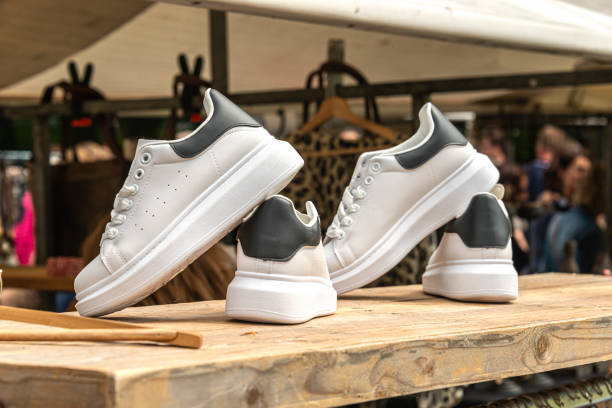
Platform sneakers, a close cousin of the chunky style, had their own parallel resurgence. Rooted in seventies disco and nineties Spice Girl aesthetics, platform sneakers offer height without the instability of a traditional heel. They appeal to a broad demographic seeking both physical elevation and a sense of empowerment. Brands like Buffalo, with their iconic thick-soled London boot, returned to prominence, while newer labels such as Veja and Superga introduced platforms with a more refined environmental consciousness. The platform sneaker bridges the gap between function and fashion, providing the comfort of an athletic shoe with the dramatic visual presence of a heeled boot. It has become a staple for individuals who want to stand taller while staying grounded in casual style.
Statement designs within the chunky and platform category extend beyond mere silhouette. Colour blocking, holographic materials, exaggerated branding, and unexpected textures define this subcategory. The Nike Air Max 97, with its rippling metallic upper and full-length Air unit, remains a perennial favorite for those who want a sneaker that literally glitters in the light. The Adidas Yeezy 500 and 700 lines brought a futuristic organic feel with bulbous forms and earthy tones that seemed to defy traditional sneaker anatomy. Meanwhile, independent designers and small-batch artisans have used the chunky platform as a canvas for hand-painted patterns, embroidered details, and recycled materials, turning each pair into wearable art. The result is a market where a sneaker can simultaneously be a collector’s item, a fashion statement, and a personal identity marker.
The cultural impact of this trend runs deeper than aesthetics. Chunky and platform sneakers represent a deliberate departure from the pursuit of invisibility that once dominated footwear design. In an age of digital identity and social media visibility, a shoe that cannot be ignored makes perfect sense. The chunky sneaker invites conversation, demands attention, and refuses to blend into the background. It aligns with broader movements in fashion that embrace body positivity, gender fluidity, and the rejection of narrow beauty standards. The same logic that celebrates different body types also celebrates different shoe shapes. Platforms and chunky soles democratize height and presence, allowing anyone to adopt a powerful stance without sacrificing step.
Sustainability has also entered the conversation, as several brands now produce chunky sneakers from recycled ocean plastics, vegan leathers, and biodegradable foams. This adds another layer of statement-making: the wearer can signal environmental awareness while wearing an unmistakably bold shoe. Companies like Rombaut, with its fungal leather and exaggerated geometric shapes, exemplify how the statement sneaker can also be ethically conscious. The future of chunky and platform designs seems boundless, as 3D printing and innovative materials promise even wilder forms and lighter weights.
At its core, the chunky sneaker phenomenon is about reclaiming joy in dressing. It is a reaction against the tyranny of the slim, the streamlined, and the invisible. It celebrates the clumsy, the proud, the deliberate. Whether it is a vintage pair of Skechers Energy Lights from the early 2000s or a limited-edition Balenciaga collaboration, wearing a chunky or platform sneaker is an act of intentional visibility. It says that the wearer is not afraid to take up space, to be noticed, and to walk through the world with a heavy, deliberate step. In a culture that often rewards quiet conformity, the chunky sneaker stands as a monument to the beauty of being loud.
Articles