The Air Jordan 1: The Sneaker That Started a Revolution
The year was 1984. Michael Jordan had just been drafted third overall by the Chicago Bulls, a skinny guard from North Carolina with a vertical leap that defied physics and a competitive fury that would reshape professional basketball. But the sneaker world had no idea that a single shoe, designed in a rush and nearly banned before it ever touched a court, would become the most consequential piece of footwear in modern history. The Air Jordan 1 did not merely launch a product line. It ignited a cultural takeover that fused sports, fashion, music, and identity into an enduring phenomenon.
At the core of the Air Jordan 1’s origin is a story of rebellion. Nike, then a running shoe company struggling to gain foothold in basketball, gambled everything on a rookie. Designer Peter Moore sketched the iconic silhouette, featuring a high-top collar, a swoosh, and an innovative Air-Sole unit. The colorway that would become infamous—black and red, known as the “Bred”—violated the NBA’s uniform policy, which demanded shoes be at least 51 percent white. Jordan wore them anyway. The league fined him $5,000 per game. Nike, seeing an opportunity, paid the fines and leveraged the controversy. A television commercial aired showing the shoe with a voiceover declaring, “The NBA banned them, but nobody can stop you from wearing them.” That single act of defiance transformed the sneaker from a piece of athletic equipment into a symbol of individual freedom and rebellion.
The market responded instantly. Hype was new in the 1980s, but the Air Jordan 1 generated it organically. Kids saved allowances, waited in lines, and begged parents to drive them to stores. The shoe sold out repeatedly. It crossed racial and economic lines, appearing on playgrounds in Chicago, on basketball courts in Harlem, and on the feet of suburban teenagers who wanted a taste of Jordan’s cool. Critics called it a fad. They were wrong. The Air Jordan 1 introduced the concept of limited releases and scarcity marketing, techniques that would define sneaker culture for decades. Every subsequent release built on the foundation laid by that first silhouette.
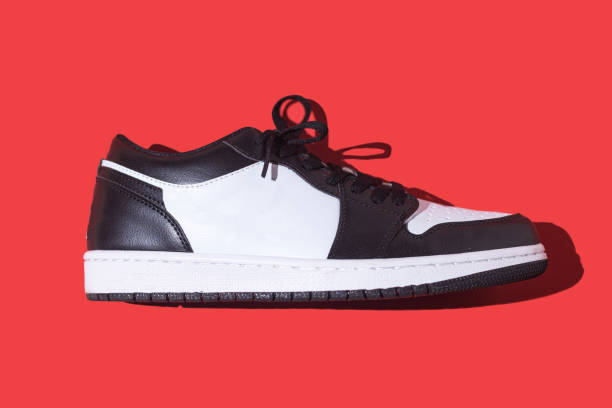
Beyond sales, the Air Jordan 1 became a canvas for storytelling. Each colorway carried meaning. The “Chicago” red and white honored the Bulls’ team colors. The “Royal Blue” and “Black Toe” iterations offered variations that collectors would later chase with religious fervor. The shoe appeared in “Back to the Future Part II” as Marty McFly’s futuristic Nikes, linking Jordan’s brand to pop culture at large. Rappers embraced the sneaker in the late 1980s and early 1990s, wearing them in music videos and on album covers. Run-D.M.C.’s Adidas connection was strong, but the Air Jordan 1 represented a distinctly American aspirational narrative—the idea that a poor kid from Brooklyn or a teenager in the Midwest could own something worn by a god.
The cultural takeover deepened as Michael Jordan’s legend grew. Six championships, five MVP awards, and a global icon status meant the shoe was no longer just a basketball shoe. It was a signifier of excellence. Wearing Air Jordan 1s said something about the wearer: they understood greatness, they appreciated history, they belonged to a tribe that valued performance and style equally. In the 1990s, the sneaker became a uniform for skaters, graffiti artists, and streetwear pioneers who had no interest in basketball. Its stiff ankle support and durable leather made it practical for skateboarding, while its bold lines suited oversized jeans and graphic tees. The shoe crossed subcultures effortlessly.
When Michael Jordan retired in 2003, the Air Jordan 1 could have faded into nostalgia. Instead, it experienced a renaissance. Retro releases began in the early 2000s, reintroducing original colorways to a new generation. The “Black/Red” Bred returned, the “Chicago” returned, and collaborations with high-fashion designers like Virgil Abloh’s Off-White and Travis Scott elevated the silhouette into luxury territory. The Off-White Air Jordan 1, with its deconstructed panels and zip-tie branding, sold for thousands on the resale market and inspired countless imitations. It proved that a sneaker from 1985 could remain relevant, even dominant, in a world of Yeezys and Ultra Boosts.
Today, the Air Jordan 1 is the most iconic sneaker in history. It is the benchmark against which all other releases are measured. Every year, new colorways drop, and every drop generates frenzy. The shoe has been worn by presidents, artists, athletes, and everyday people. It has been exhibited in museums and analyzed in academic papers. Its legacy is not simply about Michael Jordan’s scoring titles or championships. It is about what the shoe represents: the moment a brand, an athlete, and a culture converged to create something that transcended its original purpose.
The Air Jordan 1 remains a testament to the power of a single idea executed with conviction. It started a revolution not because of its technology, but because of its soul. And that revolution continues with every new pair that hits the pavement.
Articles