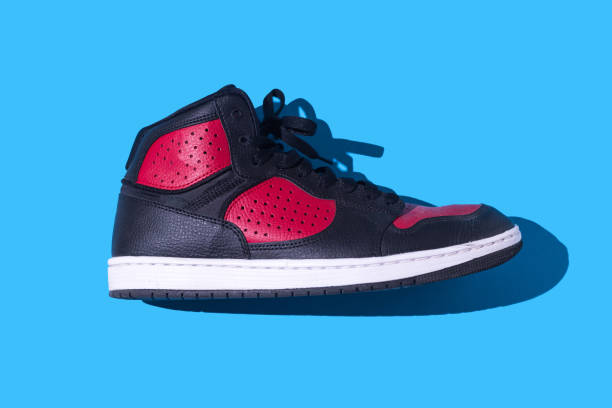
The Evolution of Hiking Sneakers: Blending Trail Performance with Everyday Comfort
For decades, the outdoor footwear landscape was dominated by a stark binary: heavy leather hiking boots for serious trekkers and flimsy athletic sneakers for pavement pounders. That line has not only blurred but vanished. The hiking sneaker, once considered a compromise between comfort and capability, has become a category-defining innovation in its own right. These shoes have rewritten the rules of trail footwear by combining the lightweight agility of running shoes with the rugged protection and traction once reserved for boots. Understanding how they evolved, what makes them effective, and why they now dominate the market reveals a deeper shift in how we approach outdoor recreation.
The genesis of the hiking sneaker can be traced to the growing popularity of fastpacking and day hiking in the late 1990s and early 2000s. Recreational hikers wanted to cover more ground with less weight on their feet, and traditional boots, weighing two to three pounds per pair, imposed a significant energy penalty. At the same time, trail running was exploding as a sport, and shoe companies noticed that runners were taking their low-cut, cushioned shoes onto technical terrain. The natural progression was to tweak the trail runner formula—adding ankle support structures, tougher outsoles, and water-resistant uppers—to create a shoe that could handle a loaded daypack without sacrificing speed.
The core engineering challenge in a hiking sneaker is balancing flexibility with stability. Unlike a boot, which uses a rigid shank and high collar to lock the ankle, a sneaker relies on a combination of a snug heel cup, a supportive midsole, and an aggressive outsole to keep the foot planted on uneven ground. Modern hiking sneakers employ technologies borrowed from both running shoes and hiking boots. For example, brands integrate thermoplastic urethane (TPU) shanks—thin plates embedded in the midsole—that prevent the shoe from twisting under load while still allowing the forefoot to bend naturally at the metatarsal heads. This is critical for maintaining the rolling stride that makes sneakers feel more energetic than clomping boots.
Waterproofing has become a hallmark of the category, but it is a feature that requires careful execution. The most common solution is a waterproof-breathable membrane, typically Gore-Tex or a proprietary equivalent, laminated between the outer fabric and the inner lining. When done right, this membrane blocks liquid water from entering while allowing water vapor from perspiration to escape. However, a poorly ventilated hiking sneaker can trap sweat, leading to the paradox of wet feet even on dry trails. The best designs place the membrane in a bootie construction that seals around the foot without restricting movement, and they pair it with a hydrophobic treated mesh upper that sheds rain before it can saturate the shoe. For warmer climates, non-waterproof mesh versions remain popular because they dry quickly after stream crossings, offering a different kind of utility.
Another critical element is the outsole. Hiking sneakers demand rubber compounds that grip loose soil, wet rock, and slick roots without wearing down too fast on gravel paths. Vibram remains the gold standard, but many manufacturers now develop their own proprietary formulations that balance stickiness with durability. Lug depth and pattern also matter: widely spaced chevron-shaped lugs shed mud efficiently, while a pronounced heel brake provides braking traction on descents. The trend toward a lower stack height—the distance between the foot and the ground—has also improved stability, reducing the leverage that can cause ankle rolls on side slopes.
Perhaps the most significant driver of the hiking sneaker’s rise is its crossover appeal. These shoes no longer look strictly utilitarian; they have been absorbed into the broader sneaker culture, appearing in street style rotations and even on casual office floors. The same features that make them functional on a trail—cushioned midsoles, breathable uppers, rugged soles—also make them comfortable for all-day wear in the city. This dual-purpose nature has expanded the market beyond dedicated outdoorspeople to include travelers, dog walkers, and anyone who values a shoe that can handle a surprise downpour or a detour through a park.
Critics sometimes argue that hiking sneakers lack the durability and ankle support for multi-day backpacking with heavy loads. That is a fair point: for loads over thirty pounds or for extended off-trail travel, a traditional boot still provides advantages. Yet the vast majority of hikers—those tackling well-groomed trails with daypacks—find that a well-constructed hiking sneaker meets their needs with less fatigue and a faster pace. The category continues to evolve, with brands experimenting with knit uppers, graphene-infused outsoles, and even integrated gaiter attachments. As materials science improves, the gap between sneaker and boot narrows further.
Ultimately, the hiking sneaker represents a philosophy of footwear that prioritizes movement, comfort, and versatility over pure protection. It acknowledges that most people do not climb mountains so much as walk through them, and that the best shoe for the trail is one that lets them forget they are wearing shoes at all. For the sneaker enthusiast who also loves the outdoors, this convergence is a perfect expression of form meeting function. The hiking sneaker is not a compromise; it is a carefully crafted solution for the way we actually explore the world today.
Articles