The Forgotten Interval: Why Resting Your Sneakers Between Wears Is the Best Crease Defense
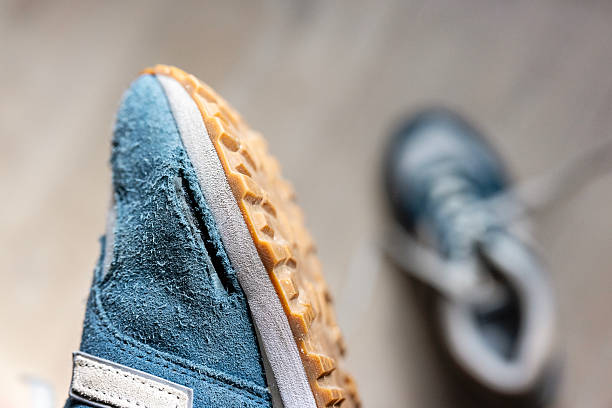
Every sneaker enthusiast knows the dreaded moment when a pristine toe box gives way to the first faint line of a crease. This marks not the end of the shoe but the beginning of a battle. While countless products promise to shield, stuff, or spray away creases, the most effective strategy is both simpler and more deliberate: the resting period between wears. This interval, often overlooked in favor of instant fixes, allows the materials of your sneakers to recover their original structure, and it fundamentally changes how you store and wear your footwear without damage.
To understand why resting works, one must appreciate the physics of a crease. When you walk, flex, or even stand still, the upper of the sneaker bends at the toes and the ball of the foot. This bending compresses and stretches the leather, synthetic leather, or canvas at a specific fatigue point. Over hours, the fibers lose their elastic memory. They begin to conform to the compressed state rather than snapping back. If you wear the same pair daily, there is no opportunity for recovery. The material continuously works under stress, and the crease deepens, eventually becoming a permanent fold that also damages the adhesive bonds between the upper and the outsole.
Resting your sneakers introduces a recovery window for that material. Leather, in particular, has a natural springiness that returns when given time to sit unloaded. A full day off, ideally two, allows the oils and fibers to redistribute and relax. The difference is noticeable. A pair worn every other day will show substantially lighter creasing than a pair worn daily for the same total number of hours. This is not folklore; it is the same principle that applies to your own muscles after a workout. Recovery builds resilience. Sneaker materials are no different, especially when you consider that modern uppers often contain polyurethane blends with time-dependent viscoelastic properties. They recover more slowly than they deform, meaning they lose their shape if you never stop deforming them.
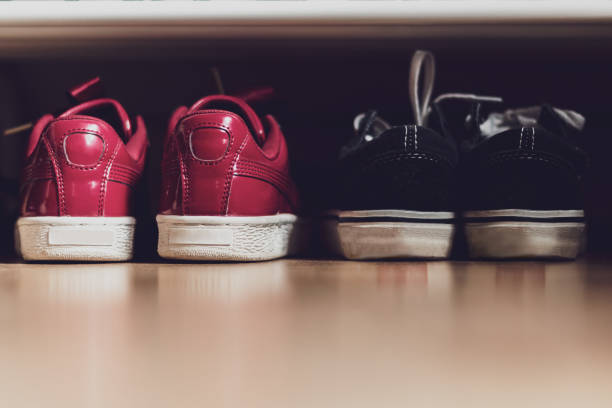
Yet resting alone is insufficient. How you store the sneaker during that interval makes or breaks its recovery. Simply kicking them off into a pile next to the door negates the benefit. The correct storage method involves two key tools: a shoe tree and a controlled environment. A proper shoe tree, ideally cedar or one with a smooth toe form, pushes the upper forward toward its original shape. This counteracts the bend that the toe box experienced during wear. Insert the tree while the sneaker is still slightly warm and slightly damp from foot moisture, not wet, but just from humidity. That warmth allows the material to be gently molded back into place by the tree. As the sneaker cools and dries, the tree acts as a memory guide for the silhouette, resetting the crease line to a straighter, smoother state.
The environment of storage also plays a role. Never store tired sneakers in a sealed plastic bag or a hot, sunny corner. Heat accelerates the breakdown of polymers and makes the material more pliable, which sounds good but actually means it will take a set in the wrong direction, deformed by gravity or by the floor of your closet. Instead, choose a cool, dry, and dark place. A consistent room temperature around twenty degrees Celsius is ideal. Humidity is an even sneakier enemy. Excess moisture in the air softens leather and loosens the fibrous structure, making creases easier to emerge. Conversely, extremely dry air can cause cracking. A moderate humidity level around fifty percent is perfect. Rotating between two or three pairs, each with its own shoe tree, allows you to always have a rested pair ready to wear.
Many enthusiasts resist rotation because they love one specific model. However, embracing an interval of at least forty-eight hours between wears of the same pair will extend the life of that sneaker by months, maybe years. The crease prevention is not about avoiding movement altogether, which is impossible, but about controlling when and how the material returns to its resting state. Think of your sneakers as having a finite number of flex cycles before permanent damage. Every five-mile hike uses up many of those cycles. A day in the office uses fewer. By giving the shoe time off, you effectively reset a portion of those used cycles, not perfectly, but enough to delay the fatiguing process.
Do not fall for the myth that crease protectors worn inside the shoe are the only answer. Those rigid shells can cause their own discomfort and sometimes even accelerate creasing at the edges where the protector ends. The natural interval, combined with a quality shoe tree after each wear, is a far more elegant solution. It respects the craftsmanship of the sneaker and your own biomechanics. So next time you take off your favorite pair, resist the temptation to put them on again tomorrow. Give them the gift of time. Your feet will thank you with cushioning that lasts, and your sneakers will reward you with a clean, uncreased silhouette that turns heads for years to come.
Articles