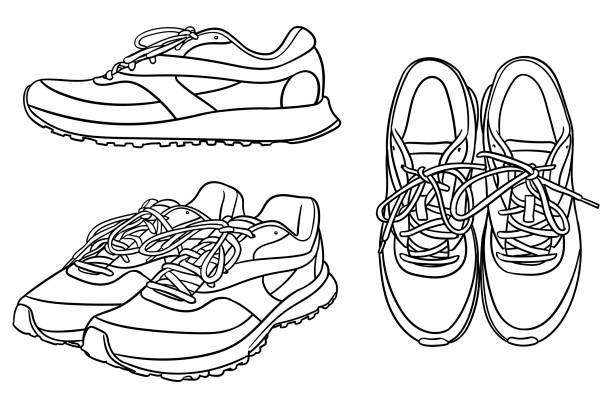
The Signal vs. the Noise in Community Ratings

The modern sneaker enthusiast exists in a paradox of plenty. With every major release now accompanied by dozens of professional reviews, hundreds of unboxing videos, and thousands of user-generated ratings, the challenge is no longer finding information but filtering it. The aggregation of community ratings and feedback has transformed how we evaluate sneakers, shifting authority from editorial gatekeepers to the collective voice of the crowd. Yet this democratization carries its own complications, as raw data must be interpreted with the same critical eye one applies to a sneaker’s silhouette or materials.
Community rating systems typically operate on a numeric scale, most commonly out of five stars. At first glance, this seems elegantly simple. A 4.2 average suggests a solid performer, while a 2.8 warns of disappointment. But sneakerheads quickly learn that the star rating alone tells an incomplete story. A basketball shoe designed for outdoor courts may receive three-star ratings from indoor players who find the outsole too aggressive, while receiving five stars from those who play exclusively on asphalt. The same shoe, same build quality, same performance metrics—yet divergent experiences yield radically different scores.
The aggregation of user reviews addresses this problem through volume and specificity. When hundreds of reviews converge around certain strengths or weaknesses, patterns emerge that transcend individual bias. A common complaint about inadequate heel lockdown in a particular model, repeated across dozens of independent users, carries real weight. Likewise, consistent praise for outsole durability in a lifestyle sneaker signals genuine value. The crowd becomes a distributed testing lab, logging miles and workouts that no single reviewer could replicate.
But the crowd is also subject to its own pathologies. Hype cycles create feedback loops where early adopters rate sneakers higher partly because they have paid resale prices and need to justify their investment emotionally. Conversely, release-day disappointments can trigger review bombing, where minor flaws are exaggerated into fatal condemnations. Discerning readers must learn to recognize these distortions. A sudden cluster of one-star reviews within twenty-four hours of a drop suggests coordinated sentiment rather than organic experience. Similarly, a model with only five-star reviews from accounts with no other ratings should raise skepticism.
The temporal dimension of community feedback adds another layer of complexity. Initial ratings, posted within days of purchase, capture first impressions—the feel of the upper, the immediate comfort of the midsole, the aesthetic satisfaction. These are valuable but limited. Long-term reviews, submitted after months of wear, reveal durability patterns, midsole compression rates, and outsole wear. The most useful aggregated systems separate launch-week buzz from sustained community wisdom. Some platforms now timestamp reviews or offer filters for “verified purchase after 30 days,” acknowledging that a sneaker’s true performance unfolds over time.
Fit and sizing remain the most contested territory in user-generated feedback. Even with detailed size charts, variation between brands and even between models from the same brand creates confusion. A community rating that says “go half a size up” may reflect the reviewer’s foot shape as much as the shoe’s dimensions. Aggregation helps here, but only when there is enough data to identify consensus. When five hundred users agree that a particular model runs narrow, that is a statistically meaningful signal. When five users say the same thing, it might be coincidence.
The most sophisticated sneaker communities have developed moderation systems to surface the highest-quality feedback. Upvoting helpful reviews, flagging unhelpful ones, and algorithmically weighting reviews based on reviewer expertise are all methods to separate signal from noise. Some platforms recognize “trusted reviewers” who have demonstrated consistent, detailed, and accurate feedback across multiple models. This hybrid approach preserves the democratic breadth of community ratings while introducing editorial judgment about credibility.
Ultimately, the aggregation of user reviews and community ratings represents the collective intelligence of the sneaker world. It captures truths that no single voice could articulate: that a shoe’s performance changes with weather, that break-in time varies by foot shape, that colorways differ in leather quality. But this intelligence requires active interpretation. The savvy enthusiast reads the average rating, then dives into the distribution, scans for recurring themes, and considers the reviewer profiles behind each score. The star is not the answer; it is the beginning of the question. Community ratings do not replace critical thinking—they demand it.
Articles