The Nike Air Force 1’s Journey from Basketball Essential to Hip-Hop Crown Jewel
In 1982, when Bruce Kilgore’s design for the Nike Air Force 1 first hit the hardwood, the basketball world was introduced to a shoe that defied convention. It was the first sneaker to feature Nike Air cushioning in a full-length unit, providing unprecedented comfort and impact protection for players who spent their careers pounding the boards. The original “White on White” colorway, with its clean leather upper and chunky silhouette, was engineered for performance. Yet even the most visionary product managers at Nike could not have predicted that this basketball shoe would eventually transcend the court to become one of the most enduring symbols in streetwear and hip-hop culture.
The Air Force 1’s early success on the court was undeniable. Six NBA players—Michael Cooper, Bobby Jones, Moses Malone, Calvin Natt, Mychal Thompson, and Jamaal Wilkes—were selected as the original endorsers, forming the “Original Six.” Their on-court dominance helped legitimize the shoe’s performance credentials. But after a brief production halt in 1984, Nike learned a crucial lesson: the shoe had developed a cult following far beyond professional basketball. Stores in Baltimore, Washington D.C., and Philadelphia began demanding restocks, driven by a growing community of sneaker enthusiasts who wore the Air Force 1 not for games but for everyday life. Nike reinstated the model as a lifestyle sneaker in 1986, and the Air Force 1 was reborn.
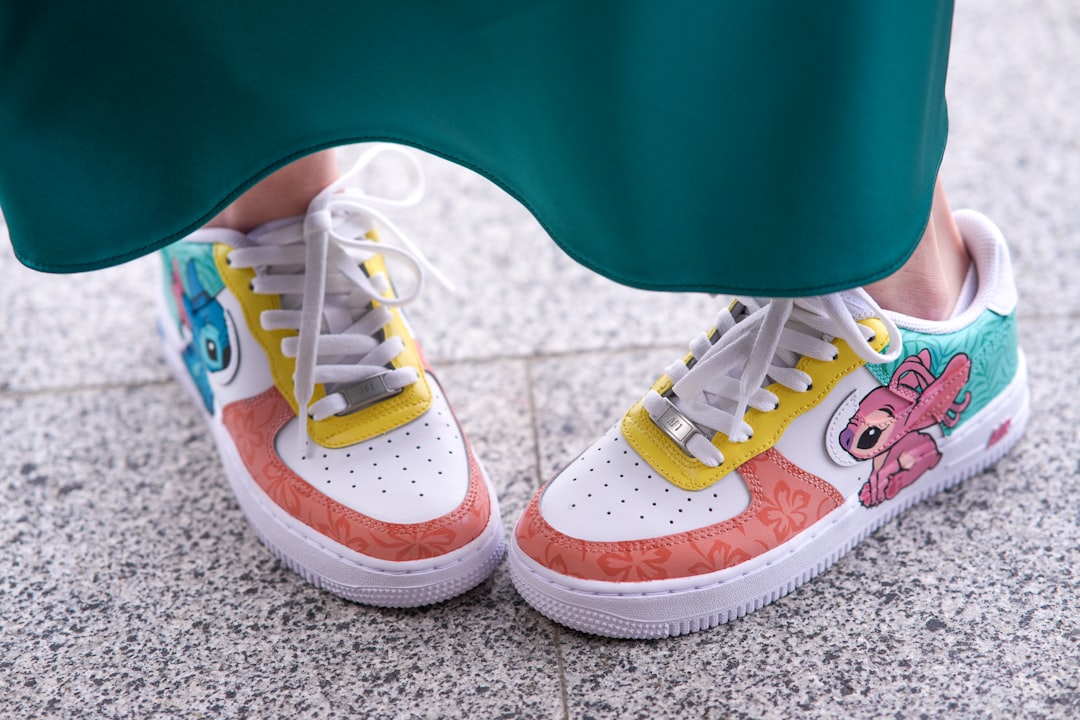
This pivot from basketball gear to street icon set the stage for the shoe’s inextricable link with hip-hop. As the genre exploded in the 1980s and 1990s, rappers and their fans adopted the Air Force 1 as a badge of authenticity. The shoe’s bold, clean lines resonated with a culture that prized both flash and substance. Artists like Nelly famously wore them in the early 2000s, but the connection ran deeper—the Air Force 1 became a uniform for b-boys, graffiti writers, and DJs. A pair of white-on-white Air Force 1s signaled that you were part of the movement, that you understood the code. The shoe’s durability meant it could withstand the rigors of street life, while its simple canvas allowed for endless customization—from paint-splattered art projects to diamond-encrusted luxury renditions.
The 1990s and 2000s saw the Air Force 1 evolve into a platform for collaboration and limited-edition releases. Nike’s “Color of the Month” series, initiated by Baltimore retailers, proved that the shoe could be a vehicle for local identity. Soon after, the Air Force 1 became the canvas for partnerships with designers, artists, and brands. From Stüssy to Supreme, from Off-White to Travis Scott, each collaboration reinterpreted the classic shape while preserving its core DNA. This ability to absorb new aesthetics without losing its original character is what separates the Air Force 1 from other sneakers that fade with passing trends. It is at once timeless and chameleonic.
Today, the Nike Air Force 1 remains the best-selling sneaker in Nike’s history, with millions of pairs sold annually across dozens of colorways and variants. Its influence extends into high fashion, where luxury houses have appropriated its silhouette, and into sneaker conventions, where rare pairs command thousands of dollars. Yet the humble white-on-white still holds a special place, worn by everyone from toddlers to grandmothers, from street vendors to billionaires. The shoe’s democratic appeal—its ability to look just as good with a tuxedo as with ripped jeans—is its ultimate legacy.
The Air Force 1’s journey from a performance basketball shoe to the undisputed crown jewel of hip-hop culture is not a story of accidental success but of cultural alignment. The shoe arrived at a moment when both basketball and hip-hop were ascending, and it provided a tangible link between these worlds. Its silhouette—bold, clean, unapologetic—mirrored the confidence of a generation. Decades later, it still speaks that same language. When you see a pair of Air Force 1s, you are not just seeing a shoe; you are seeing a history of sport, music, and identity wrapped in leather and air.
Articles