The Quiet Power of Minimalist Leather Sneakers in Smart Casual Style
Smart casual is often described as a balancing act, but its most successful expressions feel less like tightrope walking and more like quiet confidence. The leather sneaker has become central to that confidence because it bridges two impulses that once seemed incompatible: the ease of casual dressing and the polish of tailored clothing. Within that broad relationship, minimalist leather sneakers deserve particular attention. They are not the loudest option, nor the most technical, and they rarely announce themselves as fashion statements. Instead, they work through proportion, material, and restraint, allowing an outfit to feel relaxed without losing its shape.
The first virtue of a minimalist leather sneaker is a clean silhouette. Smooth uppers, a low profile, subtle stitching, and a sole that does not overwhelm the foot all help the shoe behave more like a refined accessory than athletic equipment. When paired with smart casual clothing, this restraint matters. A slim leather sneaker can sit beneath a tapered trouser or a softly pressed chino without interrupting the line of the leg. Chunky soles and high-contrast panels can be compelling in streetwear contexts, but they often compete with blazers, knitwear, and tailored coats. Minimalism keeps the conversation between clothing and footwear calm.
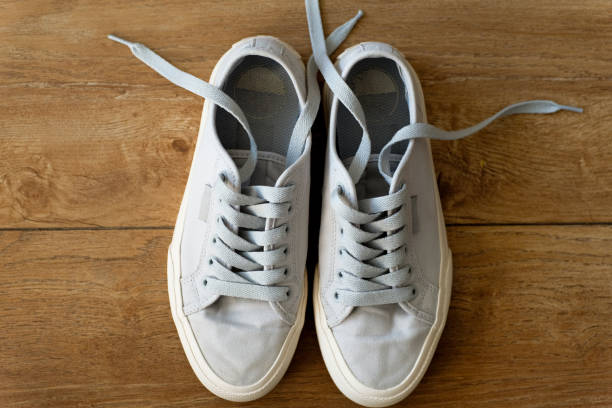
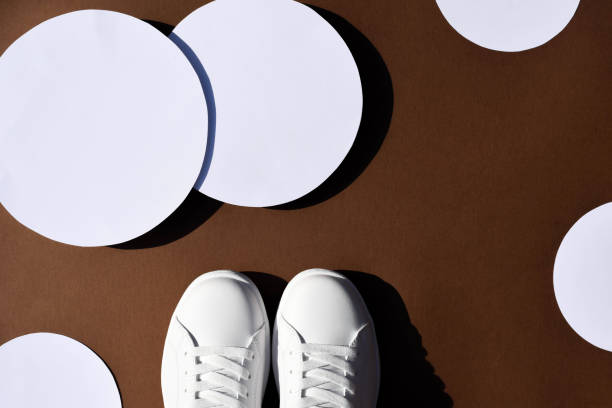
Color is the next consideration. White leather remains the default for good reason: it lifts darker trousers, freshens navy and charcoal, and creates a crisp contrast beneath earth-toned knitwear. Yet white is not the only minimal choice. Off-white, bone, taupe, and soft grey leather offer similar versatility with a softer edge, while dark brown or black leather sneakers can feel more grounded in autumn and winter. The key is not absolute neutrality but low visual noise. A single leather tone, limited hardware, and a sole that matches or gently contrasts with the upper allow the sneaker to integrate rather than dominate.
Material quality also shapes the smart casual result. Leather that looks plastic or creases harshly undermines the polish of tailored clothing, while a supple full-grain or smooth calf leather develops character without looking careless. A clean leather sneaker can be maintained with basic care: brushing away dust, wiping marks promptly, using shoe trees, and protecting the surface against weather. This maintenance is not merely practical; it supports the slightly dressed-up intention that smart casual requires. A scuffed canvas shoe may read as deliberately relaxed, but a cared-for leather sneaker reads as considered.
Styling succeeds when the sneaker is treated as part of a coherent whole. Tailored trousers with a gentle break, a fine-gauge sweater, an unstructured blazer, and a leather sneaker form a reliable uniform because each piece shares a similar level of formality. The same shoe can soften a button-down shirt and wool trousers, or bring ease to a monochromatic outfit of charcoal knit and grey flannel. In warmer weather, it works with lightweight chinos and an open-collar linen shirt, provided the trouser is clean and the shoe remains minimal. The danger is not the sneaker itself but the accumulation of casual signals: distressed denim, oversized hoodies, technical outerwear, and a loud sneaker can tip a smart casual outfit into pure leisurewear.
Proportion deserves special attention. Cropped or slightly tapered trousers often reveal the ankle and create a sharper relationship with a low-profile sneaker. Full-length trousers can work too, but they should fall cleanly rather than pool around the shoe. Socks become a deliberate detail: invisible socks preserve a streamlined summer look, while fine wool or cotton socks in a complementary tone add warmth and intention in cooler months. A leather sneaker should never look like an afterthought beneath an otherwise polished outfit; it should look like the piece that makes the outfit feel human.
Ultimately, minimalist leather sneakers endure in smart casual wardrobes because they offer permission. They permit tailoring to feel less rigid, knitwear to feel more deliberate, and daily dressing to move easily between a meeting, a meal, and a walk without a change of shoes. Their power is quiet, but it is real. When the silhouette is clean, the leather is cared for, and the outfit is balanced, the leather sneaker does not lower the dress code. It translates it into something more wearable, modern, and assured.