The Science of Ankle Support in High-Top Basketball Sneakers: Materials and Design Innovations
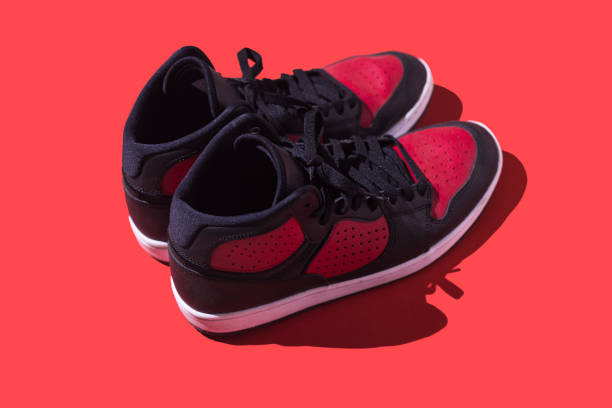
The high-top basketball sneaker stands as one of the most iconic silhouettes in footwear history, yet its primary purpose extends far beyond aesthetics. For decades, players at every level have relied on the elevated collar of a high-top to protect their ankles during the explosive lateral movements, sudden stops, and vertical landings that define the game. But the simple idea of wrapping material around the ankle has evolved into a sophisticated engineering challenge involving biomechanics, material science, and custom-fit technologies. Understanding how modern high-tops achieve ankle support and grip reveals a fascinating intersection of human anatomy and industrial design.
Ankle injuries remain among the most common ailments in basketball, with the anterior talofibular ligament particularly vulnerable to inversion sprains during rapid changes of direction. The traditional high-top design attempts to mitigate this risk by limiting the range of motion at the ankle joint, though early research often questioned whether simply raising the collar provided meaningful protection. The crucial insight came when designers realized that passive support from a tall upper is less effective than active stabilization that conforms dynamically to the foot. This realization drove the shift from rigid leather boots to engineered textiles and synthetic overlays that offer targeted compression without sacrificing mobility.
Modern high-tops employ a layered construction strategy. The inner sleeve, often made from knit mesh or neoprene, wraps the foot snugly like a sock, providing proprioceptive feedback that helps the wearer sense joint position. Over this, external support elements such as thermoplastic polyurethane (TPU) counterforts, molded heel clips, and lacing cages lock the heel into place. The lacing system itself has become a critical channel for transmitting tension from the foot to the ankle. Technologies like Nike’s Flywire use high-strength cables that integrate with the lace eyelets, pulling the upper tight across the midfoot while allowing the collar to adjust independently for ankle lockdown. This separation of forefoot and ankle tension was a breakthrough, as it enabled players to tailor the fit precisely.
Cushioning plays an unexpected but vital role in ankle support. A thick, unstable midsole can inadvertently increase the lever arm length, making an ankle roll more damaging. Consequently, many high-top basketball shoes now feature low-profile, responsive foams that keep the foot close to the ground. Nike’s Zoom Air units, Adidas’s Boost compound, and Puma’s ProFoam offer energy return while maintaining court feel. Some brands have even integrated carbon fiber plates or shanks into the midfoot to resist torsional bending, preventing the shoe from twisting excessively during cuts. This stiffness complements the ankle collar, creating a unified chassis that supports the entire kinetic chain from heel to toe.
Grip, the second half of the high-top promise, is delivered through carefully engineered outsole patterns. Basketball courts are notoriously variable surfaces—dusty wood, polished concrete, or outdoor asphalt each demand different rubber formulations and tread geometries. Herringbone patterns remain a gold standard for multidirectional traction, but designers now use data from motion capture to create non-symmetrical tread blocks that bite into the floor during specific movements. The rubber compound itself has evolved from simple gum rubber to high-wear carbon rubber blends that balance stickiness with durability. Some brands, like Under Armour, have introduced micro-textured layers that improve grip on dusty courts without leaving black marks.
The most advanced recent innovations involve adaptive technologies. Lace-less systems such as the Nike Adapt platform use a motorized dial to automatically adjust tension throughout a game, tightening the ankle collar when landing from a jump and loosening slightly during rest. While still niche, these systems point toward a future where ankle support becomes reactive rather than static. Meanwhile, 3D-printed midsoles and custom-lasted uppers are beginning to offer personalized fit based on a player’s foot scan, theoretically optimizing the pressure distribution around the ankle for injury prevention.
Despite all this engineering, the high-top is not a cure-all. Research continues to debate its effectiveness compared to low-tops or even barefoot-style shoes, especially when ankle strengthening and proprioceptive training are factored in. What remains clear is that the high-top has evolved from a simple padded leather collar into a complex biomechanical tool. The materials—flyknit, fuse meshes, TPU, Pebax—are chosen not for marketing appeal but for their measurable effects on joint stability. The grip patterns are not decorative but calculated from thousands of hours of player testing.
For anyone stepping onto a basketball court, the choice of high-top should be informed by play style, foot shape, and court conditions. A high-top’s real value lies not in the height of the collar but in how seamlessly it integrates with the foot’s natural movement. When a shoe disappears on the foot, when the ankle feels cradled yet free, and when the sole bites into the floor on a hard cut, that is the moment the science of support and grip becomes invisible—and utterly effective.
Articles