The Science of Grip: How High-Top Basketball Sneakers Revolutionized Court Traction
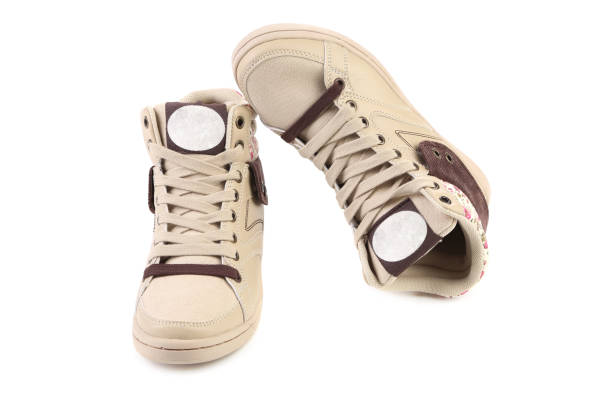
The basketball court is a stage for explosive movements, sudden stops, and sharp cuts. For decades, the high-top sneaker has been synonymous with ankle support, but the equally critical component of grip has undergone a quiet revolution. While the iconic collar height protects against sprains, the outsole pattern—the interface between athlete and hardwood—determines whether that support translates into performance or leads to a slip. Understanding how traction evolved in high-top basketball sneakers reveals a story of material science, biomechanics, and design innovation that transformed the game itself.
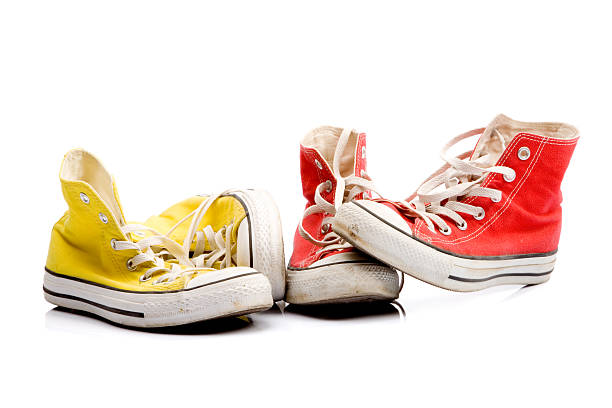
In the early days of basketball, players wore canvas sneakers with flat, smooth rubber soles. These shoes offered minimal grip, and players often resorted to dusting the court with rosin or talcum powder to manage moisture and improve traction. The introduction of the Converse All Star in the 1920s, with its high-top silhouette, provided ankle containment, yet the outsole remained a simple herringbone pattern. This design, though rudimentary, became the foundation for decades of traction engineering. The herringbone’s angled grooves effectively channeled dust away from the contact patch, increasing friction during lateral movements. It was not until the 1970s, when athletic footwear began to separate into specialized categories, that basketball sneaker designers focused on grip as a distinct performance variable.
The 1980s ushered in a golden era of basketball sneaker innovation, driven by the rise of signature athlete endorsements. Nike’s Air Force 1, released in 1982, featured a thick rubber outsole with a pivot point at the forefoot—a circular pattern that allowed players to rotate their weight without catching the floor. This design enhanced agility while maintaining the high-top’s ankle lockdown. Meanwhile, the adidas Forum introduced interchangeable outsole inserts, allowing players to customize traction for different court surfaces. These early experiments revealed that grip was not a one-size-fits-all feature; it depended on the player’s position, playing style, and the specific finish of the hardwood.
The 1990s brought the most radical shift in grip technology with the introduction of encapsulated Air units and visible cushioning systems. The Nike Air Jordan series, particularly the AJ XI, used a carbon fiber spring plate and a translucent rubber outsole that offered exceptional traction on clean courts. However, the translucent rubber was notoriously slippery on dusty floors, leading to a demand for more aggressive tread patterns. Reebok’s Pump system, while primarily focused on fit, also integrated a herringbone pattern with deeper, wider channels to expel debris. This era demonstrated that grip was a trade-off: deeper treads improved multi-surface performance but reduced court feel, while shallow patterns offered responsiveness at the cost of slip resistance on dusty or slick courts.
By the 2000s, computational modeling and motion-capture technology allowed manufacturers to map pressure points during game-like movements. The Nike Zoom GP and later the LeBron series employed a “data-driven” traction layout, with concentrated pods of herringbone under the ball of the foot and the heel, where maximum force occurs during jumps and cuts. The high-top design evolved concurrently, with collar heights rising higher and lacing systems integrating with the outsole to create a unified chassis. For example, the adidas Crazy 1 introduced a molded heel counter that worked in concert with the traction pattern to stabilize the foot during hard stops, effectively linking ankle support and grip into a single system.
Today, high-top basketball sneakers achieve grip through multi-directional patterns, often combining chevrons, circles, and wavy lines to handle both linear acceleration and lateral shuffling. Materials like Continental rubber, used by Nike and adidas, provide superior durability and wet-grip performance, while Michelin-treaded outsoles appear on premium models like the Puma Clyde All-Pro. Yet the most significant advancement may be the rise of “adaptive traction”—outsoles that remain effective even when dust accumulates. Brands now treat the outsole with special compounds that attract or repel dust particles, and some designs incorporate small grooves that actively release foreign matter during play.
The relationship between the high-top silhouette and grip is not merely additive; it is interdependent. A high-top sneaker that fails to grip will place more strain on the ankle, as the foot slips within the shoe or across the floor, negating the support of the collar. Conversely, a sole with exceptional traction can reduce the need for extreme collar height, allowing for lighter, more flexible designs. Modern sneakers like the Nike KD series and the Under Armour Curry line showcase how a balanced approach—moderate collar height paired with micro-tread patterns—can achieve both ankle stability and court bite.
What lies ahead is even more exciting. Smart soles with embedded sensors may one day adjust tread depth in real time based on court conditions, while 3D-printed outsoles promise personalized traction maps tailored to an individual’s gait. As long as basketball remains a game of sudden stops and explosive leaps, the high-top sneaker will continue to evolve, driven by the eternal quest for that perfect pivot. The grip is not just about sticking to the floor; it is about freedom—the freedom to move without hesitation, to cut without fear, and to land with confidence. In that sense, the science of grip is the unsung hero behind every ankle-high silhouette.
Articles