The Science of Sole Yellowing in Deadstock Sneakers
Natural rubber and polyurethane are common midsole materials. Their chemical structure contains double bonds that react with oxygen. This process, called oxidative degradation, is the primary reason white soles turn yellow over time even when a sneaker has never touched pavement. For collectors, the irony is that unworn condition confers no immunity. A deadstock pair from the 1990s may display more yellowing than a pair worn twice and stored improperly. Time is the active ingredient, and oxygen is the catalyst.
The yellowing mechanism varies slightly by material. Rubber uses accelerators and antioxidants that migrate to the surface and react with ozone or UV light. Polyurethane undergoes chain scission - the long polymer chains break into shorter fragments that absorb blue light and reflect yellow. Temperature accelerates these reactions. For every ten degree Celsius rise, oxidation rates roughly double, a relationship known as the Q10 rule in chemistry. Thus a pair stored in a hot attic will yellow far faster than one in a climate controlled closet. Conversely, refrigeration slows the process, which is why some conservation experts recommend cool, dry storage for long term preservation. But freezing is dangerous; moisture condensation can damage leather, suede, and adhesives. The same reaction happens to yellowed PU foam in running shoes, though deadstock pairs are valued specifically because the process never started with wear.
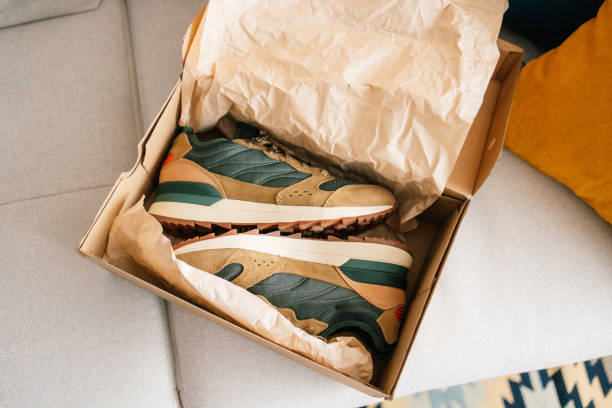
Light, particularly ultraviolet, initiates photocleavage in polymers. Many collectors display deadstock pairs on shelving or acrylic cases. Even indirect sunlight can break down the surface of a sole. LED lighting in stores emits negligible UV, but window-filtered daylight still carries high energy wavelengths. The safest display for a deadstock pair is a dark, enclosed box. Yet the original shoe box itself is not inert. Cardboard and printing inks can release small amounts of sulfur compounds and volatile organic compounds that stain or accelerate yellowing on certain rubbers. Acid free tissue paper and acid free boxes are better alternatives, though they are often seen as less authentic.
Humidity also plays a role. Moisture acts as a plasticizer and a transport medium for oxygen into the polymer network. High humidity promotes hydrolysis in polyurethane, a different breakdown process that can lead to crumbling and lack of structural integrity. Low humidity, however, can cause desiccation. Leather shrinks and cracks, and adhesives become brittle. When preparing deadstock sneakers for decades of storage, a relative humidity of forty to fifty five percent is recommended. Silica gel packets help absorb micro moisture inside an airtight container, but they desaturate over time. Rechargeable desiccants require periodic drying, and this maintenance is often forgotten.
Beyond environmental factors, the original factory finish matters. Early polyurethane formulations lacked the stabilizing chemistry found in modern sneakers. Midsole yellowing is thus an irreversible, spontaneous event. Chemical treatments like “sole sauce” or hydrogen peroxide mixed with UV light can temporarily reverse oxidation on the surface, but these processes alter the polymer and often accelerate future yellowing. Solvent based cleaners can remove protective factory coatings. For this reason, serious collectors often accept a certain degree of yellowing as natural aging, similar to the patina on a leather jacket. Some enthusiasts intentionally expose soles to controlled UV light, seeking a uniform vintage aesthetic rather than fighting nature.
The economic valuation of deadstock cleanness has created a complex relationship between collector and object. A pair that remains crisp and icy is worth more than a yellowed pair, but the yellowed pair may actually be aesthetically pleasing to some. The sneaker resale market awards premiums to pairs stored in climate controlled facilities, not attics. For anyone serious about maintaining unworn condition, the keys are simple: limit oxygen exposure, shield from light, control temperature, and moderate humidity. Place sneakers in airtight mylar bags with an oxygen absorber, then inside a cedar or pH neutral box. Store them in a cool room, away from heat vents and windows. Never stack heavy boxes on top of a sneaker box. Handle deadstock pairs only with gloves or freshly washed hands, since skin oils and salts penetrate the surface and begin decomposition. Such handling protocols may seem excessive, but they separate the casual collector from the serious preservationist.
Ultimately, deadstock preservation is a race against entropy. Every polymer that gives a sneaker its life is also the seed of its chemical death. The mission of the dedicated collector is to slow this race, not to win it, because winning means keeping a shoe in a state chemistry does not allow. Understanding the scientific underpinnings of yellowing transforms preservation from a mere environmental accident to a deliberate act of material care. By recognizing that the same oxygen that sustains us is the agent that yellows our treasures, we accept the paradox: true deadstock preservation demands the absence of the very atmosphere that surrounds the living world.
Articles