The Sidestripe That Changed Skateboarding: Vans Old Skool’s Enduring Icon Status
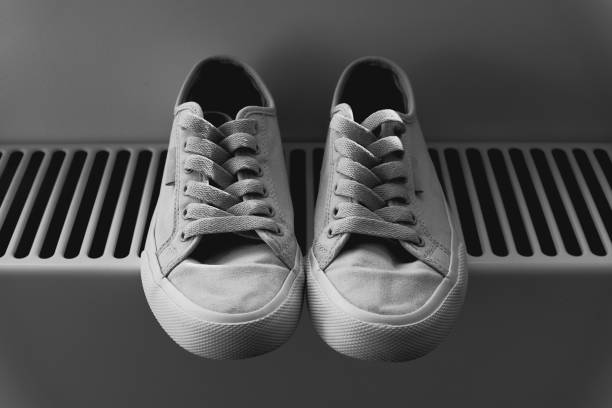
The Vans Old Skool began in 1977 as Style 36, a low-top skate shoe that looked simple but carried a radical detail: a curved leather stripe sweeping from the eyestay to the heel. Originally called the Jazz Stripe, that mark would become one of the most recognizable design signatures in footwear. It was not merely decoration. The stripe gave the shoe a sense of motion, echoing the arcs of skateboarders carving pool walls and the lines they drew on concrete. More importantly, it arrived at a moment when skateboarding needed footwear that could survive the abuse of a new generation. The Old Skool answered with a combination of board feel, grip, and toughness that would make it a permanent fixture in skate history.
Before the Old Skool, skateboarders often wore canvas sneakers that tore apart quickly. The rise of vertical skating in empty swimming pools and the growing street-skating scene demanded more. The Old Skool’s upper mixed sturdy suede panels with breathable canvas, placing reinforcement where ollies, kickflips, and slides wore through first. Its padded collar offered ankle support without sacrificing movement. Underfoot, the waffle rubber outsole provided the mechanical grip that became a Vans hallmark. That sole, with its diamond pattern, locked onto grip tape and gave riders the confidence to commit to tricks. The shoe was not engineered in a laboratory; it was refined by skaters who tested it in real conditions and asked for changes. That feedback loop made the Old Skool feel authentic, because it was built with the culture rather than merely marketed to it.
The sidestripe became a visual shorthand for that authenticity. In the late 1970s, skateboarding was still outsider culture, dismissed by many as a fad. The Old Skool’s stripe was a quiet emblem for those who knew. It appeared on shoes scuffed by curbs, stained with pool dust, and held together by shoelaces knotted after heavy sessions. Skaters like Tony Alva and Stacy Peralta helped push the shoe into the spotlight, linking it to the Dogtown era and the rebellious energy of Southern California. As skateboarding grew, the Old Skool grew with it. It moved from pools to parks, from parks to streets, and from streets to the world stage. Through every shift, the silhouette remained recognizable. The stripe did not need to shout. It simply persisted.
That persistence is why the Old Skool crossed over. By the 1990s, it was no longer only a skate shoe. Musicians, artists, and everyday wearers adopted it for its unpretentious look. The shoe fit with punk, hip-hop, indie, and streetwear because it never tried too hard. Its proportions were balanced, its materials honest, and its logo subtle enough to be worn without feeling like a billboard. Collaborations brought new materials, colors, and stories, but the core design stayed intact. A checkerboard pattern, a premium leather build, or a bright suede colorway could change the mood without changing the message. The Old Skool became a canvas for self-expression, yet it always returned to the same shape.
In the collector world, the Old Skool occupies a rare position. It is accessible enough for a first pair and deep enough for a lifetime of hunting. Vintage examples, early Style 36 models, rare collaborations, and regional exclusives all tell the story of how a skate shoe became a cultural object. Collectors appreciate the small details: the stitching around the toe, the heel logo, the shape of the stripe, the way different eras altered the silhouette. These variations matter because they show how a single design can evolve while keeping its identity. The Old Skool is not preserved behind glass. It is meant to be worn, skated, and worn again until the suede softens and the sole smooths.
The Vans Old Skool remains a Hall of Fame model because it did not choose between performance and style. It proved that a skate shoe could be functional, durable, and beautiful in its simplicity. The sidestripe is more than a logo. It is a line that connects pool coping to city streets, amateur skaters to professionals, and past decades to the present. In a market full of reinventions, the Old Skool endures by staying true to its original idea: make something that works, make it tough, and let the culture do the rest. That is why the shoe still rolls, still grips, and still belongs.
Articles