
The Significance of the “Uptown” Nickname: More Than Just Geography
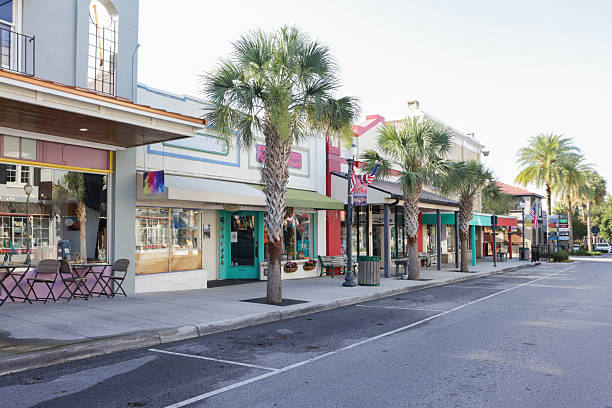
The nickname “Uptown” carries a resonance that far exceeds its simple directional meaning. While it literally denotes the northern part of a city or a higher-elevation area, its significance is woven from threads of cultural identity, socio-economic history, and aspirational symbolism. To understand “Uptown” is to explore how communities define themselves in opposition to “Downtown,“ creating a distinct narrative of refinement, exclusivity, and evolving urban life.
Historically, the significance of “Uptown” is rooted in the 19th and early 20th-century urban expansion of North American cities. As industrial cores—Downtown—became crowded, polluted, and associated with commerce and the working class, the affluent sought refuge in quieter, greener neighborhoods literally up the hill or north of the bustling center. Thus, “Uptown” became synonymous with a residential haven of spacious brownstones, grand apartments, and manicured streets. It signaled a separation from the grit of daily business, representing a zone of domesticity, leisure, and perceived sophistication. This established the foundational layer of the nickname’s meaning: an enclave of privilege and a deliberate social distancing from the chaotic heart of the city.
Culturally, “Uptown” evolved into a powerful brand denoting a certain lifestyle and aesthetic. It conjures images of elegance, high culture, and upscale consumption—think of New York’s Uptown galleries, museums, and boutiques along Madison Avenue. The term became an adjective unto itself; “uptown” manners implied polish and formality, while an “uptown” venue promised a more expensive and exclusive experience. This cultural cachet is powerfully reinforced through art, music, and literature. From Duke Ellington’s “Take the ’A’ Train,“ which celebrated the vibrant Black renaissance in Harlem (New York’s Uptown), to the sleek “Uptown Funk” of a later era, the nickname is consistently tied to vibrancy, style, and a cutting-edge scene, albeit one with a sheen of sophistication.
However, the significance of “Uptown” is not monolithic and reveals crucial socio-economic and racial dimensions. In many cities, the term has been adopted and transformed by Black communities, most notably in Charlotte, North Carolina, and Chicago. In these contexts, “Uptown” can lose its exclusively white, affluent connotation and instead represent a historic center of Black commerce, culture, and resilience. Here, the nickname signifies a self-sustaining community hub with its own identity, challenging the traditional narrative. Yet, this very cultural significance often makes these neighborhoods targets for gentrification, where the historical “Uptown” meaning of affluent displacement can tragically reassert itself, creating tension between legacy and renewal.
Ultimately, the enduring significance of the “Uptown” nickname lies in its relational and aspirational qualities. It cannot exist without its counterpart, “Downtown.“ Where Downtown is public, fast-paced, and commercial, Uptown is often portrayed as more private, leisurely, and residential. It represents an aspiration—a geographic and social climb. To “go Uptown” or to live “Uptown” is to have achieved a level of success that permits a certain remove and refinement. Even as modern cities blur these lines, with luxury condos downtown and vibrant mixed-use neighborhoods uptown, the nickname retains its symbolic power.
In conclusion, the significance of “Uptown” is a complex tapestry of urban history, cultural signaling, and social stratification. It is a geographic marker that transcends geography, serving as a shorthand for exclusivity and elegance, a badge of community identity, and a symbol of the eternal urban dynamic between the core and the periphery. More than just a point on a map, “Uptown” is an idea—one of arrival, distinction, and the perpetual redefinition of what constitutes the “better” part of town.
Articles