The Unexpected Legacy: How Celebrities Are Making Retro Sneakers the New Luxury Statement
Walk into any high-end boutique or scroll through a red-carpet gallery today, and you’ll notice a curious shift. The sneakers that once screamed “athlete” or “skater” now whisper “investment” and “heritage.” While fashion houses have long dabbled in streetwear, it is the celebrity class—actors, musicians, athletes turned style icons—who have single-handedly elevated retro sneakers from nostalgic relics to coveted luxury status symbols. This transformation didn’t happen overnight, but it has permanently altered how we perceive footwear, value, and identity.
The story begins with a paradox. For decades, luxury fashion was synonymous with leather loafers, polished oxfords, and stiletto heels. Sneakers belonged to playgrounds and gyms. Yet the moment a celebrity stepped off a private jet in a pair of beat-up Air Jordan 1s, the narrative fractured. Suddenly, those faded, creased sneakers carried a story—a story of authenticity, rebellion, and cultural capital. The high price tag of a limited-release retro sneaker became a badge of insider knowledge, not just disposable income.
What makes retro sneakers so magnetic to today’s stars? Part of it is the implicit challenge to traditional hierarchy. When Hailey Bieber pairs a vintage Adidas Stan Smith with a silk slip dress, or when LeBron James wears a pristine pair of Nike Air Force 1s to a charity gala, they are signaling that comfort and history can coexist with elegance. They are rewriting the rules of formality. The retro sneaker, with its chunky silhouette, aged midsole, and slightly yellowed rubber, becomes a textural contrast that adds depth to an otherwise pristine outfit. It is a deliberate act of visual storytelling.
Consider the cultural phenomenon of the “quiet luxury” trend that dominated recent years. While minimalist wardrobes lean on cashmere and tailored wool, retro sneakers offer the perfect counterpoint. A vintage New Balance 990, for example, with its subtle grey mesh and suede overlays, embodies an understated opulence that speaks to connoisseurship rather than branding. Celebrities like Steve Lacy and Rihanna have been photographed wearing these so-called “dad shoes” with everything from cargo pants to floor-length gowns, proving that the most expensive accessory can be the one that looks worn-in.
Then there is the power of rarity. Retro sneakers are often re-released in limited quantities, creating a scarcity that mirrors the exclusivity of haute couture. When a celebrity debuts a pair of sneakers that have not been produced in decades, they instantly command attention. The hype around Travis Scott’s Air Jordan collaborations or Kanye West’s Yeezy 350 v2 models is not just about the shoe itself—it is about the taste and timing required to own it. For fans, seeing their idol wear a retro sneaker is a validation of their own style instincts. It turns a personal purchase into a shared cultural moment.
Dressing like a celebrity, however, is not about imitation. The true lesson from celebrity styling of retro sneakers lies in the confidence of juxtaposition. Take the way Zendaya pairs a streamlined vintage Nike Cortez with a tailored blazer and wide-leg trousers. The sneaker adds movement and youthfulness, while the blazer provides structure. Or consider how Harry Styles has worn brightly colored retro Reeboks with printed suits, blurring the line between masculine and feminine, formal and casual. These choices teach us that retro sneakers are not a retreat from style but an advancement of it.
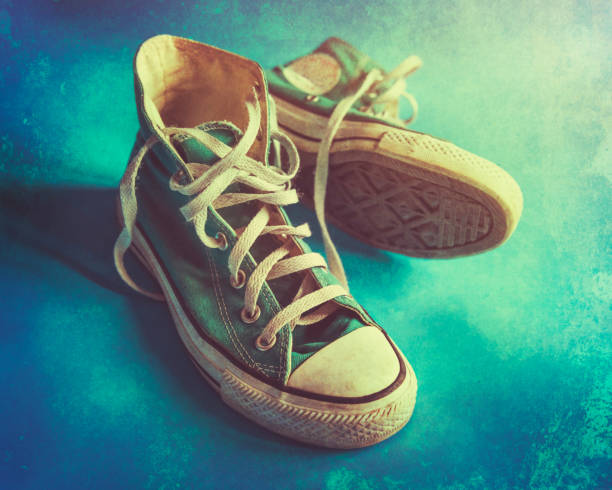
The luxury market has taken notice. High-end brands such as Prada, Dior, and Gucci have collaborated with retro sneaker silhouettes, embedding their logos into foam midsoles and mesh uppers. Yet, interestingly, the most powerful celebrity endorsements often bypass these designer collaborations in favor of pure, unadulterated vintage. When a singer like Justin Bieber wears a pair of thirty-year-old Converse Weapons, he is affirming that true luxury is not manufactured—it is found. It is the patina of age, the worn-in collar, the slightly frayed lacing that no factory can replicate.
From a stylistic perspective, the retro sneaker’s resurgence has democratized fashion. A pair of classic Nike Dunks can be dressed up with a cashmere coat or down with distressed denim. They function as neutral canvases that absorb the personality of the wearer. Celebrities have shown us that the sneaker’s value lies not in its price tag but in its ability to anchor an outfit with a sense of history. When you slip on a retro model, you are borrowing the energy of another era—be it the 1985 Air Jordan release, the 1970s Adidas Gazelle, or the 1990s Asics Gel-Lyte. That borrowed energy becomes a conversation starter, a subtle declaration of cultural literacy.
As we look to the future, the celebrity-driven renaissance of retro sneakers shows no signs of waning. With each new generation of street style photographers and social media influencers, the retro sneaker continues to evolve. It no longer stands as a relic of the past but as a living, breathing component of contemporary luxury. The lesson is clear: style is not about following trends but about understanding the stories embedded in the objects we choose. And when a celebrity selects a retro sneaker, they are telling the world that some stories are worth stepping into.
Articles