The Unlikely Ascent: How the Nike Dunk Transformed from Basketball Blueprint to Skateboarding Icon
When the Nike Dunk first hit hardwood floors in 1985, it entered a world already crowded with basketball sneakers. The Air Jordan 1 had launched just months earlier, capturing headlines and cultural lightning. The Dunk, by contrast, seemed almost modest: a high-top silhouette borrowed heavily from the Terminator and the Air Jordan 1 itself, offered in a series of college-color combinations that paid homage to top NCAA programs. Few could have predicted that this team-centric, court-focused shoe would one day become the defining canvas of skateboarding culture, a symbol of rebellion and creativity that would outlast its original purpose and inspire generations of collectors.
The Dunk’s original mission was straightforward. Nike designed it to be an affordable, durable basketball shoe for college athletes. The “Be True to Your School” campaign rolled out colorways for seven universities: St. John’s, Iowa, Michigan, Georgetown, Syracuse, UNLV, and Kentucky. Each pair used the school’s primary colors on the smooth leather upper, with a white panel keeping the design clean and school-spirited. The shoe performed adequately on the court, but it never achieved the cultural dominance of the Air Jordan line. By the early 1990s, basketball had moved on to newer technologies and sleeker shapes, and the Dunk faded into relative obscurity, gathering dust on clearance racks.
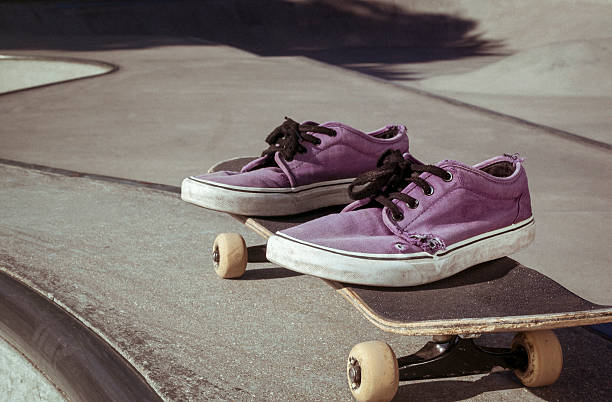
But a strange thing happened on the way to irrelevance. In the mid-1990s, skateboarders began to discover the Dunk. The skate scene of that era was in flux. The chunky, puffy basketball shoes of the early ’90s had become cumbersome for board feel, while thin canvas sneakers lacked the protection needed for hard landings. Skaters needed something with flat soles, durable construction, and enough cushioning to absorb impact without sacrificing control. The Nike Dunk, with its sturdy leather, padded collar, and grippy outsole, fit the bill perfectly. Skate teams in California and the Pacific Northwest started customizing old Dunks, repainting them in wild patterns, and wearing them as unofficial uniform. Nike, ever alert to emerging trends, took notice.
The turning point came in 1999 when Nike officially entered the skate market with a dedicated team and the release of the Nike Dunk SB—the SB standing for Skateboarding. This was not merely a reissue. The Dunk SB received subtle but crucial modifications: a thicker tongue to cushion lace pressure, a Zoom Air insole for impact protection, and a more durable suede or leather upper that could withstand the abrasion of grip tape. The silhouette remained true to the original, but the upgrades made it a technical tool as much as a style statement. Suddenly, the Dunk was not a forgotten basketball shoe; it was the most sought-after sneaker in skate shops.
What followed was a golden era of collaborative releases that elevated the Dunk SB into the pantheon of iconic sneakers. The early 2000s saw partnerships with skate shops like Supreme, Stüssy, and Zoo York, producing colorways that became instant grails. The “Supreme Dunks” in red and white, the “Stüssy Dunks” in hemp and denim, and the “Tiffany” Dunks by Diamond Supply Co. (with a turquoise and black palette inspired by a New York jewelry store) all demonstrated that the Dunk could transcend sport and become wearable art. These collaborations were not just about aesthetics; they represented a fusion of skateboarding’s counter-culture spirit with sneakerhead obsessiveness. Each release was limited, heavily hyped, and often embroiled in campouts, raffles, and resale frenzies.
The Dunk’s journey from college colors to skate domination also redefined how sneaker culture interacts with sports. Where basketball shoes traditionally celebrated athletes and teams, the Dunk SB celebrated skaters, artists, and local shops. The “Paul Rodriguez” Dunks, named after the professional skater, featured his signature logo and personal details. The “Nike SB Dunk Low ‘Raygun’” paid tribute to an imaginary basketball team from a Nike marketing campaign, blending the shoe’s original basketball heritage with its new skate identity. Each release told a story, and collectors chased those stories as much as they chased the shoes themselves.
The impact of the Dunk on contemporary sneaker culture cannot be overstated. When the original “Be True to Your School” colorways were retroed in 2008 and again in 2020, they sold out instantly, not because of college nostalgia but because the Dunk had become a universal symbol of cool. The shoe’s simple, clean lines make it a perfect canvas for endless reinterpretation—from traditional leather to premium suede, from loud prints to muted tans. In 2020, the Dunk returned to the spotlight in a massive way, driven by retro releases, celebrity endorsements, and a new generation of sneaker enthusiasts who had grown up on skate videos and limited editions. The resurgence reached such a fever pitch that the Dunk became one of the most resold shoes on platforms like StockX, often commanding multiples of retail price.
Today, the Nike Dunk stands as a testament to the unpredictable path that footwear can take. What began as a college basketball shoe, practical and team-oriented, evolved into a skateboarding essential and then into a cultural icon that bridges sports, streetwear, and art. Its story reminds us that authenticity in design—a comfortable shape, durable materials, and a willingness to adapt—can outlast any marketing campaign. The Dunk did not conquer the world by being the fastest or the highest-tech. It conquered it by being a blank slate, a shoe that allowed skaters, designers, and wearers to project their own identities onto it. From the courts of the Big East to the concrete ledges of Los Angeles, the Nike Dunk earned its place in the Hall of Fame not by dominating a single category, but by refusing to stay in one.
Articles