The Vans Old Skool: From Skate Park to Street Style Icon
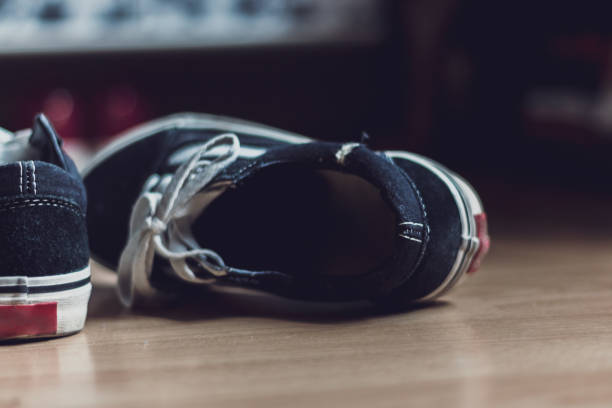
In the sprawling history of footwear, few silhouettes have achieved the cultural ubiquity of the Vans Old Skool. Born in 1977, this model arrived at a pivotal moment in skateboarding’s evolution, when riders were no longer content with simple canvas slip-ons. The Old Skool was Vans’ first shoe to incorporate leather and suede panels, a reinforced toe cap, and, most famously, the now-iconic Sidestripe. What began as a functional upgrade for skaters demanding more durability and board feel soon became a visual shorthand for rebellion, creativity, and subcultural authenticity. Its journey from the concrete bowls of Southern California to the runways of high fashion is a story of how a utilitarian design can transcend its origins to become a global symbol.
The late 1970s were a transformative era for skateboarding. The sport had moved beyond the empty swimming pools of the 1960s into purpose-built skate parks, and skaters were pushing the limits of trick progression. The original Vans #44, known as the Authentic, was a lightweight canvas low-top that offered excellent grip but little protection. As skaters began landing harder moves and dragging their feet for braking, they quickly wore through the thin canvas. In response, Vans designer Paul Van Doren introduced the Style 36—the shoe that would later be renamed Old Skool. By adding a suede toe cap and leather side panels, he created a shoe that could withstand the abrasion of grip tape while still providing the flexibility needed for precise board control. The Sidestripe, originally a simple white leather strip stitched onto the side, was not merely decorative; it reinforced the stress points where the shoe flexed during ollies and kickflips.
The Old Skool’s adoption by the emerging skateboarding community was immediate and organic. It was the shoe of choice for the Z-Boys, the legendary Dogtown crew whose aggressive, low-to-the-ground style reshaped the sport. Skaters like Tony Alva, Jay Adams, and Stacy Peralta wore the Old Skool not because they were paid to, but because it worked. The shoe’s padded collar and padded insole provided comfort during long sessions, while the vulcanized rubber sole delivered the grip that allowed skaters to feel every contour of their board. As skateboarding exploded in popularity throughout the 1980s, the Old Skool became the de facto uniform for a generation of kids who saw skateparks as their sanctuaries. The Sidestripe, originally a functional detail, became a badge of identity—a mark of belonging to a counterculture that rejected mainstream athletic shoe branding in favor of something more raw and authentic.
But the Old Skool’s influence did not stop at the skate park. The early 1980s saw the rise of punk rock and hardcore music scenes, and skaters were often at the center of these movements. Bands like Black Flag and the Dead Kennedys wore Vans on stage, and soon the Old Skool became a staple of punk fashion. The shoe’s simple, tough aesthetic meshed perfectly with the DIY ethos of the scene. It was affordable, durable, and anonymous enough to be customized with band patches or spray paint. This crossover between skateboarding and music helped cement the Old Skool as a symbol of youth rebellion. By the early 1990s, the shoe had spread beyond subcultures into mainstream streetwear, partially due to its adoption by breakdancers, BMX riders, and early hip-hop pioneers. The checkerboard pattern, though originally associated with the Slip-On, was occasionally applied to the Old Skool, further blurring the lines between skate, punk, and street style.
The mid-1990s brought a downturn for skateboarding as a commercial force, but the Old Skool never disappeared. It remained a staple in skate shops and thrift stores alike, worn by a dedicated core of skaters and non-skaters who appreciated its timeless silhouette. Then came the 2000s, when nostalgia-driven fashion cycles revived interest in 1980s and 1990s aesthetics. High-fashion labels began collaborating with Vans, elevating the Old Skool from a utilitarian skate shoe to a luxury streetwear item. The 2014 release of the Vans x Marc Jacobs collection and subsequent partnerships with Supreme, Fear of God, and Off-White transformed the Sidestripe into a canvas for artistic expression. Celebrities like Justin Bieber, Gigi Hadid, and Kanye West were photographed in Old Schools, and the shoe became a staple of the normcore and athleisure movements. Suddenly, the same shoe that had been worn by skaters in gritty parking lots was appearing on the feet of fashion editors at Paris Fashion Week.
This transition from subcultural tool to global icon was not without tension. Some purists lamented that the Old Skool had been co-opted by mainstream consumers who had never ridden a skateboard. Yet the shoe’s endurance lies in its versatility. It is equally at home on a skateboard, in a classroom, or at a gallery opening. Its design is so refined that it has become a blank slate for collaboration, with limited editions featuring everything from hand-painted floral motifs to reflective safety materials. The Old Skool has also maintained its core functionality; Vans continues to produce the classic version with the same vulcanized construction and waffle outsole that made it a skater’s best friend in the 1970s.
Today, the Old Skool stands as a testament to the power of functional design rooted in a specific subculture. It is a shoe that has evolved without losing its essence. Each new iteration, whether a collab or a colorway, pays homage to the skaters who first wore it as they pushed the boundaries of what was possible on four wheels. The Sidestripe is no longer just a reinforcement; it is a signature of authenticity, a reminder that great design can emerge from necessity and become timeless. As skateboarding evolves further, with its inclusion in the Olympic Games and its global reach, the Old Skool remains the constant—a quiet rebel that never went out of style because it was never truly in style. It simply always was.
Articles