The Vans Old Skool’s Sidestripe: Symbol of Rebellion and Style
In the vast pantheon of sneaker history, few silhouettes carry the weight of cultural revolution quite like the Vans Old Skool. While many shoes are celebrated for athletic innovation or technological breakthroughs, the Old Skool earned its place in the Sneaker Hall of Fame through a quieter, more organic process—by becoming the uniform of counterculture movements that defined generations. At the heart of its enduring mystique lies a single, deceptively simple design element: the Sidestripe. This sweeping, jazz-inspired line, originally added to reinforce the canvas and suede upper, has transcended its functional purpose to become one of the most recognizable symbols in footwear, representing a spirit of nonconformity, creativity, and enduring cool.
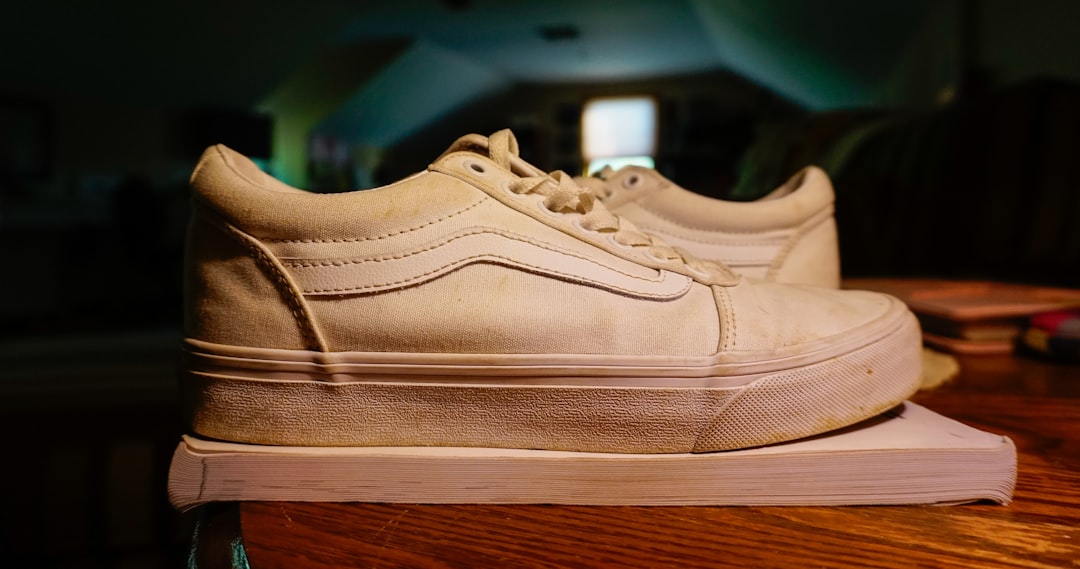
The Old Skool debuted in 1977 as Vans’ first low-top design featuring the now-iconic Sidestripe. At the time, skateboarding was evolving from a niche California pastime into a subculture with its own aesthetic language. The shoe’s rugged canvas and suede construction, combined with a vulcanized rubber sole and padded collar, offered skaters the durability and grip they needed to push the limits of a sport that was still finding its feet. But it was the Sidestripe—an almost calligraphic stroke of white leather contrasting against the dark upper—that transformed a practical skate shoe into a visual statement. Unlike the racing stripes of athletic shoes that screamed speed and competition, the Sidestripe had a languid, effortless quality. It suggested motion without shouting, rebellion without aggression.
What elevated the Vans Old Skool beyond its utilitarian origins was the way it became a canvas for personal expression. In the 1980s, as skate culture collided with punk, new wave, and early hip-hop, the Sidestripe became a badge of authenticity. Skaters personalized their Old Skools with paint, markers, and patches, making each pair a unique artifact. The Sidestripe’s clean line provided a natural boundary for this creative chaos, anchoring the chaos without stifling it. This adaptability allowed the shoe to transcend its skatepark roots and infiltrate mainstream fashion. By the 1990s, the Old Skool was as likely to be spotted on the feet of alternative rock musicians, graffiti artists, and West Coast rappers as it was on skateboarders. The Sidestripe had become a visual shorthand for being in the know—a quiet signal that the wearer belonged to a tribe that valued substance over flash.
The shoe’s Hall of Fame status is cemented not by a single iconic moment, but by a slow, organic accumulation of cultural capital. In 2001, Vans released the “Half Cab,” a reimagined version of the Old Skool that slashed the silhouette down to a lower profile, named after professional skater Steve Caballero. Yet the original Sidestripe design never faded. It continued to appear in countless collaborations, from high-fashion houses like Supreme and Off-White to artist partnerships with Takashi Murakami. Each collaboration paid homage to the Sidestripe’s purity, often using it as a framing device for bold patterns or luxurious materials. The line’s simplicity made it infinitely remixable, while its history gave each reinterpretation a layer of reverence.
Today, the Vans Old Skool occupies a rare space in sneaker culture: it is both a timeless staple and a canvas for constant reinvention. It is worn by CEOs and skateboard punks, by grandmothers and hypebeasts. The Sidestripe has become so iconic that it no longer needs the brand name to be recognized—a true testament to its place in the visual vocabulary of the modern world. Unlike other sneakers that rise and fall with trends, the Old Skool’s Sidestripe endures because it represents something deeper than fashion. It represents a philosophy of understated individuality, a rejection of pretension, and an embrace of the gritty, the real, and the personal.
In the context of the Sneaker Hall of Fame, the Vans Old Skool is not just another model; it is a monument to the idea that a shoe’s greatest power lies not in its technology or its marketing, but in the stories it carries. Every scuff on a pair of Old Skools is a memory, every frayed Sidestripe a badge of honesty. It is a shoe that has walked the line between the underground and the mainstream without ever losing its soul. The Sidestripe remains as relevant today as it was in 1977—a simple line that connects us to decades of rebellion, creativity, and the quiet courage of being yourself.
Articles