Why the Converse Chuck Taylor All Star Remains a Timeless Canvas for Personal Style

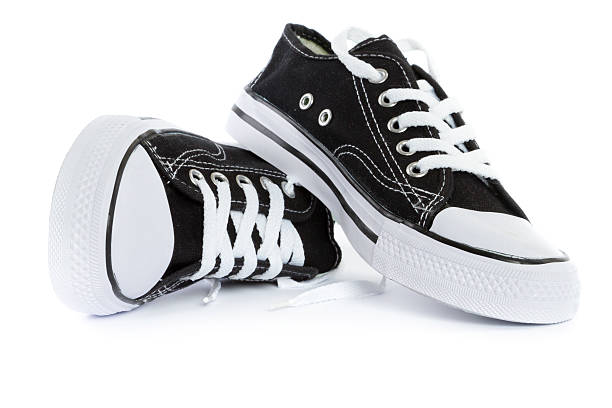
Few sneakers have crossed as many boundaries as the Converse Chuck Taylor All Star. Born as a basketball shoe in the early twentieth century, it has long since outgrown the court to become one of the most recognizable objects in everyday dress. Its genius lies not in complexity but in restraint. A canvas upper, rubber toe cap, thin white outsole, and ankle patch form a design so plain that it can absorb almost any identity. That blankness explains why the Chuck has lasted for a century: it is less a fixed fashion statement than a canvas for personal style. The silhouette has been copied, altered, and remixed, but its core proportions remain immediately legible.
The shoe’s original purpose was practical. In 1917, Converse introduced the All Star as a basketball sneaker, and the company soon enlisted basketball player Charles H. “Chuck” Taylor as a salesman and ambassador. Taylor’s name became part of the shoe, and his promotion helped turn a functional athletic product into a household name. For decades, the Chuck was what athletes wore before specialized performance footwear took over. Its rubber sole gripped gym floors, its canvas upper kept the foot cool, and its high top offered ankle coverage. Those same utilitarian features later became style signifiers. The very things that made the shoe useful on court—the durable toe bumper, the license plate heel patch, the contrast stitching—became the details collectors and casual wearers recognize instantly.
What separates the Chuck Taylor All Star from many iconic sneakers is its ability to belong to conflicting worlds without losing itself. It has appeared on Olympic basketball courts and military bases, on punk stages and skate ramps, in art-school studios and suburban classrooms. Rock musicians adopted it as a uniform of rebellion and accessibility; skateboarders valued its grip and board feel; filmmakers and artists used its plainness as a visual shorthand for youth, authenticity, and creative independence. In each context, the shoe did not need to change dramatically. A different lace color, a scrawl in marker, a cut-off collar, or a worn hole could make the same silhouette read as preppy, grungy, minimalist, or defiant. Its low top and high top versions also shift the mood without changing the essential formula.
That mutability is central to the Chuck’s longevity. Fashion often depends on reinvention, but the Chuck has stayed relevant by allowing wearers to do the reinventing. A pristine pair suggests nostalgia and neatness. A beat-up pair tells a story of concerts, commutes, and summers. Custom embroidery, painted panels, and limited-edition prints turn the shoe into a diary. Collaborations with designers, artists, and musicians have amplified this idea, but they are not the source of the shoe’s endurance. They are evidence of it. The Chuck is already a platform for self-expression, which is why so many creators want to leave their mark on it.
The shoe also carries a rare democratic quality. It has never been exclusively luxury, nor exclusively utilitarian. Its price and availability have made it a common language across generations and subcultures. A teenager saving for a first pair, a collector hunting a rare collaboration, and a designer pairing high fashion with low-top canvas can all claim the same model without contradiction. That accessibility does not erase its history; it expands it. The Chuck Taylor All Star is a reminder that true style is not always about rarity. Sometimes it is about recognition, repetition, and the small personal adjustments that make a mass-produced object feel like one’s own.
In a sneaker landscape crowded with technology, hype, and constant novelty, the Chuck remains stubbornly itself. It does not rely on cushioning breakthroughs or futuristic silhouettes. Its power is cultural and visual: a shape so familiar that it can disappear into an outfit and still anchor it. After more than a century, the Converse Chuck Taylor All Star endures because it asks very little of the wearer and offers enormous room to answer back. It is a basketball relic, a punk artifact, a fashion staple, and a personal canvas all at once. That is not just longevity. It is a kind of timeless style that keeps being rewritten with every pair. The wearer completes the design simply by living in it.