Saucony’s Grid Technology: The Cushioning Revolution That Redefined Stability
In the crowded landscape of premium running footwear, few innovations have left as enduring a mark as Saucony’s Grid system. First introduced in the early 1990s, the Grid—an acronym for Ground Reaction Inertia Device—represented a radical departure from the foam-based cushioning that dominated the market. Where competitors relied on air pockets or gel inserts, Saucony engineers imagined a suspended network of resilient filaments that could absorb impact while guiding the foot through a more natural gait cycle. This technology did not merely add comfort; it fundamentally altered how runners understood the relationship between cushioning and stability, creating a lineage of shoes that still influences modern performance designs.
The original Grid system employed a series of interwoven fibers held under tension within a hollowed-out heel unit. When the foot struck the ground, these fibers would stretch and deform, dissipating energy across a broad surface rather than concentrating it in a single foam layer. The result was a sensation that felt both plush and responsive, unlike anything else on the market. Early adopters praised the Grid for its ability to reduce heel-strike shock without sacrificing the ground feel that serious runners craved. The Saucony Grid Shadow, released in 1991, became an instant classic, earning a loyal following among marathoners and casual joggers alike. Its mesh-and-leather upper combined breathability with durability, but it was the springy, web-like grid in the heel that generated the most conversation in running magazines and shoe stores.
As the decade progressed, Saucony refined the Grid in multiple directions. The Grid 9000, launched in 1993, brought the technology to a lighter, sleeker silhouette that appealed to road racers. Meanwhile, the Grid Hurricane introduced the concept of dual-density grids, offering medial support for overpronators without the harsh rigidity typical of motion-control shoes. This was a breakthrough. Traditionally, runners who needed stability had to sacrifice cushioning, often ending up with heavy, board-like shoes that felt oppressive on long runs. The Hurricane’s grid system allowed the shoe to be firm on the inside edge yet forgiving everywhere else, creating a ride that felt natural and supportive simultaneously. Runners who had previously struggled with knee and ankle pain found relief, and the Hurricane quickly became a top recommendation from podiatrists and running coaches.
The late 1990s and early 2000s saw Saucony push the Grid even further with the introduction of the Grid Procyon and Grid Trigon series. These models incorporated a full-length grid that extended from heel to midfoot, providing a smoother transition through the gait cycle. The Trigon, in particular, used a combination of grid fibers and EVA foam in a tri-zone setup that varied firmness from rear to forefoot. This design reflected a deeper understanding of biomechanics—recognizing that the heel needs ample shock absorption, the midfoot requires support, and the forefoot benefits from energy return during toe-off. Saucony’s engineers worked closely with university sports science labs to fine-tune the tension and spacing of the grid filaments, resulting in shoes that could be tailored to different foot types and running styles.
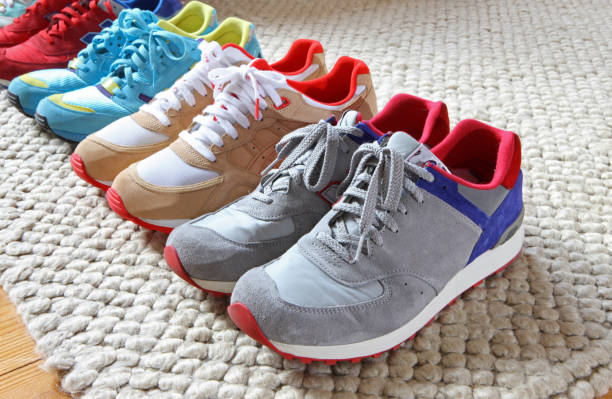
One of the most fascinating chapters in this story is the impact of the Grid on the collector sneaker community. While Saucony is not typically grouped with basketball giants like Nike or Adidas in the hypebeast world, the Grid Shadow and Grid 9000 have achieved cult status among vintage sneaker enthusiasts. Their distinctive waffle-like heel window, visible through translucent panels, became an iconic design element. Collaborations with brands like Bodega, Premier, and Sneaker Freaker revived these models in limited colorways, often paying homage to the original technology. For collectors, owning a pair of Grid Shadows is like holding a piece of running history—a reminder of an era when shoe companies took genuine technological leaps rather than relying on marketing gimmicks.
Modern iterations of the Grid continue to evolve. Saucony’s current PWRRUN and PWRRUN+ foams incorporate lessons learned from the Grid’s variable-density approach, and the brand has even released hybrid models like the Saucony Endorphin Shift that combine a rigid carbon-fiber plate with Grid-inspired stability elements. The technology never really disappeared; it just became integrated into more sophisticated systems. Even today, when a runner laces up a pair of Saucony Triumph or Guide, they are experiencing the distant echo of that original grid—a philosophy of cushioning that balances resilience with guidance.
What made the Grid so revolutionary was not just the material but the mindset behind it. Saucony refused to accept the trade-off between comfort and control. Instead, they designed a system that turned the strike force into a supportive partner, not an adversary. It is a testament to thoughtful engineering that the Grid remains relevant three decades later, still delivering the same smooth, stable ride that won over runners in the early 1990s. For anyone curious about how premium running technology evolves through generations, the story of the Grid offers a masterclass in innovation that prioritizes the runner’s experience above all else.
Articles