The Air Jordan Phenomenon: How One Shoe Forged Nike’s Empire
In 1984, a fledgling sportswear company in Beaverton, Oregon, took a gamble that would forever alter the landscape of athletic footwear. Nike, then still carving out its identity beyond its Blue Ribbon Sports origins, signed a rookie basketball player named Michael Jordan. The partnership produced the Air Jordan I, a shoe that not only launched a billion-dollar franchise but also cemented Nike’s transition from a running-shoe specialist into a global cultural juggernaut. Understanding this single moment is essential to grasping how Nike achieved its dominance, because the Air Jordan line did more than sell sneakers—it rewrote the rules of marketing, endorsements, and sneakerhead consumerism.
Before the Air Jordan, Nike’s reputation rested largely on performance running shoes like the Cortez and the Tailwind, as well as early innovations in cushioning technology. The company had succeeded in the athletic sphere, but it lacked the transcendent cultural pull that would later define it. When Nike executives decided to invest heavily in Michael Jordan—a promising but unproven talent from the University of North Carolina—they were taking a calculated risk on a player whose style and charisma seemed to match the brand’s emerging ethos of rebellion and excellence. The result was a shoe that defied convention.
The Air Jordan I broke visual and regulatory boundaries. Its bold red and black colorway violated the NBA’s uniform policy, which required shoes to be predominantly white and match teammates’ footwear. The league fined Jordan $5,000 per game for wearing them, but Nike happily paid the fines, turning the controversy into a marketing masterstroke. The “Banned” narrative became legend, positioning Jordan—and by extension Nike—as an outlaw hero challenging the establishment. This story resonated with young consumers who saw the shoe as a symbol of individuality and defiance. Sales skyrocketed, and the Air Jordan I became the most sought-after basketball shoe of its era.
More importantly, the Air Jordan line established a new economic model for athlete endorsements. Previously, athletes were paid a flat fee to wear a brand’s products. Nike, under the visionary leadership of marketing executive Rob Strasser and designer Peter Moore, created a revenue-sharing structure that gave Jordan a percentage of every shoe sold. This aligned incentives perfectly: Jordan’s success on the court directly boosted his income, while Nike’s profits soared alongside the player’s fame. The arrangement turned Jordan into a billionaire and made the Air Jordan brand a perpetual cash machine. By 2023, the Jordan Brand generated over $6 billion in annual revenue for Nike, dwarfing the entire output of many competing sneaker companies.
Culturally, the Air Jordan transcended sports. The shoe became a hip-hop staple, a fashion statement, and a canvas for artistic collaboration. Rappers like Run-D.M.C. referenced the brand, graffiti artists customized pairs, and collectors began treating rare colorways as investment assets. The “sneakerhead” subculture—a community of enthusiasts who obsess over drops, resale values, and authenticity—owes its modern form to the frenzy surrounding Air Jordans. Each new release, from the III to the XI to the Retro series, triggered long lines, campouts, and online wars. Nike learned to manufacture scarcity, controlling production quantities to stoke demand, a tactic now ubiquitous across streetwear and luxury goods.
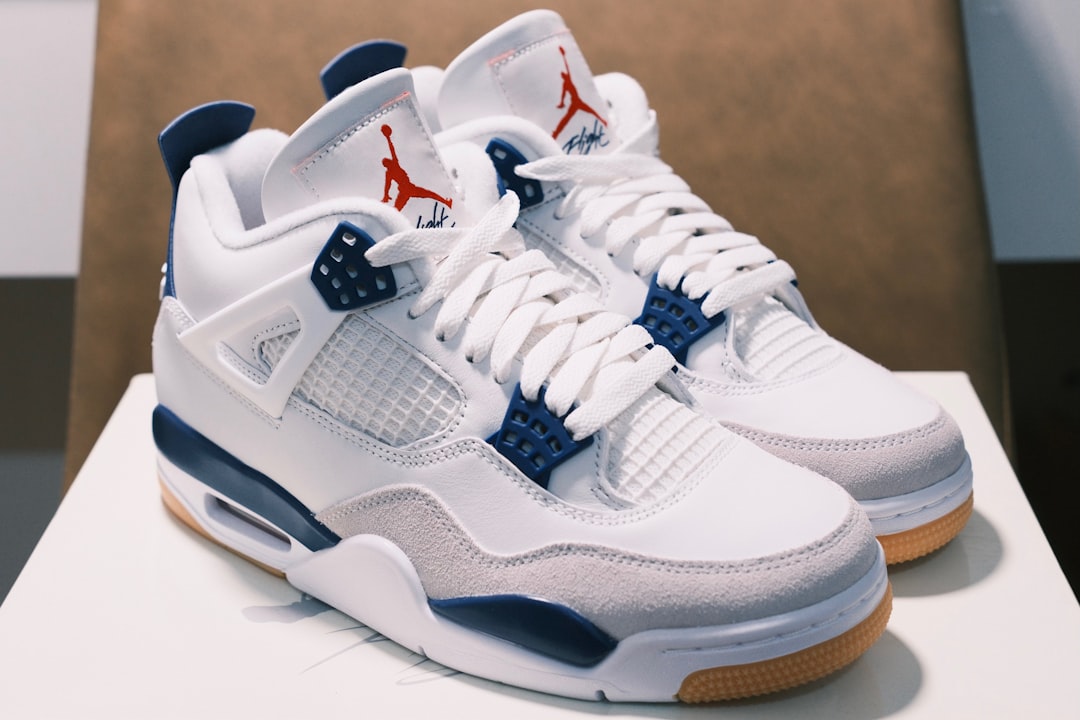
This phenomenon also forced Nike to innovate relentlessly. The Air Sole technology visible in the Air Jordan III, designed by Tinker Hatfield, became a signature aesthetic. Hatfield’s introduction of the elephant print, the Jumpman logo, and the visible air unit set a new standard for sneaker design. Every subsequent model pushed technological boundaries—the IV introduced mesh panels for breathability, the V featured a reflective tongue and lace locks, the VI added a clear rubber outsole and a spoiler heel. Each iteration told a story of evolution, keeping consumers engaged year after year. Nike’s mastery of product cycles, combined with Jordan’s legendary career, created an endless pipeline of must-have footwear.
The ripple effects extended beyond basketball. Nike leveraged Jordan’s cachet to enter other sports and lifestyle segments. The Air Jordan brand spawned apparel, accessories, and even collaborations with luxury houses like Dior. It gave Nike the credibility to sign other superstar athletes—LeBron James, Kobe Bryant, Serena Williams—and replicate the endorsement formula. More broadly, the Air Jordan phenomenon proved that a sneaker could be simultaneously a performance tool, a status symbol, and a work of art. This realization allowed Nike to dominate not just the athletic market but the entire fashion footwear industry.
Today, the legacy of the Air Jordan continues to shape Nike’s strategy. Retro releases generate as much hype as new models, proving that nostalgia is a powerful driver of demand. The secondary market for rare Jordans exceeds a billion dollars annually, with some pairs selling for hundreds of thousands. Meanwhile, Nike’s direct-to-consumer channels, fueled by the SNKRS app and exclusive drops, have made the brand a master of digital commerce. All of this traces back to that bold decision in 1984, when a hungry company bet on a young player and created a cultural revolution.
The Air Jordan line did not merely contribute to Nike’s global dominance—it defined it. Without that shoe, Nike might still be a respected running brand, but it would lack the mythology, the street cred, and the economic engine that propelled it to the top of the sneaker world. The swoosh became more than a logo; it became a symbol of aspiration, rebellion, and winning. And it all started with a single pair of banned shoes.
Articles