The Science of Sneaker Storage: Why Climate Control and Material Preservation Matter
Every sneaker collector eventually faces a quiet crisis. After months of hunting down a grail pair, after scouring resale platforms and waiting for restocks, that precious box finally arrives. The sneakers are pristine, untouched by pavement or weather. But within a year, the midsole begins to yellow. The leather develops a faint powdery residue. The once-crisp mesh feels brittle to the touch. The culprit is not age but environment. Storage is not merely about keeping shoes organized or visually appealing. It is the single most consequential factor in determining whether a sneaker lasts five years or fifty. The materials that make sneakers desirable also make them vulnerable, and understanding that vulnerability is the foundation of serious preservation.
The primary enemies of sneaker longevity are heat, humidity, light, and air quality. Each attacks different components of a shoe in distinct ways. Polyurethane midsoles, used in countless classic models, are particularly susceptible to hydrolysis. This chemical reaction causes the material to break down from within, leading to crumbling, cracking, and the infamous “brittle midsole” that plagues older Air Jordans and Nike Air Max pairs. Hydrolysis accelerates dramatically in environments with high humidity. When relative humidity exceeds sixty percent, moisture molecules penetrate the foam structure and react with polymer chains. The result is not reversible. Once hydrolysis begins, the midsole will eventually disintegrate regardless of how carefully the sneaker is handled.
Leather presents a different set of challenges. Genuine leather is a natural material that breathes and absorbs moisture from the air. In humid conditions, leather becomes a breeding ground for mold and mildew. These microorganisms feed on the organic compounds within the hide, leaving behind stains, odors, and structural damage that cannot be fully repaired. In excessively dry environments, leather loses its natural oils and begins to crack along crease lines. The ideal storage humidity for leather sneakers falls between forty and fifty percent, a range that prevents both fungal growth and desiccation. Silica gel packets placed inside boxes help maintain this balance, but they must be replaced regularly as they become saturated.
Temperature fluctuations are equally destructive. Sneakers stored in attics or garages endure seasonal swings that cause materials to expand and contract repeatedly. This thermal cycling weakens glue bonds, causing soles to separate from uppers. It also accelerates the oxidation of rubber components, turning white soles yellow and making translucent outsoles cloudy. The sweet spot for sneaker storage is a stable temperature between sixty and seventy degrees Fahrenheit. Even a consistent temperature slightly above that range is preferable to a space that moves between hot and cold throughout the day.
Light exposure is a more subtle but equally insidious threat. Ultraviolet radiation breaks down polymer chains in rubber, foam, and synthetic materials. It also accelerates yellowing in clear soles and causes color fading in printed graphics and fabric patterns. Direct sunlight is the most aggressive offender, but even indirect ambient light from windows or overhead fixtures contributes to degradation over time. Display cases with UV-filtering acrylic are an excellent solution for collectors who want to showcase their shoes without exposing them to damaging wavelengths. For long-term storage, opaque boxes that block all light are the gold standard.
Air quality matters more than most collectors realize. Pollution particles, dust, and airborne chemicals settle onto sneaker surfaces and gradually break down materials. Cities with high ozone levels accelerate the aging of rubber components. Spaces near kitchens or garages may introduce cooking grease or fuel fumes that adhere to leather and suede. Storing sneakers in sealed containers with activated charcoal filters can mitigate these risks, especially for high-value pairs intended for preservation rather than rotation.
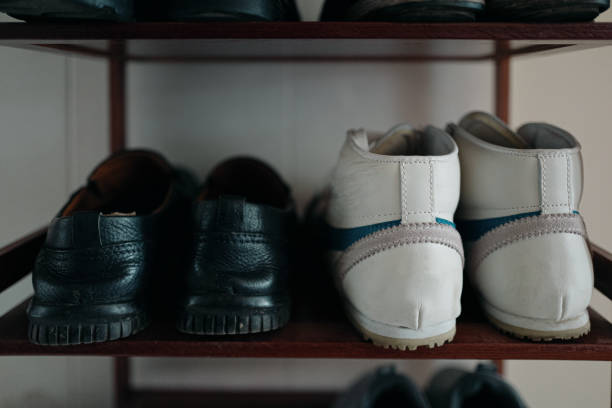
Beyond environmental factors, physical pressure must be considered. Stacking shoeboxes places weight on the shoes below, compressing midsoles and distorting shapes over months and years. The heaviest boxes should always go on the bottom. Better yet, each pair should have its own dedicated shelf space where no weight presses against the upper or heel. Sneaker trees or crumpled acid-free tissue paper help maintain shape, particularly for high-top models where the ankle collar tends to collapse when stored empty.
The container itself deserves scrutiny. The original shoebox is aesthetically pleasing and culturally meaningful, but it is not engineered for preservation. Corrugated cardboard absorbs moisture from the air and releases it slowly, creating microclimates inside the box. Archival-grade storage boxes made from inert plastics or acid-free materials offer superior protection. Clear plastic containers allow visual identification without opening, reducing the frequency of handling and the associated risk of accidental damage. For collectors who value the original box experience, placing the sneakers inside a protective plastic sleeve before returning them to the cardboard box offers a compromise between authenticity and preservation.
Ultimately, storage is an act of respect for the craftsmanship and history embedded in every pair. A sneaker that sits on a dusty shelf in a sun-drenched room is not being preserved. It is being slowly destroyed. The collector who invests in proper climate-controlled storage is not being obsessive or excessive. They are acknowledging that sneakers are not just shoes. They are artifacts of culture, design, and personal narrative. And like any artifact, they deserve the conditions that will allow them to survive for generations to come.
Articles